
Topic
Laboratory for Information and Decision Systems (LIDS)
Download RSS feed: News Articles / In the Media / Audio
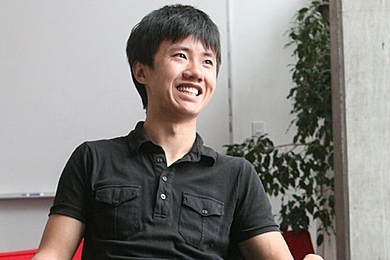
From theory to practice
PhD student Kuang Xu has found a way to apply predictive modeling to improve emergency-room wait times.

How computers can learn better
With a recently released programming framework, researchers show that a new machine-learning algorithm outperforms its predecessors.

Valuing versatility
In an age of specialization, a little versatility could improve operations management, cloud computing, and possibly even the provision of health care.

Can control theory make software better?
Techniques used to ensure that airplanes won’t stall out in flight could be adapted to prove that computer programs won’t divide by zero.
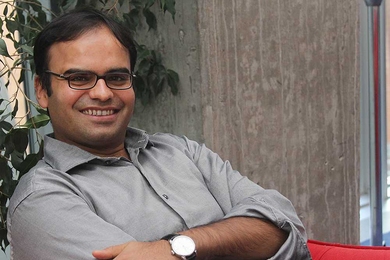
Networks of probability
Devavrat Shah spans disciplines by looking at networks probabilistically and probabilities as networks.
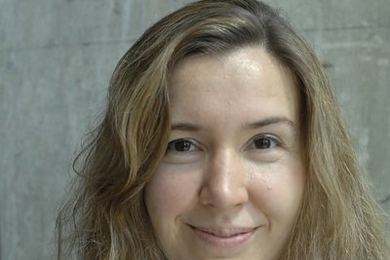
Ozdaglar selected as the inaugural Steven and Renee Finn Innovation Fellow
The fellowship provides tenured, mid-career faculty in the Department of Electrical Engineer and Computer Science with resources for up to three years to pursue new research and development paths.

Speed limit for birds
MIT researchers find critical speed above which birds — and drones — are sure to crash.
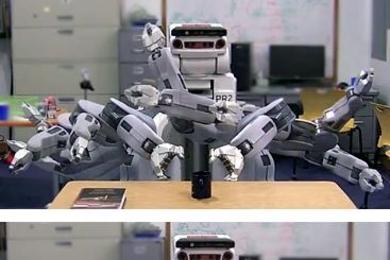
Smarter robot arms
A combination of two algorithms developed at MIT allows autonomous robots to execute tasks much more efficiently — and move more predictably.

The too-smart-for-its-own-good grid
New technologies intended to boost reliance on renewable energy could destabilize the power grid if they’re not matched with careful pricing policies.

Improving recommendation systems
Researchers believe that comparing products, rather than rating them on an absolute scale, will lead to algorithms that better predict customers’ preferences.

How wise are crowds?
By melding economics and engineering, researchers show that as social networks get larger, they usually get better at sorting fact from fiction.
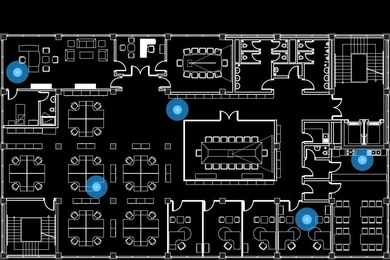
Can you find me now?
By demonstrating fundamental limits on their accuracy, MIT researchers show how to improve wireless location-detection systems.
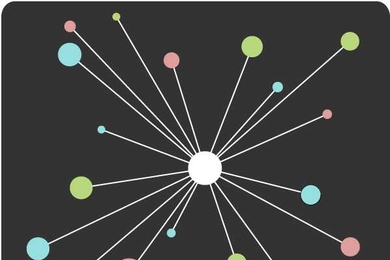
Sizing samples
Many scientific disciplines use computers to infer patterns in data. But how much data is enough to ensure that the inferences are right?
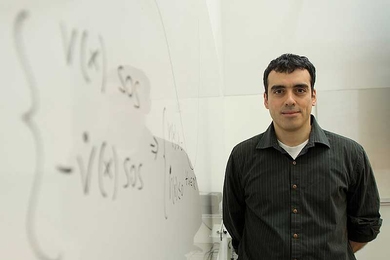
Nonlinear thinker
With techniques for translating complicated equations into ‘sums of squares,’ Pablo Parrilo helps make sense of previously insoluble problems.