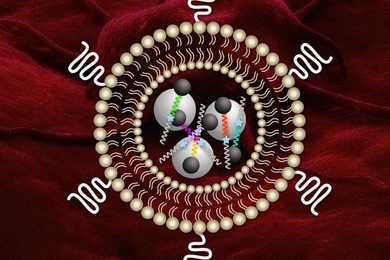
Nanosensors could help determine tumors’ ability to remodel tissue
Measuring enzyme levels could help doctors select appropriate treatments.
Measuring enzyme levels could help doctors select appropriate treatments.
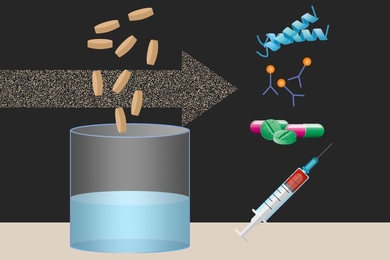
Freeze-dried cellular components can be rehydrated to churn out useful proteins.
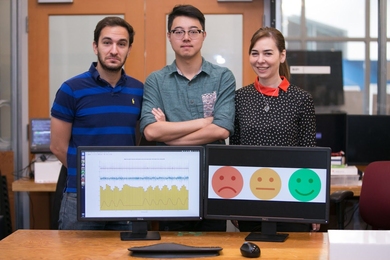
Measuring your heartbeat and breath, CSAIL device can tell if you’re excited, happy, angry, or sad.

Gene-regulating RNA molecules could help treat early-stage breast cancer tumors before they spread.

Innovators from many sectors to tackle issues involving the digital economy, education, and more.
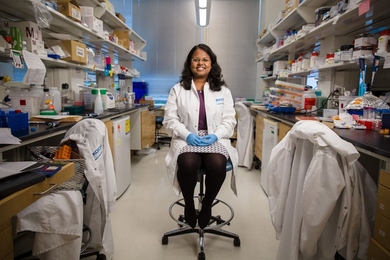
PhD student Anasuya Mandal’s microneedle device could painlessly monitor the immune system.
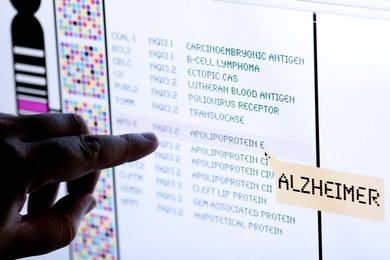
Personal genomic data makes a bigger impact when it portends well, a new study finds.

Device that measures growth of many individual cells simultaneously could lead to rapid tests for antibiotics.
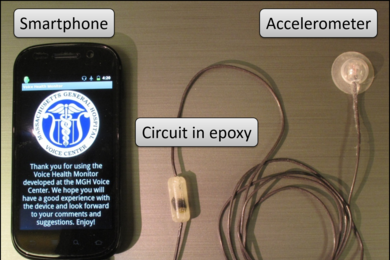
By detecting signs of vocal misuse, system from CSAIL and Mass General could eventually be used to help diagnose voice disorders.

Study shows long-lasting health, economic impacts of lead emissions from U.S. general aviation flights.

Dean for Student Life Suzy Nelson says new policy is designed to reduce barriers to help-seeking, ensure student safety; changes respond to students’ concerns.
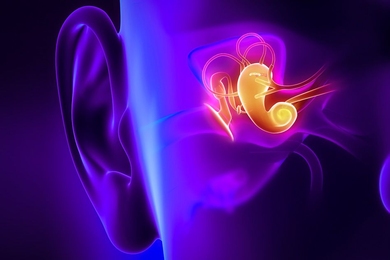
Shortwave infrared instrument from MIT could see deeper, help improve diagnosis of ear infections.
Four organizations will partner with J-PAL North America to evaluate substance abuse treatment, care integration, social-service delivery, and patient-engagement programs.

Wearable sensor for athletes detects potential head injuries, gathers data on hard hits.

Graduate student who suffered from seasonal affective disorder (SAD) develops MindHandHeart Innovation Fund project.