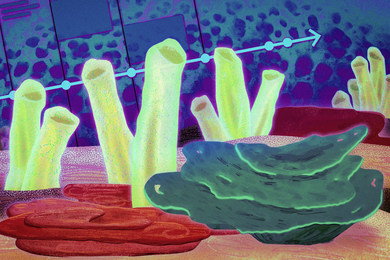
The first animals on Earth may have been sea sponges, study suggests
MIT researchers traced chemical fossils in ancient rocks to the ancestors of modern-day demosponges.
MIT researchers traced chemical fossils in ancient rocks to the ancestors of modern-day demosponges.

Based on mini “lab-quakes” in a controlled setting, the findings could help researchers assess the vulnerability of quake-prone regions.

New research shows the natural variability in climate data can cause AI models to struggle at predicting local temperature and rainfall.

Research shows these channels allow seawater and nutrients to flow in and out, helping to maintain reef health over millions of years.
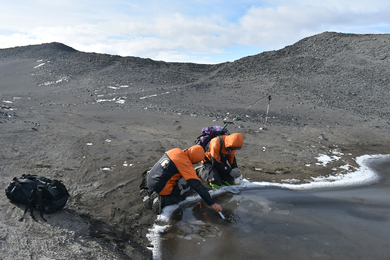
Modern-day analogs in Antarctica reveal ponds teeming with life similar to early multicellular organisms.

Ananda Santos Figueiredo, a senior in climate system science and engineering, is charting her own course of impact.
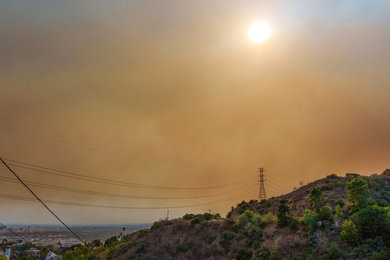
Ground-level ozone in North America and Western Europe may become less sensitive to cutting NOx emissions. The opposite may occur in Northeast Asia.
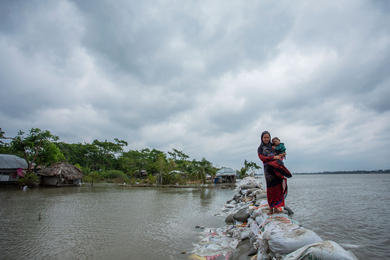
With projected global warming, the frequency of extreme storms will ramp up by the end of the century, according to a new study.
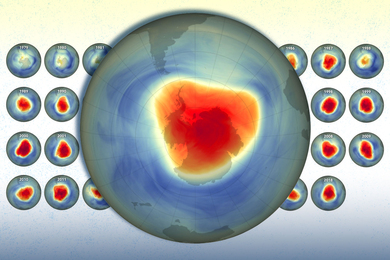
New results show with high statistical confidence that ozone recovery is going strong.
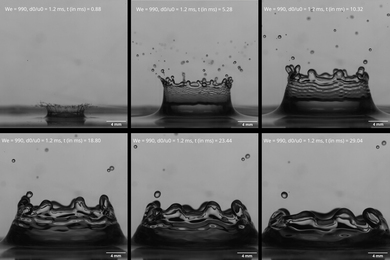
Findings may help predict how rain and irrigation systems launch particles and pathogens from watery surfaces, with implications for industry, agriculture, and public health.
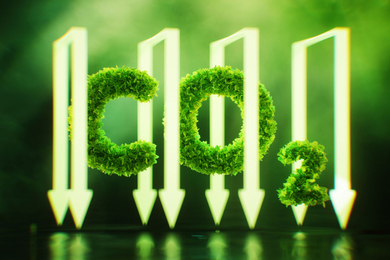
In a report on the feasibility of removing carbon dioxide from the atmosphere, physicists say these technologies are “not a magic bullet, but also not a no-go.”

MIT oceanographer and biogeochemist Andrew Babbin has voyaged around the globe to investigate marine microbes and their influence on ocean health.
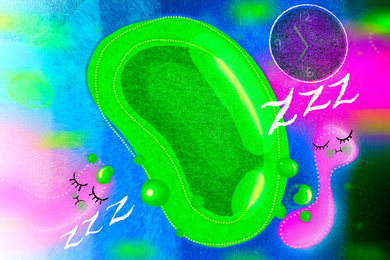
New findings illuminate how Prochlorococcus’ nightly “cross-feeding” plays a role in regulating the ocean’s capacity to cycle and store carbon.

Haystack Observatory researchers and citizen scientists team up to map the aurora.
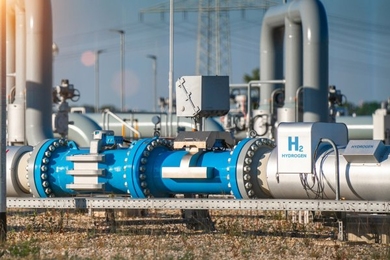
MIT study confirms the climate impacts of hydrogen, recommends leak prevention be a priority as infrastructure for handling this clean-burning fuel is built.