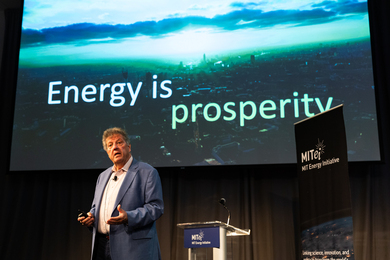
Energy, prosperity, emissions, and innovation: A decarbonization progress report
Eric Toone, CTO of Breakthrough Energy, assessed global decarbonization, and the opportunities and challenges that remain, at MITEI’s annual research conference.
Eric Toone, CTO of Breakthrough Energy, assessed global decarbonization, and the opportunities and challenges that remain, at MITEI’s annual research conference.
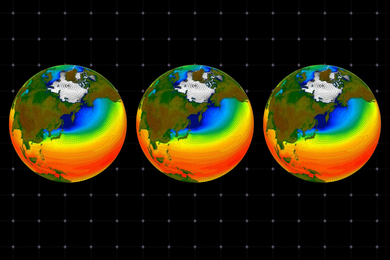
MIT scientists developed a training method to generate models that simulate the effects of human activities on climate much more quickly than other approaches.
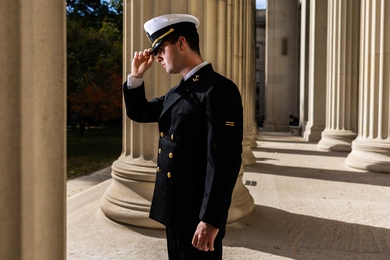
Through leadership roles in ROTC and Camp Kesem, plus navigating an academic pivot, senior Andrew Voelsing has learned to face new challenges with enthusiasm.
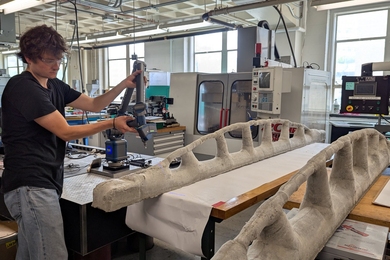
MIT engineers cast a concrete beam using a sewn fabric mold with one-third the amount of concrete and half as much steel as a conventional beam.
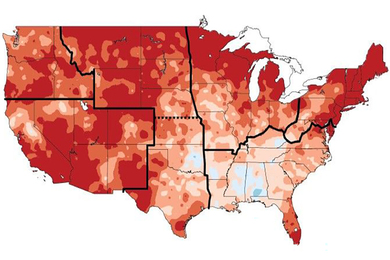
The findings indicate where adaptive measures are needed most around the United States.
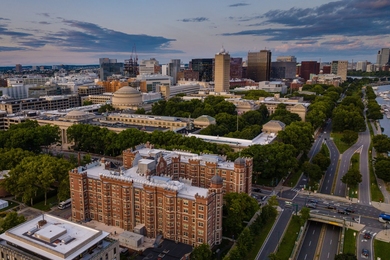
Professor Ali Jadbabaie describes how AI, digital transformation, climate change, and complex geopolitics are forcing engineers and policymakers to rethink how infrastructure is designed, built, and managed.
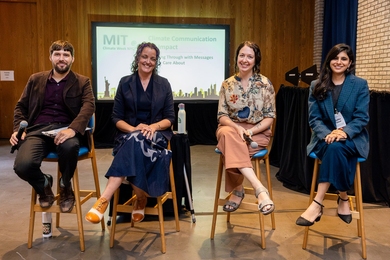
A cross-section of the MIT community convened discussions on topics ranging from data centers and super pollutants to agriculture and education.
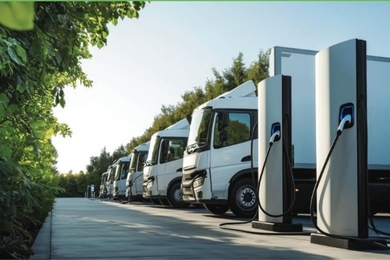
MIT's Center for Transportation and Logistics finds sustainability commitments are strong, but governance gaps and external disruptions prevent execution.
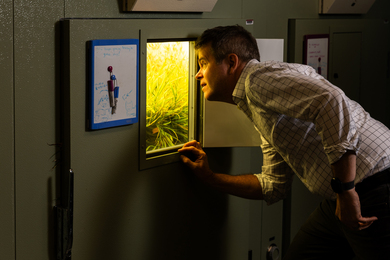
Associate Professor David Des Marais studies how plants interact with their surroundings and adapt over time.
J-PAL North America’s Learning Lab supported a second cohort of U.S. government and nonprofit organizations in building and using rigorous evidence to advance effective decarbonization and adaptation strategies.
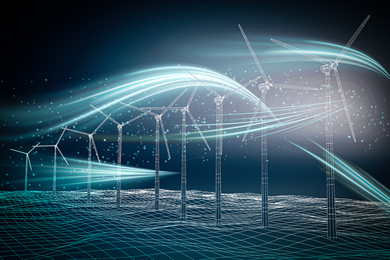
A new way of simulating wind turbines in the field shows how tweaking turbine operation could unlock tens of thousands of dollars per turbine every year.
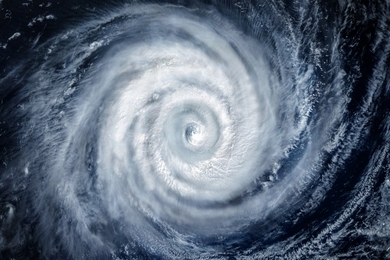
The Climate Grand Challenges “New World of Weather” project shows how modeling, planning tools, and infrastructure analysis are translating research into real-world resilience.
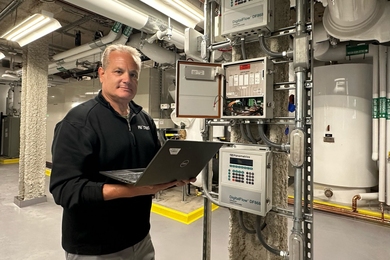
Innovative strategies, technologies, and collaborations are helping MIT advance solutions on campus and beyond.
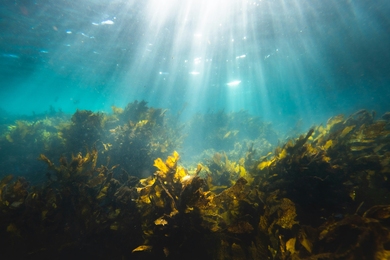
Researchers reveal how communities of marine bacteria divide the task of degrading fucoidan, a key player in ocean carbon storage.

The work is part of a multiyear effort to develop a distributed sensor network for relaying data collected from this critical region.