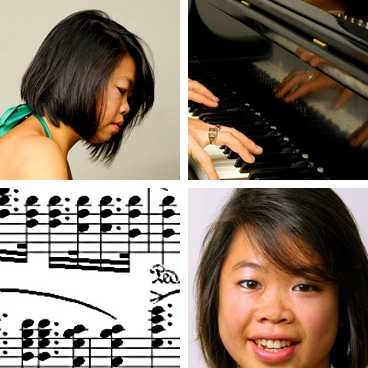
The MIT Music Section of the School of Humanities, Arts and Social Sciences (SHASS) has announced the 2011 winner of the MIT Symphony Orchestra (MITSO) Concerto Competition. This year’s winner is senior Amanda Mok, a double major in biological engineering and music, who is a skilled pianist and accomplished violinist.
“Apart from complete technical assurance, Amanda's playing possesses both a variety of colors and a feeling of spontaneity that brings her performances to life. She is able to take the rather unwieldy first movement of the Tchaikovsky and give it a natural, inevitable pacing," said Adam Boyles, director of MITSO. "As a pianist, violinist, scholar and musical ambassador, Amanda represents the very top rank of what our students bring to the MIT community and the world.”
Mok will perform with MITSO under the direction of Adam Boyles on Friday, March 11, at 8 p.m. in Kresge Auditorium. The program will include the first movement of Tchaikovsky's Piano Concerto No. 1 and Holst’s The Planets.
A comprehensive Q&A interview with Mok can be found on the School of Humanities, Arts, and Social Sciences web site.
“Apart from complete technical assurance, Amanda's playing possesses both a variety of colors and a feeling of spontaneity that brings her performances to life. She is able to take the rather unwieldy first movement of the Tchaikovsky and give it a natural, inevitable pacing," said Adam Boyles, director of MITSO. "As a pianist, violinist, scholar and musical ambassador, Amanda represents the very top rank of what our students bring to the MIT community and the world.”
Mok will perform with MITSO under the direction of Adam Boyles on Friday, March 11, at 8 p.m. in Kresge Auditorium. The program will include the first movement of Tchaikovsky's Piano Concerto No. 1 and Holst’s The Planets.
A comprehensive Q&A interview with Mok can be found on the School of Humanities, Arts, and Social Sciences web site.