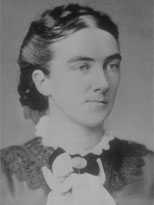
The life of Ellen Swallow Richards, MIT's first alumna, will be the focus of a one-woman show from 7-9 p.m. on Wednesday, Oct. 1, in Room 4-370. Swallow, who graduated in 1873 after studying chemistry at MIT, applied her brilliant mind, chemistry training and organizing finesse to universal human concerns -- clean water, air, pure food.
Swallow's far-reaching legacy is only now being recognized. She promoted and organized a Women's Laboratory, made important progress in clean air and water, and furthered women's education in basic science and its application to everyday life. Her life was based in and around the halls of MIT, but her legacy reached into homes, governments and institutions around the nation.
Joyce Beery Miles, the presenter, will use period costume and words from Swallow's own writings. She will first portray Swallow as a young student before obtaining her master's degree at Vassar College and during then her Vassar days. The second scene covers her initial days at MIT and in the Women's Chemistry lab, and finally, the show will depict her last 10-15 years of professional activity, including the 1893 Columbia World Exposition in Chicago, her work with the New England Kitchen and the Lake Placid Conference.
Tickets are $12 for Association of MIT Alumnae (AMITA) members; $15 for nonmembers; students are free. Alumni may register online.
Contact Sarah Simon at sarah.simon@alum.mit.edu if you would like to join a pre-event group for a light supper.
A version of this article appeared in MIT Tech Talk on September 24, 2008 (download PDF).