Skip to content ↓

Reeve speaks out on research

Actor and activist Christopher Reeve
Caption:
Actor and activist Christopher Reeve
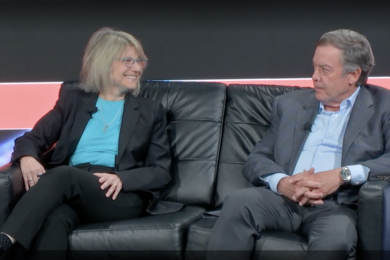
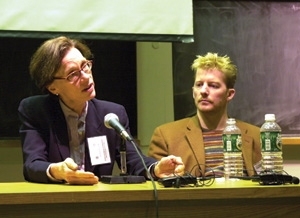
Ann Graybiel, Professor of Neuroscience (left) and John McDonald (right), a neurologist who heads the Spinal Cord Injury Progrm at the Washington University School of Medicine. Graybiel and McDonald spoke at the MIT/Harvard Conference on Neuroscience on March 2.
Caption:
Ann Graybiel, Professor of Neuroscience (left) and John McDonald (right), a neurologist who heads the Spinal Cord Injury Progrm at the Washington University School of Medicine. Graybiel and McDonald spoke at the MIT/Harvard Conference on Neuroscience on March 2.

Actor and activist Christopher Reeve highlighted the MIT/Harvard Conference on Neuroscience in Room 10-250 on March 2. Reeve, who was paralyzed in a 1995 equestrian accident, said the Bush administration has restricted stem cell research on moral grounds, disregarding the views of scientists and patient groups. Other speakers included Professor of Neuroscience Ann Graybiel, a 2001 Medal of Science winner for her study of the brain's basal ganglia, and John McDonald, a neurologist who heads the Spinal Cord Injury Program at the Washington University School of Medicine. McDonald has helped Reeve try to regain neurological function.

A version of this article appeared in MIT Tech Talk on March 5, 2003.
Related Topics

More MIT News

Globular blue and white orbs "examining" single-stranded RNA products and marking them with green checks or red x's

Why are some bacterial genes high in purines?

In certain species of bacteria, the answer lies in shielding RNA transcripts from a quality-control factor called Rho. Understanding the requirements for expressible sequences is critical for expression engineering of therapeutic agents.

Read full story

Rich Nielsen, Volha Charnysh, Kevin Dorst, and Emily Richmond Pollock seated at a table, talking

Building a scholarly community

The SHASS Faculty Fellows Program, administered by the MIT Human Insight Collaborative, is fostering new research projects and creating space for supportive and interdisciplinary discussion.

Read full story