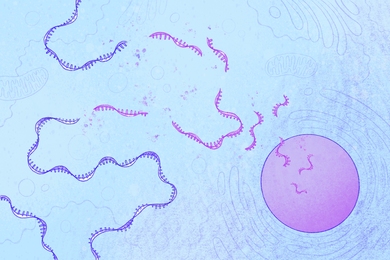
New insights into a hidden process that protects cells from harmful mutations
Research reveals how cells may activate a compensation system that can reduce the effects of harmful genetic mutations. This could inform gene therapy development.
Research reveals how cells may activate a compensation system that can reduce the effects of harmful genetic mutations. This could inform gene therapy development.
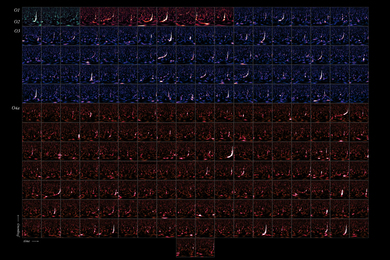
The latest crop of space-time wobbles includes a variety of heavy, fast-spinning, and lopsided colliding black holes.

Assistant Professor Alison Ringel will investigate the intersection of immunology and aging biology, aiming to define mechanisms that underlie aging-related decline, thanks to a grant from the foundation.

Offering substantial prize funding alongside workshops, classes, and mentorship, the initiative helps translate early-stage biotech research into venture-ready innovation.

In research that could help elucidate humans’ role in global warming, scientists showed how three major natural events impacted global atmospheric temperatures.

Zuri Sullivan, a new assistant professor of biology and Whitehead Institute member, studies why we get sick, and whether aspects of illness, such as disrupted appetite, contribute to host defense.
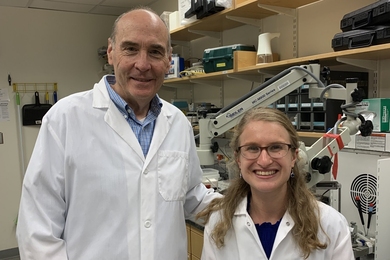
Researchers find mice modeling the autism spectrum disorder fragile X syndrome exhibit the same pattern of differences in low-frequency waves as humans — a new marker for treatment studies.

Annual award honors early-career researchers for creativity, innovation, and research accomplishments.
A new method developed at MIT could root out vulnerabilities and improve LLM safety and performance.

These ricocheting ruptures may be more common than previously thought.

Seven faculty members, along with 12 additional alumni, are honored for significant contributions to engineering research, practice, and education.
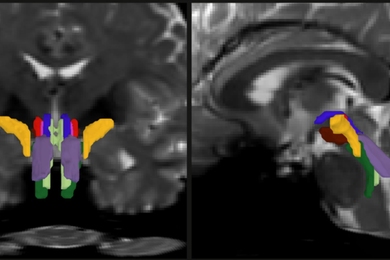
Opening a new window on the brainstem, a new tool reliably and finely resolves distinct nerve bundles in live diffusion MRI scans, revealing signs of injury or disease.

A new study suggests aerobic respiration began hundreds of millions of years earlier than previously thought.
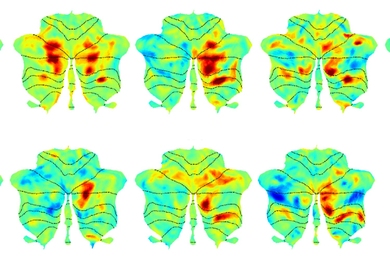
Researchers find a component of the brain’s dedicated language network in the cerebellum, a region better known for coordinating movement.

For the first time, the new scope allowed physicists to observe terahertz “jiggles” in a superconducting fluid.