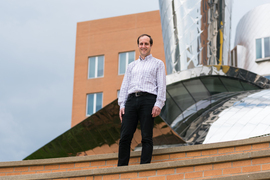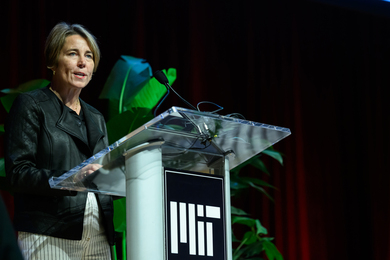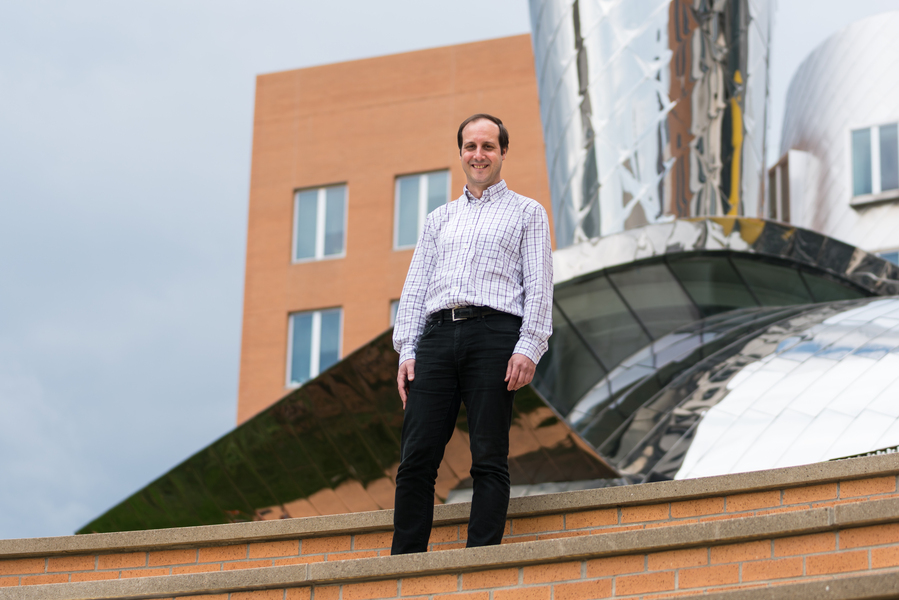
Antonio Torralba, Delta Electronics Professor of Electrical Engineering and Computer Science and faculty head of artificial intelligence and decision-making at MIT, has been named to the 2025 cohort of Association for Computing Machinery (ACM) Fellows. He shares the honor of an ACM Fellowship with three MIT alumni: Eytan Adar ’97, MEng ’98; George Candea ’97, MEng ’98; and Gookwon Edward Suh SM ’01, PhD ’05.
A principal investigator within the Computer Science and Artificial Intelligence Laboratory, Torralba received his BS in telecommunications engineering from the Universitat Politècnica de Catalunya, in Spain, in 1994, and a PhD in signal, image, and speech processing from the Institut National Polytechnique de Grenoble, in France, in 2000. At different points in his MIT career, he has been director of both the MIT Quest for Intelligence (now the MIT Siegel Family Quest for Intelligence) and the MIT-IBM Watson AI Lab.
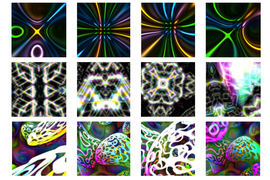
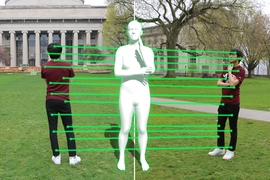
Torralba’s research focuses on computer vision, machine learning, and human visual perception; as he puts it, “I am interested in building systems that can perceive the world like humans do.” Alongside Phillip Isola and William Freeman, he recently co-authored “Foundations of Computer Vision,” an 800-plus page textbook exploring the foundations and core principles of the field.
Among other awards and recognitions, he is the recipient of the 2008 National Science Foundation Career award; the 2010 J. K. Aggarwal Prize from the International Association for Pattern Recognition; the 2017 Frank Quick Faculty Research Innovation Fellowship; the Louis D. Smullin (’39) Award for Teaching Excellence; and the 2020 PAMI Mark Everingham Prize. In 2021, he was awarded the inaugural Thomas Huang Memorial Prize by the Pattern Analysis and Machine Intelligence Technical Committee and was named a fellow of the Association for the Advancement of Artificial Intelligence. In 2022, he received an honorary doctoral degree from the Universitat Politècnica de Catalunya.
ACM fellows, the highest honor bestowed by the professional organization, are registered members of the society selected by their peers for outstanding accomplishments in computing and information technology and/or outstanding service to ACM and the larger computing community.