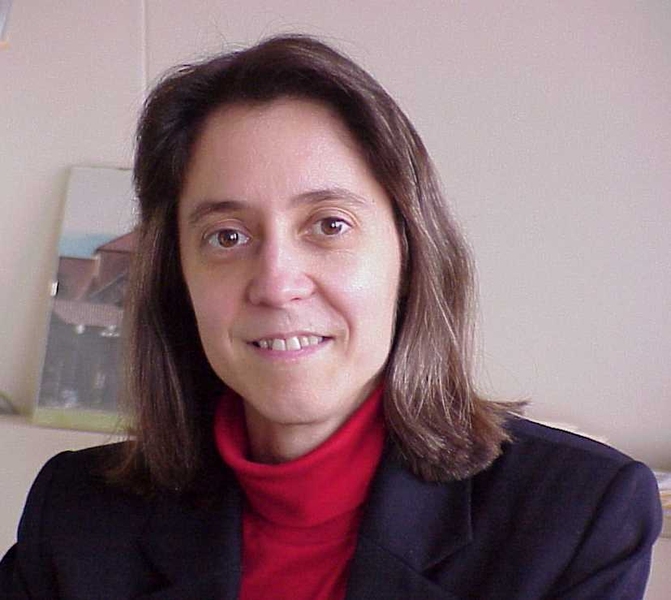
Judy Hoyt, a pioneer in semiconductor research and retired MIT professor of electrical engineering and computer science, passed away on Aug. 6. She was 65.
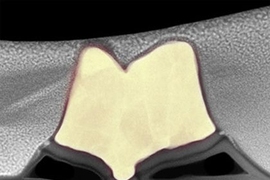
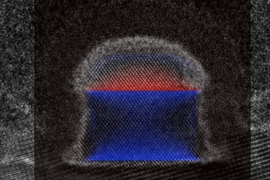
Hoyt is known well for her groundbreaking research on strained silicon semiconductor materials, work which helped greatly decrease the size of integrated circuits. Her most recognized contribution was the first demonstration of the incorporation of lattice strain as a means to enhance performance in scaled silicon devices, a key concept behind the continuation of Moore’s Law roadmap for the last 20 years. This contribution has informed virtually every high-performance chip manufactured today, leading directly to the growth of both the $500 billion semiconductor industry and the multi-trillion-dollar electronics market.
Hoyt’s contributions earned her the 2011 IEEE Andrew S. Grove Award (together with Eugene Fitzgerald) and the 2018 University Research Award by the Semiconductor Industry Association in collaboration with the Semiconductor Research Corporation.
Hoyt was a native of Garden City in Long Island, New York. She was not only a talented musician, simultaneously leading her high school band and a swing jazz band, but also a dedicated student, who earned the rank of valedictorian before going on to earn her undergraduate degree in physics and applied mathematics at the University of California at Berkeley in 1980, and her MS and PhD degrees in applied physics at Stanford University in 1983 and 1987, respectively.
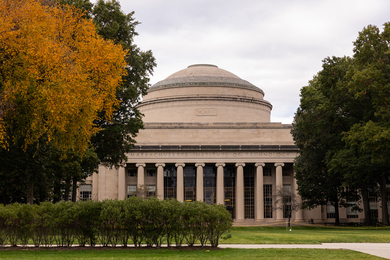
After graduation, she stayed on at Stanford as research associate and then senior research associate before joining the faculty of the MIT Department of Electrical Engineering and Computer Science as professor in 2000. From 2005 to 2018, she served as an associate director within the Microsystems Technology Laboratories (MTL) at MIT. She was also an effective proponent and key contributor to the configuration and design of the new MIT.nano building.
Throughout her academic career, Hoyt was a dedicated teacher and mentor to her students at both Stanford and MIT, many of whom went on to distinguished careers in the semiconductor industry.
Outside of MIT, she was an avid cyclist who loved the outdoors, and animals; her lifelong love of music sustained her as well.
All at MIT who knew Hoyt will remember her as a gentle soul and a caring friend whose puckish humor and unassuming demeanor hid a stern wisdom, unimpeachable sense of responsibility, and passionate loyalty to her students and her family.
She is survived by sister Barbara, brothers Robert and John, and her father George, as well as longtime close friends and colleagues Conor Rafferty and Dimitri Antoniadis.
Contributions in Hoyt’s memory can be made to St. Jude’s Hospital or the Jimmy Fund in Boston.