Closing in on superconducting semiconductors
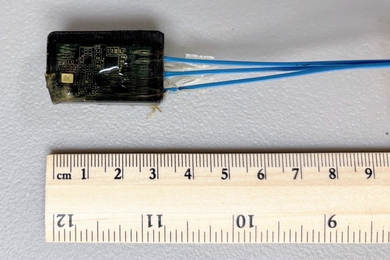
Plasma Science and Fusion Center researchers created a superconducting circuit that could one day replace semiconductor components in quantum and high-performance computing systems.
Longtime MIT electrical engineer receives SPIE Frits Zernike Award for Microlithography in recognition of outstanding accomplishments in microlithographic technology.
By performing deep learning at the speed of light, this chip could give edge devices new capabilities for real-time data analysis.
MIT Lincoln Laboratory developed the system, launched recently aboard the QZSS-HP satellite, for a collaborative effort between the US Space Force and Japan.
The system will support US Army missions.
Researchers achieved a type of coupling between artificial atoms and photons that could enable readout and processing of quantum information in a few nanoseconds.
Preventing 3D integrated circuits from overheating is key to enabling their widespread use.
Lincoln Laboratory is transitioning tools to the 618th Air Operations Center to streamline global transport logistics.
The US Air Force and MIT renew contract for operating the federally funded R&D center, a long-standing asset for defense innovation and prototyping.
Federal Laboratory Consortium award recognizes excellence in commercializing small microwave sounders expected to improve weather forecasts.
SPROUT, developed by Lincoln Laboratory and University of Notre Dame researchers, is a vine robot capable of navigating under collapsed structures.
MIT researchers developed a photon-shuttling “interconnect” that can facilitate remote entanglement, a key step toward a practical quantum computer.
First responders worldwide adopt Lincoln Laboratory's Next-Generation Incident Command System for enhanced situational awareness and coordination during emergencies.
Lincoln Laboratory and MIT researchers are creating new types of bioabsorbable fabrics that mimic the unique way soft tissues stretch while nurturing growing cells.
Eight researchers, along with 13 additional alumni, are honored for significant contributions to engineering research, practice, and education.