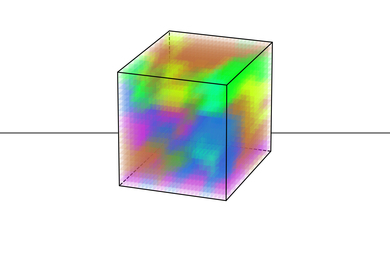
The hidden structure behind a widely used class of materials
Relaxor ferroelectrics have been used in electronics and sensors for decades, but the source of their unique properties was a mystery until now.
Relaxor ferroelectrics have been used in electronics and sensors for decades, but the source of their unique properties was a mystery until now.

Neural interaction with bacteria has important effects on animal brains. A new study investigates how neurons sense bacteria by revealing, in nematodes, the bacterial signals that a key neuron detects.


President Sally Kornbluth spoke in front of a packed crowd about growing challenges to the U.S. research ecosystem as funding for America’s top research universities becomes increasingly strained.

Economists find that in metro areas with more immigration, nurses are spending more time with elderly patients.

A new debiasing technique called WRING avoids creating or amplifying biases that can occur with existing debiasing approaches.

Building on a long-standing MIT–IBM collaboration, the new lab will chart the convergence of AI, algorithms, and quantum computing.

Based on the physics of how the instrument produces sound, the model could help violin makers in the design process.

A new method could bring more accurate and efficient AI models to high-stakes applications like health care and finance, even in under-resourced settings.

MIT researchers’ new fabrication technique can produce soft, microscopic structures with magnetically activated moving parts.
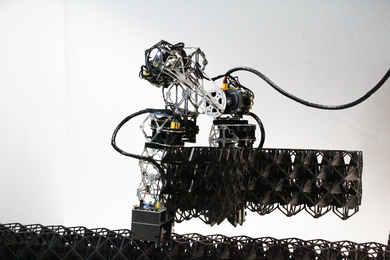
New research suggests constructing a simple building from interlocking subunits should be mechanically feasible and have a much smaller carbon footprint.

A new study reveals cellular pathways that appear to underlie some differences in physical fitness.

MIT researchers leveraged a surprise discovery to devise a faster and more precise biomedical imaging technique.

The “EnergAIzer” method generates reliable results in seconds, enabling data center operators to efficiently allocate resources and reduce wasted energy.

Ultra-efficient chip design enables extremely strong cryptography algorithms to run on energy-constrained edge devices.