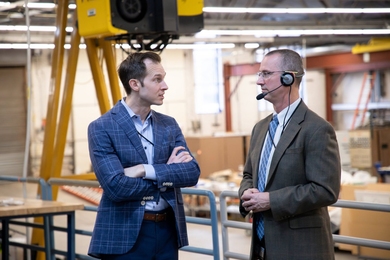
PSFC showcases technologies applicable to both fusion and geothermal energy during representative’s visit
Rep. Jake Auchincloss visits the MIT Plasma Science and Fusion Center to learn about scaling geothermal energy.
Rep. Jake Auchincloss visits the MIT Plasma Science and Fusion Center to learn about scaling geothermal energy.
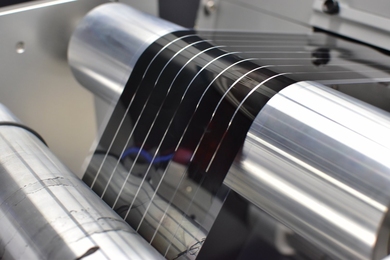
This award-winning startup with roots at the MIT Energy Initiative is developing lightweight, flexible, high-efficiency solar energy films designed to be used on roofs, walls, and any curved surface.

Geothermal innovators at MIT and elsewhere are seeking deeper and hotter rocks to generate electricity at scale.

Global Change Outlook report for 2025 shows how accelerated action can reduce climate risks and improve sustainability outcomes, while highlighting potential geopolitical hurdles.
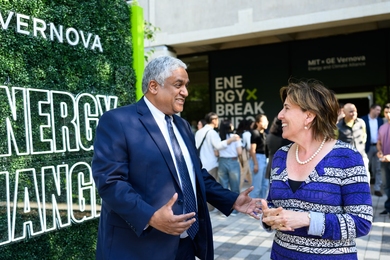
Five-year collaboration between MIT and GE Vernova aims to accelerate the energy transition and scale new innovations.
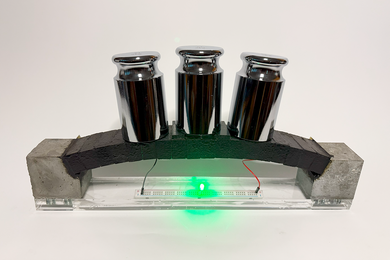
Improved carbon-cement supercapacitors could turn the concrete around us into massive energy storage systems.
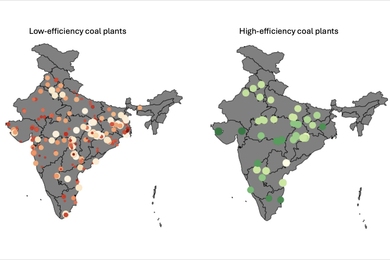
A detailed MIT analysis identifies some promising options but also raises unexpected concerns.
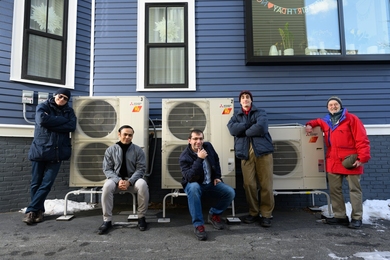
A new MIT study identifies steps that can lower not only emissions, but also costs, across the combined electric power and natural gas industries that now supply heating fuels.

Providing electricity to power-hungry data centers is stressing grids, raising prices for consumers, and slowing the transition to clean energy.

As the use of generative AI continues to grow, Lincoln Laboratory's Vijay Gadepally describes what researchers and consumers can do to help mitigate its environmental impact.

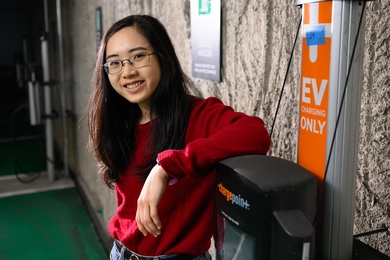
The spending increases were particularly pronounced for businesses within 100 yards of charging stations, and for businesses in low-income areas.
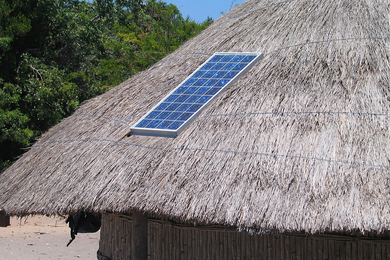
MIT Energy Initiative spinoff Waya Energy helps countries work toward universal access to electricity.

Electric fields shared among neurons via “ephaptic coupling” provide the coordination necessary to assemble the engrams that represent remembered information.

Admired teacher and mentor was a longtime member of the Laboratory for Electromagnetic and Electronic Systems and the High Voltage Research Laboratory, and champion of the VI-A Internship program.