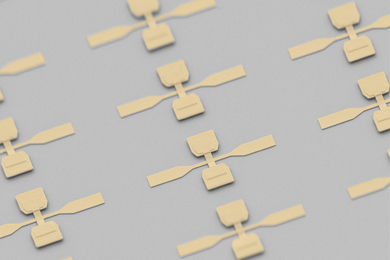
Turning molecules into reliable electronic devices
A new fabrication platform integrates molecules into electronic devices, opening the door to emerging computing technologies.
A new fabrication platform integrates molecules into electronic devices, opening the door to emerging computing technologies.
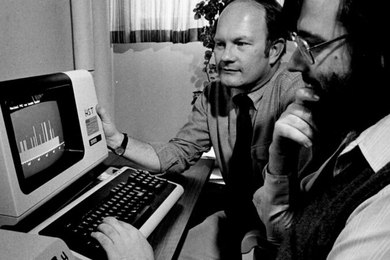
The visionary PhysioNet platform launched 25 years ago, based on a system developed at MIT in the 1970s. It has become one of the most comprehensive biomedical and clinical data repositories in existence.

Initial research projects advance national priorities across natural resources, manufacturing, nuclear physics, and more.
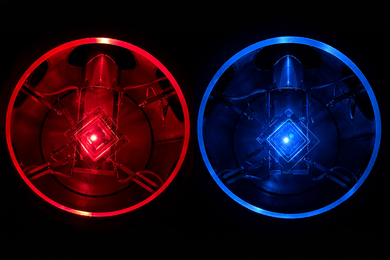
Researchers found a simple solution for extending the lifespans of LEDs made from glowing microscopic particles called quantum dots.

What’s more, the superconducting states get stronger under conditions expected to kill them.
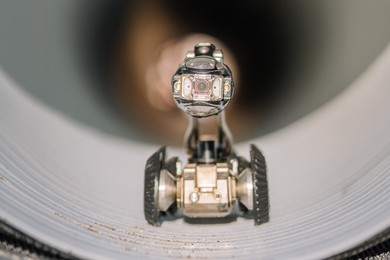
Researchers combined an efficient algorithm with dedicated hardware to rapidly generate 3D maps for navigation using minimal memory and power.

Ten faculty members have been granted tenure in five units across MIT’s School of Engineering.
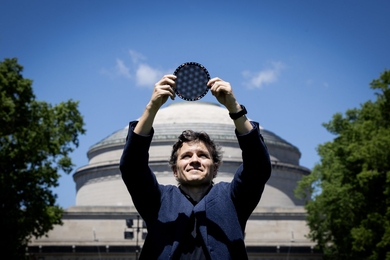
The MIT physicist shares the honor with two others for foundational research establishing the field of twistronics.

By using a thin layer of diamond to manage excessive heat, researchers can boost the speed and energy-efficiency of next-generation wireless devices.

A new technique helps scientists measure a phenomenon that can cause quantum circuits to perform differently than expected, increasing the error in computations.

With a novel design, MIT researchers overcame a stubborn problem that has limited the effectiveness of chip-based systems for lidar.
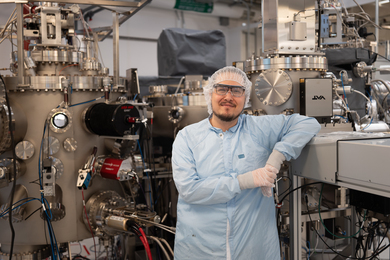
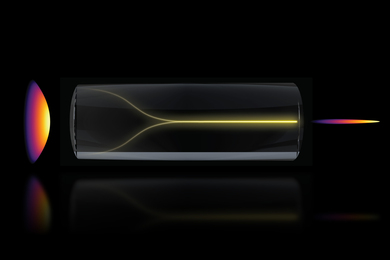
MIT researchers leveraged a surprise discovery to devise a faster and more precise biomedical imaging technique.
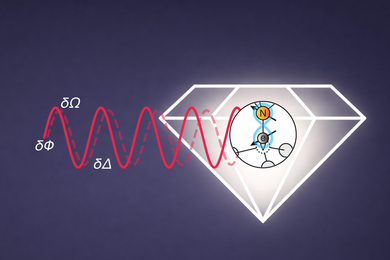
The devices represent a key step toward practical quantum sensing, with applications in biomedical sensing, materials characterization, and more.

Researchers at MIT, Mass General Brigham, and Harvard Medical School developed a deep-learning model to forecast a patient’s heart failure prognosis up to a year in advance.