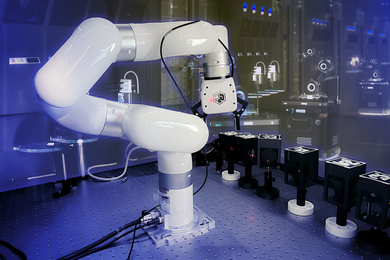
Robotic lab sets up and runs optics experiments on demand
The autonomous system could speed up testing of high-tech materials for applications such as solar cells, sensors, video displays, and quantum technologies.
The autonomous system could speed up testing of high-tech materials for applications such as solar cells, sensors, video displays, and quantum technologies.
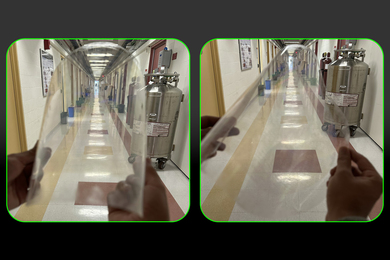
This scalable process produces high-performance chips for applications like discreet wearables or pliable augmented-reality displays.
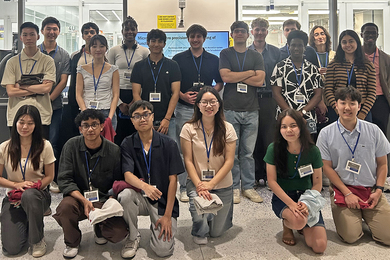
The 2026 NEMC Hub-sponsored externship gave students access to world-class research, advanced semiconductor manufacturing, and professionals driving innovation across the Northeast.

The tunable device controls mid-infrared light for more precise thermal imaging, chemical sensing, or pollution monitoring.
The FUTUR-IC research program integrates electronics and photonics in microchip systems.
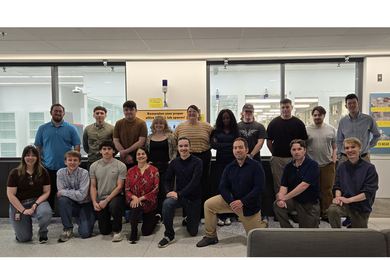
A hands-on boot camp teaches integrated photonics to community and four-year college students in the region.
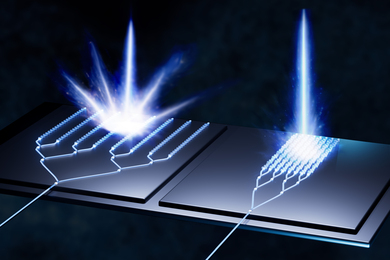
With a novel design, MIT researchers overcame a stubborn problem that has limited the effectiveness of chip-based systems for lidar.
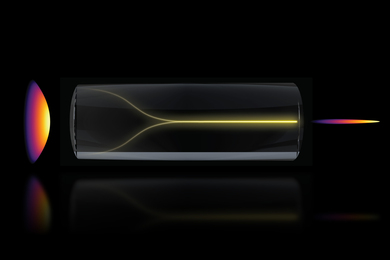
MIT researchers leveraged a surprise discovery to devise a faster and more precise biomedical imaging technique.
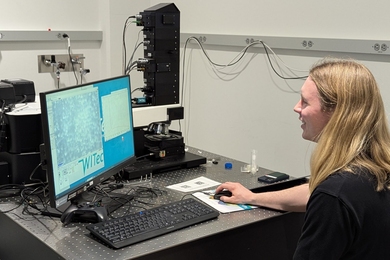
Startup accelerator program grows to over 30 companies, almost half of them with MIT pedigrees.
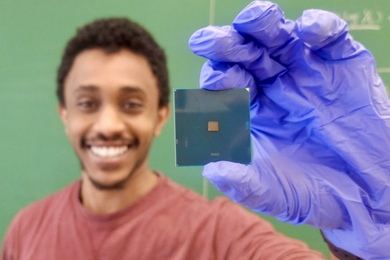
One year in, MIT’s hands-on 6-5 (Electrical Engineering With Computing) degree program is already one of the most popular majors among first-year students.
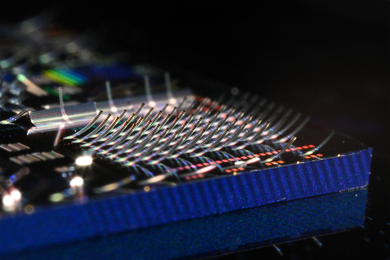
Light-emitting structures that curl off the chip surface could enable advanced displays, high-speed optical communications, and larger-scale quantum computers.
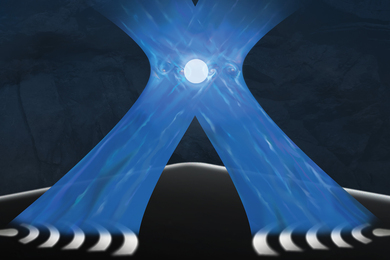
New technique could improve the scalability of trapped-ion quantum computers, an essential step toward making them practically useful.
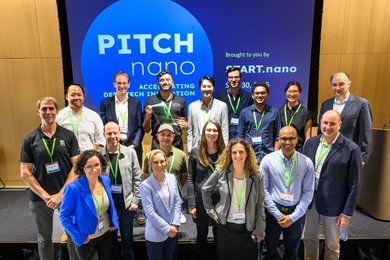
Twelve START.nano companies competed for the grand prize of nanoBucks to be used at MIT.nano’s facilities.

Lincoln Laboratory transitioned its optical-amplifier technology to Bridger Photonics for commercialization, enhancing US energy security and efficiency.
Over 50 years at MIT, the condensed-matter physicist led the development of photonic crystals, translating discoveries into wide-ranging applications in energy, medicine, and defense.