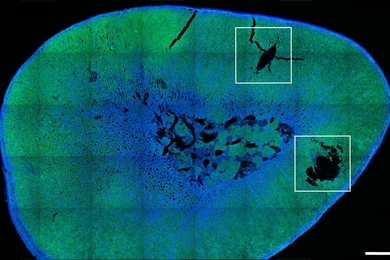
Researchers achieve remote control of hormone release
Using magnetic nanoparticles, scientists stimulate the adrenal gland in rodents to control release of hormones linked to stress.
Using magnetic nanoparticles, scientists stimulate the adrenal gland in rodents to control release of hormones linked to stress.
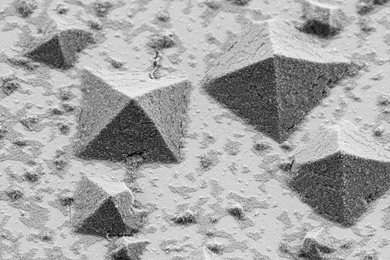
DNA-based self-assembling system sheds light on processes essential for semiconductors and nanotechnology.

Spanish conquerors depended on indigenous expertise to keep up their munitions supplies, archaeologists have found.
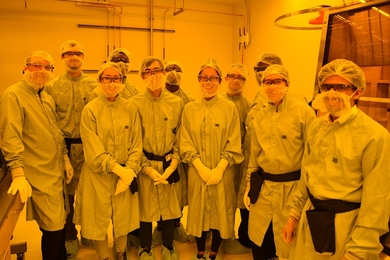
Micro/nano processing course fabricates devices in MIT.nano’s facilities.

Graduate engineering program is No. 1 in the nation; MIT Sloan is No. 5.

New technique allows for more precise measurements of deformation characteristics using nanoindentation tools.

Faculty members recognized for excellence via a diverse array of honors, grants, and prizes over the last quarter.

Institute ranks second in five subject areas.
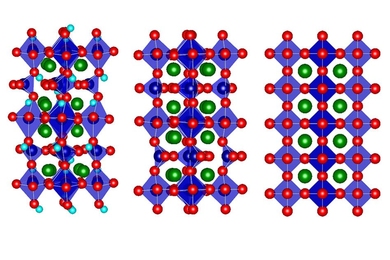
Most materials have a fixed ability to conduct heat, but applying voltage to this thin film changes its thermal properties drastically.
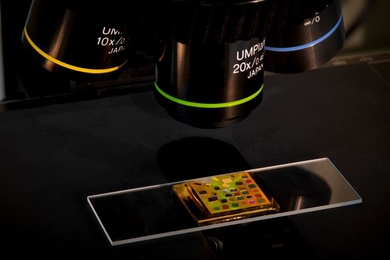
Simple chip powered by quantum dots allows standard microscopes to visualize difficult-to-image biological organisms.
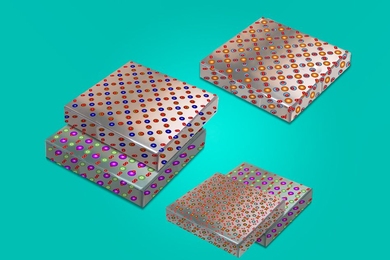
Next-generation devices made with new “peel and stack” method may include electronic chips worn on the skin.

An MIT team has devised a lithium metal anode that could improve the longevity and energy density of future batteries.
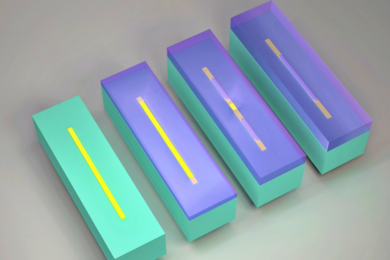
MIT researchers grow perfectly shaped germanium tunnels on silicon oxide with controllable length.

The new method could impact devices used in imaging, machine learning, and more.

The 2019-20 School of Engineering MathWorks Fellows are using MATLAB and Simulink to advance discovery and innovation across disciplines.