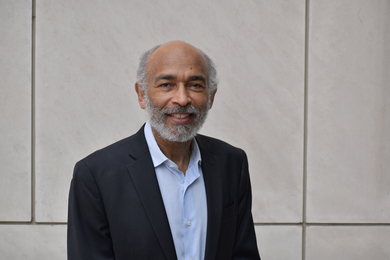
Emery Brown wins a share of 2022 Gruber Neuroscience Prize
Brown and three other scientists recognized for advancing statistical, theoretical analyses of neuroscience data.
Brown and three other scientists recognized for advancing statistical, theoretical analyses of neuroscience data.

Study shows AI can identify self-reported race from medical images that contain no indications of race detectable by human experts.
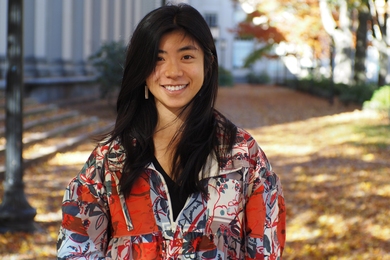
Graduate student Sarah Cen explores the interplay between humans and artificial intelligence systems, to help build accountability and trust.

MIT and Mass General Brigham researchers and physicians connect in person to bring AI into mainstream health care.

Researchers devise an efficient protocol to keep a user’s private information secure when algorithms use it to recommend products, songs, or shows.
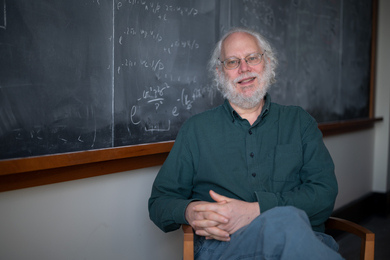
The MIT professor is honored for extraordinary accomplishments in mathematics, computer science, and quantum physics.

Have a question about numerical differential equations? Odds are this CSAIL research affiliate has already addressed it.

Workshop hosted by MIT’s Climate and Sustainability Consortium, MIT-IBM Watson AI Lab, and the MIT Schwarzman College of Computing highlights how new approaches to computing can save energy and help the planet.
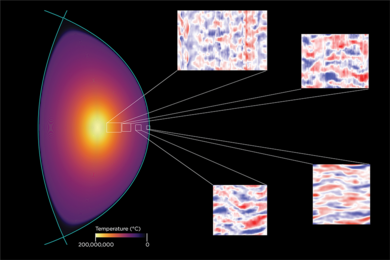
Linking techniques from machine learning with advanced numerical simulations, MIT researchers take an important step in state-of-the-art predictions for fusion plasmas.

MIT researchers can now estimate how much information data are likely to contain, in a more accurate and scalable way than previous methods.
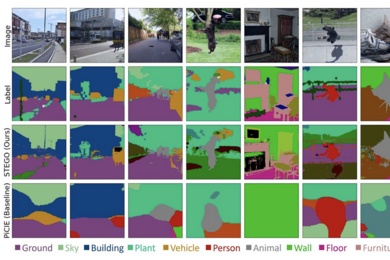
MIT CSAIL scientists created an algorithm to solve one of the hardest tasks in computer vision: assigning a label to every pixel in the world, without human supervision.
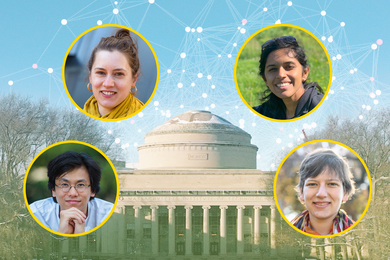
A multidisciplinary team of graduate students helps infuse ethical computing content into MIT’s largest machine learning course.
The programs are designed to foster an understanding of how artificial intelligence technologies work, including their social implications.
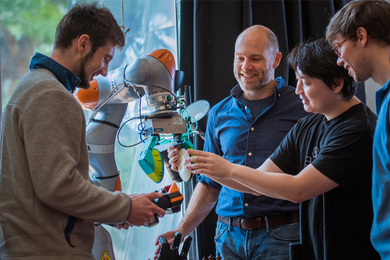
A new robotic manipulation course provides a broad survey of state-of-the-art robotics, equipping students to identify and solve the field’s biggest problems.
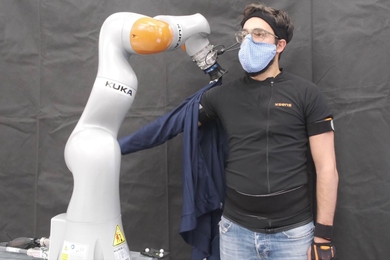
MIT researchers design a robot that has a trick or two up its sleeve.