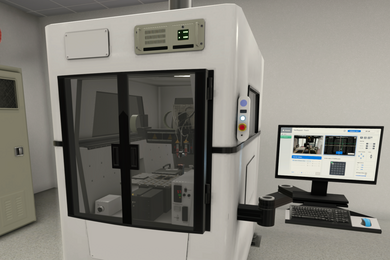
Desktop simulation of MIT.nano die bonder enables virtual tool training
Digital twins to expand training capabilities through virtual reality.
Digital twins to expand training capabilities through virtual reality.
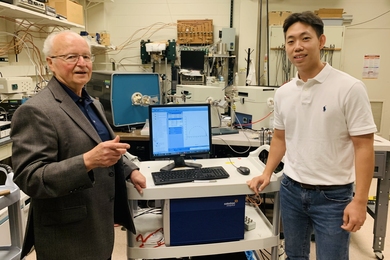
MIT researchers find that changing the pH of a system solves a decades-old problem.
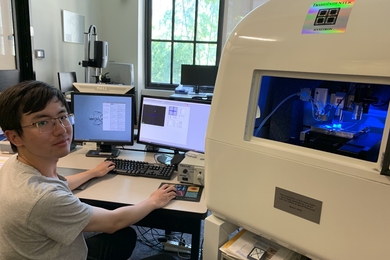
The materials’ stiffness increases up to 40 percent, in a reversible effect, the researchers report in a study that also explains the phenomenon's atomic origins.
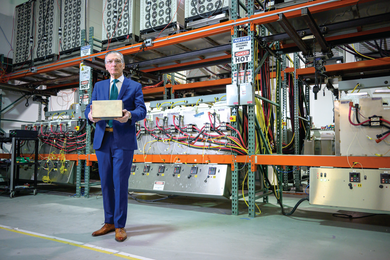
The MIT professor's work could enable long-term storage of renewable energy.
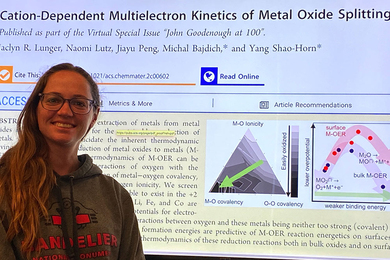
New understanding of metal electrolysis could help optimize production of metals like lithium and iron.
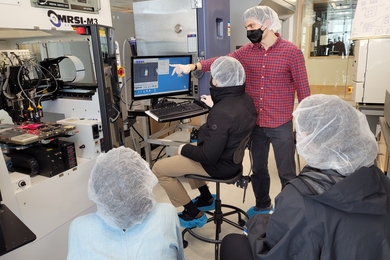
MIT’s LEAP at MIT.nano is the first in a network to advance manufacturing for the state.
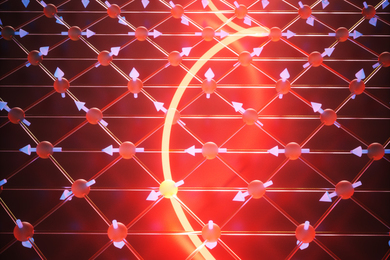
Discovery shows for the first time that multiferroic properties can exist in a two-dimensional material; could lead to more efficient magnetic memory devices.
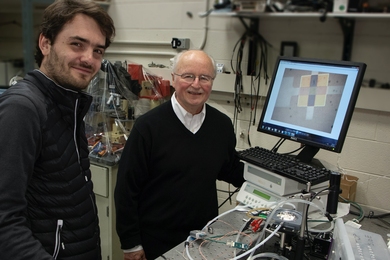
With many devices depending on the motion of ions, light could be used as a switch to turn ion motion on and off.
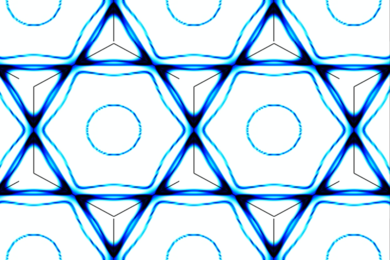
New work on superconducting kagome metal will aid design of other unusual quantum materials, with many potential applications.
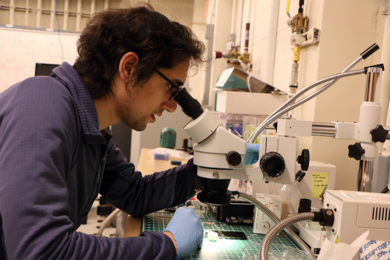
Work has potential applications in quantum computing, and introduces new way to plumb the secrets of superconductivity.
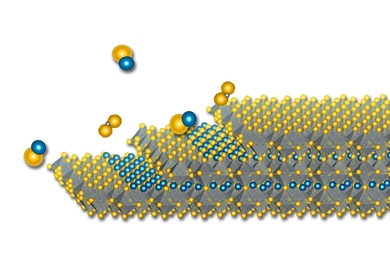
Ultrastable and made of inexpensive, nontoxic elements, chalcogenide perovskites could find applications in solar cells, lighting, and more.

Current and former MIT researchers find novel tools can improve the sustainability of road networks on a limited budget.
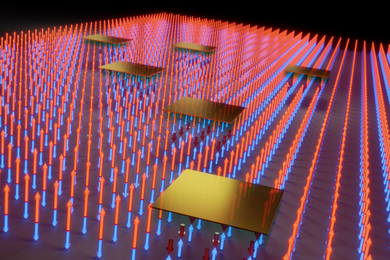
Reversible system can flip the magnetic orientation of particles with a small voltage; could lead to faster data storage and smaller sensors.

MIT researchers find emissions of U.S. buildings and pavements can be reduced by around 50 percent even as concrete use increases.
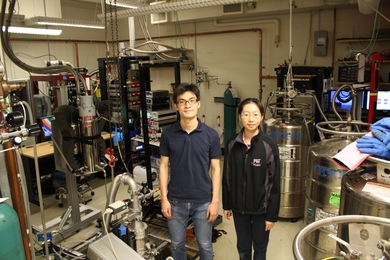
New property in an ultrathin cousin of graphene could allow for much denser computer memory.