
A faster way to solve complex planning problems
By eliminating redundant computations, a new data-driven method can streamline processes like scheduling trains, routing delivery drivers, or assigning airline crews.
By eliminating redundant computations, a new data-driven method can streamline processes like scheduling trains, routing delivery drivers, or assigning airline crews.
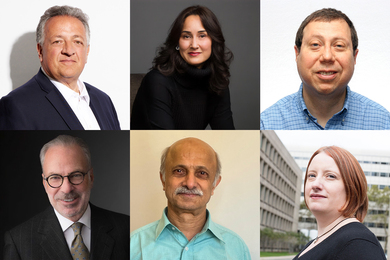
The American Association for the Advancement of Science recognizes six current affiliates and 27 additional MIT alumni for their efforts to advance science and related fields.

A new international collaboration unites MIT and maritime industry leaders to develop nuclear propulsion technologies, alternative fuels, data-powered strategies for operation, and more.

Investment in analytics may also benefit college teams and fields beyond sports, a new study shows.

New theoretical approach for generating quantum states could lead to improved accuracy and reliability of information and decision systems.

Engineers developed a planning tool that can help independent entities decide when they should invest in joint projects.
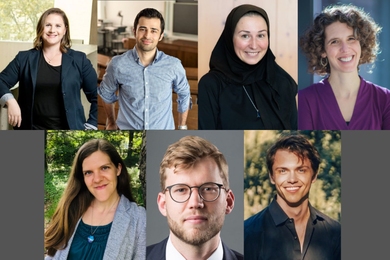
Annual award honors early-career researchers for creativity, innovation, and research accomplishments.
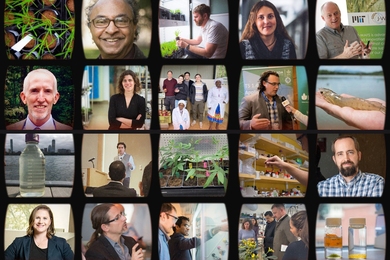
For the past decade, the Abdul Latif Jameel Water and Food Systems Lab has strengthened MIT faculty efforts in water and food research and innovation.

Accenture Fellow Shreyaa Raghavan applies machine learning and optimization methods to explore ways to reduce transportation sector emissions.

MIT researchers developed a new approach for assessing predictions with a spatial dimension, like forecasting weather or mapping air pollution.

Starting with a single frame in a simulation, a new system uses generative AI to emulate the dynamics of molecules, connecting static molecular structures and developing blurry pictures into videos.
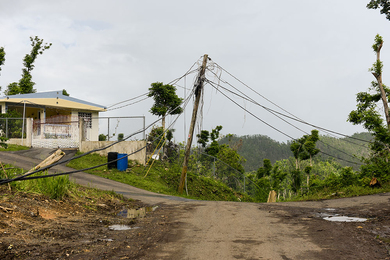
Using the island as a model, researchers demonstrate the “DyMonDS” framework can improve resiliency to extreme weather and ease the integration of new resources.
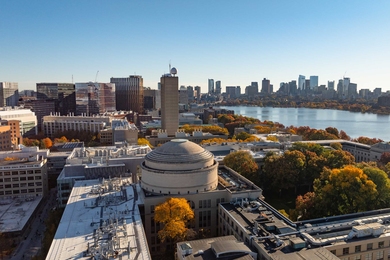
Professor Jessika Trancik’s course helps students understand energy levers for addressing climate change at the macro and micro scales.

Five MIT faculty members and two additional alumni are honored with fellowships to advance research on beneficial AI.

First organized MIT delegation highlights the Institute's growing commitment to addressing climate change by showcasing research on biodiversity conservation, AI, and the role of local communities.