Conducted by the Office of the Provost, Institutional Research, the annual Doctoral Student Exit Survey found that 45 percent of respondents intended to remain in the Bay State. This compares to roughly 6 percent of those earning degrees who indicated they attended high school in Massachusetts — a rough gauge of who among degree recipients were native to the state.
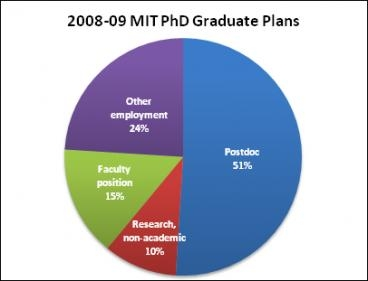
In addition to geographic intentions, the survey also gathered employment plans. Fully half of 2008-09 PhD graduates were moving forward into postdoc positions. This percentage was higher (57 percent) for those in the sciences, and lower (47 percent) for those graduating in the engineering disciplines. Among those graduates not pursuing a postdoc, the largest portion (15 percent) was headed into non-academic research positions, followed by roughly 10 percent who were seeking or had secured faculty positions.
The Doctoral Student Exit Survey is administered each academic year. Fifty-four percent of the 607 doctoral degree recipients during the 2008-09 academic year completed the most recent survey. Detailed question-by-question results can be found on the Institutional Research web site.
Nearly half of 2008-09 graduates from MIT PhD programs planned to stay in Massachusetts after completing their studies, according to the annual Doctoral Student Exit Survey.
Publication Date:
Credits:
Institutional Research