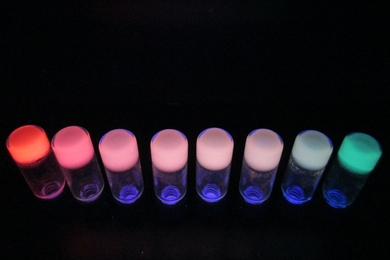
The promise of fluorescent polymer gels
Color-changing materials could be used to detect structural failure in energy-related equipment.
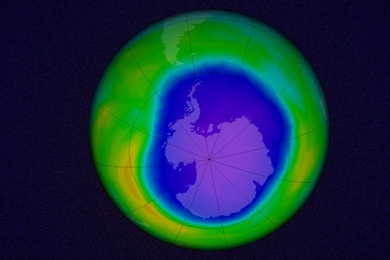
Scientists observe first signs of healing in the Antarctic ozone layer
September ozone hole has shrunk by 4 million square kilometers since 2000.
Wireless, wearable toxic-gas detector
Inexpensive sensors could be worn by soldiers to detect hazardous chemical agents.
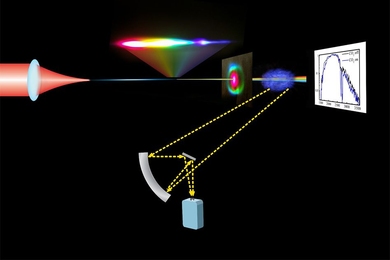
New mid-infrared laser system could detect atmospheric chemicals
Laser pulses produce glowing plasma filaments in open air, could enable long-distance monitoring.
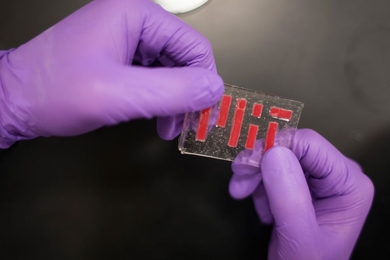
Tough new hydrogel hybrid doesn’t dry out
Water-based material could be used to make artificial skin, longer-lasting contact lenses.
Eight from MIT awarded 2016 Fulbright grants
Grantees will spend the 2016-2017 academic year conducting research abroad.

Klaus Biemann, professor emeritus of chemistry, dies at 89
Regarded as the father of organic mass spectrometry, longtime MIT professor solved many problems in protein structure.

A new approach to chemical synthesis
Communesins, originally found in fungus, could hold potential as cancer drugs.

Thirteen MIT students awarded National Defense Science and Engineering Graduate Fellowships
Honor recognizes individuals who have demonstrated ability and special aptitude for advanced training in science and engineering.
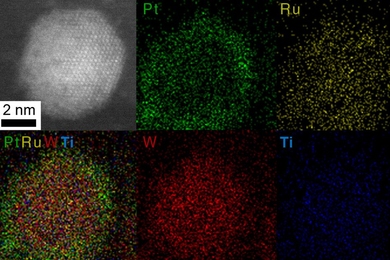
New nanoparticle catalysts could reduce need for precious metals
Process from MIT provides improved reactivity with much less platinum.
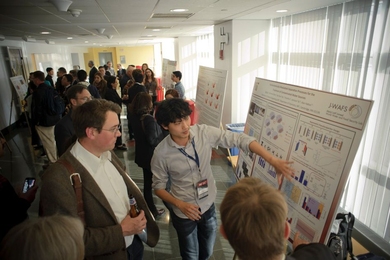
J-WAFS awards $1.3 million in second round of seed grant funding
Principal investigators will receive grants of up to $100,000 per year for up to two years for innovative research on food and water challenges.
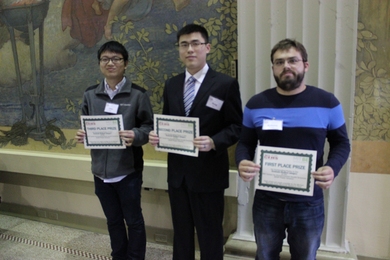
Center for Environmental Health Sciences selects 2016 poster winners
Annual poster session showcases recent work on biological effects of exposure to environmental agents.
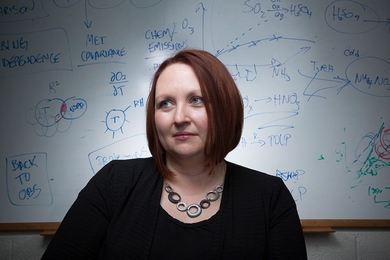
There’s something in the air
Colette Heald studies atmospheric gases and particles, and how they affect air quality and climate.