Skip to content ↓

2020 Awards Convocation recognizes and honors MIT community members

Students, faculty, staff, alumni, and friends are recognized for their outstanding contributions to MIT.

Press Contact:

Stephanie Tran
Phone: 617-253-6927
Close
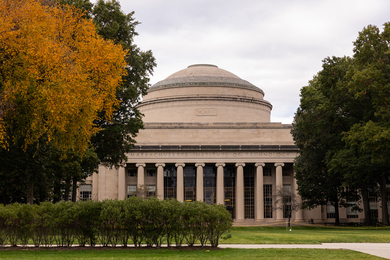
More than 80 awardees were recognized for accomplishments in leadership, academics and teaching, public service, community building, diversity and inclusion, athletics, the arts, and service to MIT.
Caption:
More than 80 awardees were recognized for accomplishments in leadership, academics and teaching, public service, community building, diversity and inclusion, athletics, the arts, and service to MIT.
Credits:
Image: Wing Ngan

Though Covid-19 has prevented community members from gathering on campus for the annual Awards Convocation celebration, the selection committees have announced the recipients of more than 40 awards typically presented at the celebration.

In total, more than 80 awardees were recognized for accomplishments in leadership, academics and teaching, public service, community building, diversity and inclusion, athletics, the arts, and service to MIT.

The nomination process began in early February and lasted several weeks into the spring semester. Award recipients are selected by committees convened for each award. This year, MIT community members submitted over 300 nominations across all award categories, with each nomination telling a story about the potential honoree’s achievements.

The Awards Convocation is one of MIT’s largest awards ceremony, drawing on offices, departments, and people from across the Institute including the arts, athletics, student life, academics, alumni, staff, faculty and students. Visit the Awards Convocation website for more information on each award and to see the full list of 2020 award recipients.

Related Links

Related Topics

Related Articles

More MIT News

Globular blue and white orbs "examining" single-stranded RNA products and marking them with green checks or red x's

Why are some bacterial genes high in purines?

In certain species of bacteria, the answer lies in shielding RNA transcripts from a quality-control factor called Rho. Understanding the requirements for expressible sequences is critical for expression engineering of therapeutic agents.

Read full story

Rich Nielsen, Volha Charnysh, Kevin Dorst, and Emily Richmond Pollock seated at a table, talking

Building a scholarly community

The SHASS Faculty Fellows Program, administered by the MIT Human Insight Collaborative, is fostering new research projects and creating space for supportive and interdisciplinary discussion.

Read full story