In 2011, Nicholas Okafor was part of the first class of the MIT Online Science, Technology, and Engineering Community (MOSTEC) program, a free, six-month online program for rising high school seniors run by the MIT Office of Engineering Outreach Programs (OEOP). Now in its sixth year, MOSTEC gives students an opportunity to take online project courses in STEM fields including robotics, neuroscience, and astrophysics, and to visit MIT’s campus for a weeklong conference filled with hands-on workshops and career seminars.
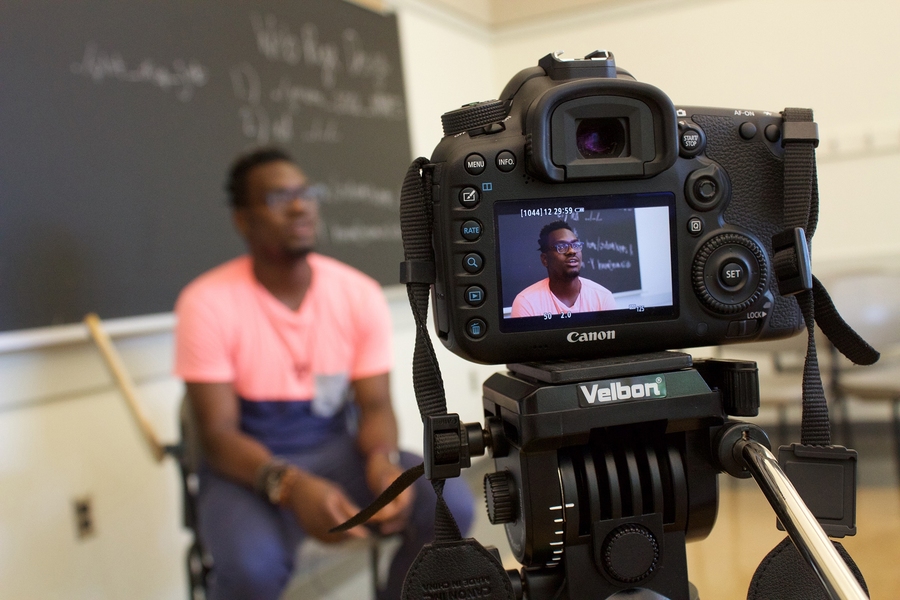
While preparing for this year's MOSTEC students to arrive, Okafor sat down for an interview as part of a video series featuring program alumni. Reflecting on his own experience as a MOSTEC student, he noted how the program helped him realize he could master any STEM field, and how it introduced him to like-minded, high-achieving students from across the country.
“As I entered college,” Okafor says, “I knew that I had this great community all across the nation of people doing incredible things, people from similar backgrounds interested in STEM, who could support me as I went through.”
This summer, after graduating from Washington University in St. Louis with a degree in mechanical engineering and international development, Okafor has returned to MIT to serve as the head online facilitator for MOSTEC before embarking on his personal mission to improve the world through engineering.
“After this summer, I’m looking to see how can I find opportunities abroad that are at the intersection of design, development, and education,” he says. “I really want to see how I can use design as a tool to help empower populations.”
Submitted by: Meredith Lawrence, OEOP | Photo by: Zachary Messick.
Have a creative photo of campus life you'd like to share? Submit it to Scene at MIT.