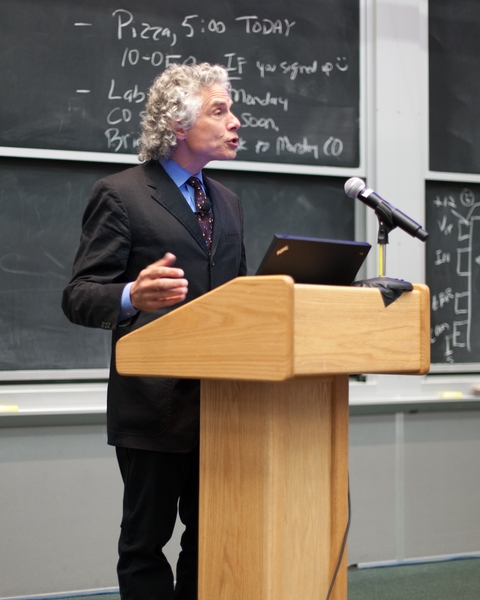
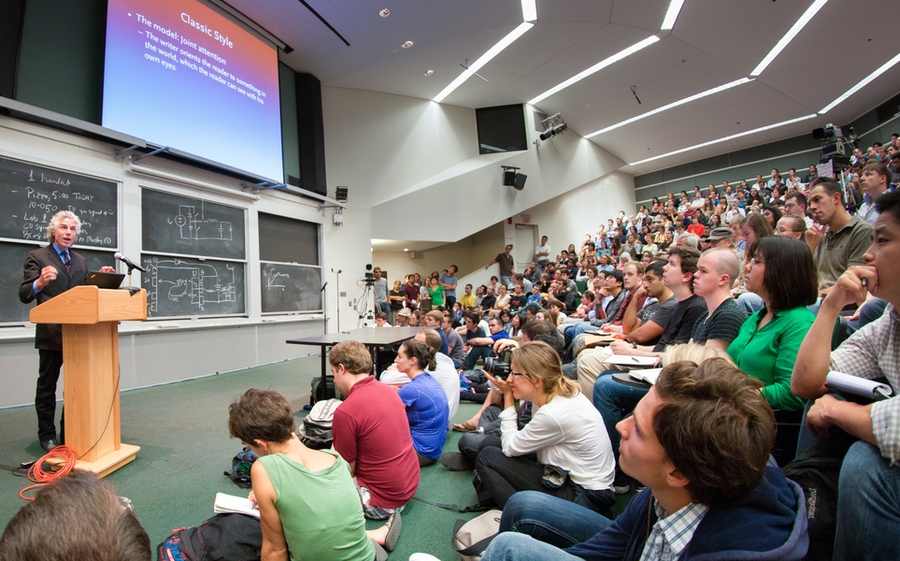
Steven Pinker, noted cognitive scientist and best-selling author, spoke to a standing-room-only crowd at MIT on Sept. 12, delivering the inaugural Department of Nuclear Science and Engineering (NSE) lecture on "Communicating Science and Technology in the 21st Century."
NSE Department Head Richard Lester introduced the lecture by noting that the ability to communicate clearly and engagingly is an essential skill for future engineering leaders and policy-influencers. In his talk, titled “The Sense of Style,” Pinker explained how to communicate complicated scientific ideas clearly and succinctly. His lively hour-long presentation covered a range of topics from the rules in The Elements of Style, to the methods of classic prose, and the intricacies of using language to convey complex ideas.
NSE Department Head Richard Lester introduced the lecture by noting that the ability to communicate clearly and engagingly is an essential skill for future engineering leaders and policy-influencers. In his talk, titled “The Sense of Style,” Pinker explained how to communicate complicated scientific ideas clearly and succinctly. His lively hour-long presentation covered a range of topics from the rules in The Elements of Style, to the methods of classic prose, and the intricacies of using language to convey complex ideas.