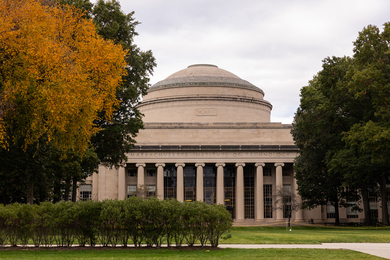
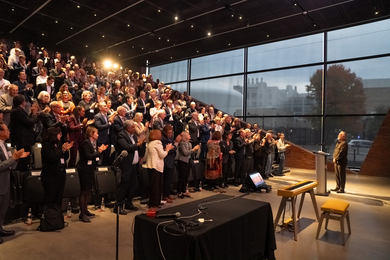
Music composed and performed by MIT’s renowned music faculty and students is now available in The Listening Room — a Web-based collection that showcases the Institute’s longstanding engagement with music.
“The MIT mission is to serve humanity,” says Marcus Thompson, the Robert R. Taylor Professor of Music at MIT, “and the arts provide a powerful way for our students to grow in knowledge and understanding of the human condition.”
The Listening Room launches with 64 recordings organized in four musical categories — Classical, Jazz, World and Faculty Opus. The collection, which is accompanied by photographs, historical notes and comments from composers, will continue to grow steadily with regular additions of new compositions and performances from MIT’s music groups, including the Festival Jazz Ensemble, Wind Ensemble, Chamber Music Society, Galak Tika, Chamber Chorus, Concert Chorus, Rambax, MIT Symphony Orchestra, and soloists from MIT’s conservatory-level Emerson Scholars Program.
“The arts at MIT are rooted in experimentation, risk-taking and imaginative problem-solving,” says Deborah Fitzgerald, the Kenan Sahin Dean of the MIT School of Humanities, Arts, and Social Sciences. “The Listening Room now opens the doors for a worldwide audience to enjoy the MIT musical experience.”