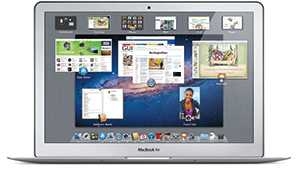
MIT Information Services and Technology (IS&T) now offers full support for Mac OS X Lion version 10.7.2 and higher. Lion is the eighth major revision of Apple’s desktop operating system.
Lion includes many new features that enhance functionality for end users. Several of these enhancements change OS X behaviors present in Leopard (10.5) and Snow Leopard (10.6). Among the most notable for the MIT community are changes to Kerberos, wired DHCP and user navigation. A full list of new features can be found on Apple’s website.
The minimum system requirements to run OS X Lion are as follows:
IS&T has purchased a fixed number of Lion licenses for MIT faculty and staff for use on MIT-owned equipment. Lion can be downloaded, free of charge, from IS&T's Available Software website. IS&T suggests that those planning to upgrade their machine(s) within the next calendar year not install Lion using MIT's volume license.
Documentation about Mac OS X Lion — including upgrade instructions — can be found in the Hermes knowledge base. Users should run Software Update immediately after installing Lion to be updated to 10.7.2.
For assistance with Lion, contact the Help Desk at 617-253-1101 or helpdesk@mit.edu. You can also submit a request online.
Lion includes many new features that enhance functionality for end users. Several of these enhancements change OS X behaviors present in Leopard (10.5) and Snow Leopard (10.6). Among the most notable for the MIT community are changes to Kerberos, wired DHCP and user navigation. A full list of new features can be found on Apple’s website.
The minimum system requirements to run OS X Lion are as follows:
- Mac computer with an Intel Core 2 Duo, Core i3, Core i5, Core i7, or Xeon processor
- 2GB of memory
- 7GB of available space
- If upgrading: OS X 10.6.6 or later (10.6.8 recommended)
IS&T has purchased a fixed number of Lion licenses for MIT faculty and staff for use on MIT-owned equipment. Lion can be downloaded, free of charge, from IS&T's Available Software website. IS&T suggests that those planning to upgrade their machine(s) within the next calendar year not install Lion using MIT's volume license.
Documentation about Mac OS X Lion — including upgrade instructions — can be found in the Hermes knowledge base. Users should run Software Update immediately after installing Lion to be updated to 10.7.2.
For assistance with Lion, contact the Help Desk at 617-253-1101 or helpdesk@mit.edu. You can also submit a request online.