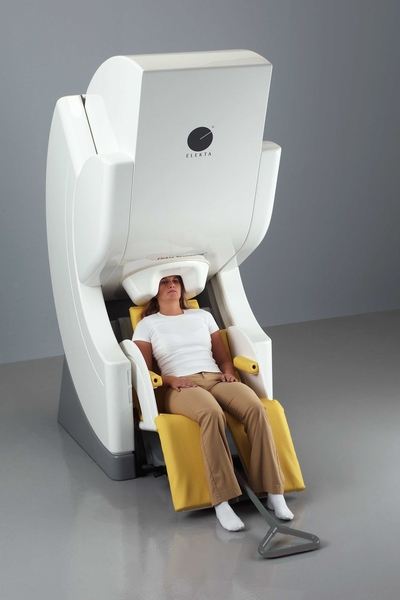
The McGovern Institute for Brain Research will soon acquire a magnetoencephalography (MEG) scanner for human brain imaging. The new instrument will be installed in the Martinos Imaging Center under the direction of Professor John Gabrieli and will complement the center’s existing capabilities based on magnetic resonance imaging (MRI) and electroencephalography.
MEG works by detecting the tiny (femtotesla) magnetic fluctuations at the surface of the head that arise from the brain’s electrical activity. Unlike MRI, MEG can measure the timing of brain activity with millisecond precision, allowing researchers to study the rapid brain events that underlie human cognition.
The new MEG scanner will operate as a shared core facility for the local neuroscience community, and will be used for a wide range of studies, including basic research on human cognition in adults and children as well as studies of autism, dyslexia, depression, schizophrenia and other disorders. There will also be an emphasis on technology development — progress in MEG depends on advances in signal processing, and Gabrieli hopes to engage MIT’s expertise in computer science and engineering to push the capabilities of MEG technology.
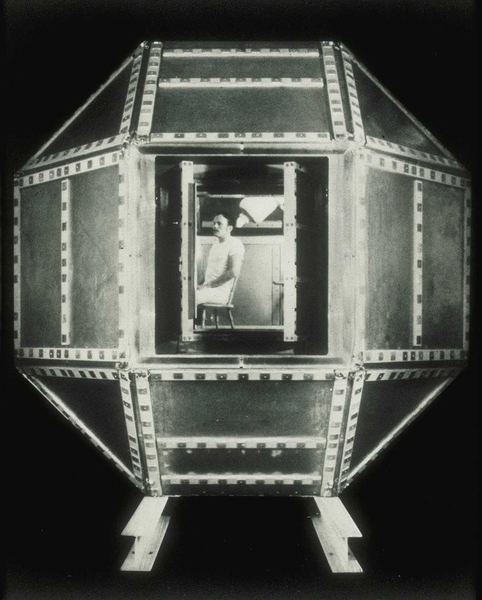
MEG was developed at MIT in 1969 by David Cohen, who exploited the newly invented SQUID detectors that provided the necessary sensitivity to measure the brain’s tiny magnetic signals. The new MIT scanner, an Elekta Neuromag, will have an array of 306 such detectors, providing a detailed spatial view of the signal sources far beyond what was possible 40 years ago. It will be housed in a magnetically shielded room to protect the sensitive detectors from background noise.
The purchase of a new MEG system has been made possible by grants from the National Science Foundation and the Simons Foundation, and by philanthropic support to the McGovern Institute from Thomas F. Peterson ‘57, Edward and Kay Poitras, and an anonymous donor. Construction will begin this month, and the scanner is expected to be operational by fall.
Anyone interested in learning more should contact Charles Jennings, director of the McGovern Institute Neurotechnology (MINT) program at charlesj@mit.edu.
MEG works by detecting the tiny (femtotesla) magnetic fluctuations at the surface of the head that arise from the brain’s electrical activity. Unlike MRI, MEG can measure the timing of brain activity with millisecond precision, allowing researchers to study the rapid brain events that underlie human cognition.
The new MEG scanner will operate as a shared core facility for the local neuroscience community, and will be used for a wide range of studies, including basic research on human cognition in adults and children as well as studies of autism, dyslexia, depression, schizophrenia and other disorders. There will also be an emphasis on technology development — progress in MEG depends on advances in signal processing, and Gabrieli hopes to engage MIT’s expertise in computer science and engineering to push the capabilities of MEG technology.
MEG was developed at MIT in 1969 by David Cohen, who exploited the newly invented SQUID detectors that provided the necessary sensitivity to measure the brain’s tiny magnetic signals. The new MIT scanner, an Elekta Neuromag, will have an array of 306 such detectors, providing a detailed spatial view of the signal sources far beyond what was possible 40 years ago. It will be housed in a magnetically shielded room to protect the sensitive detectors from background noise.
The purchase of a new MEG system has been made possible by grants from the National Science Foundation and the Simons Foundation, and by philanthropic support to the McGovern Institute from Thomas F. Peterson ‘57, Edward and Kay Poitras, and an anonymous donor. Construction will begin this month, and the scanner is expected to be operational by fall.
Anyone interested in learning more should contact Charles Jennings, director of the McGovern Institute Neurotechnology (MINT) program at charlesj@mit.edu.