
Blockchain technology could provide secure communications for robot teams
The transaction-based communications system ensures robot teams achieve their goal even if some robots are hacked.
The transaction-based communications system ensures robot teams achieve their goal even if some robots are hacked.

PhD student Heng Yang is developing algorithms to help driverless vehicles quickly and accurately assess their surroundings.
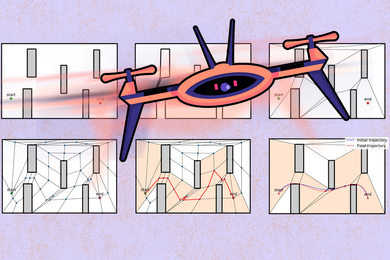
New algorithm could enable fast, nimble drones for time-critical operations such as search and rescue.

Associate professor of aeronautics and astronautics will head MIT’s longest continuously-running lab.

“This is a really exciting time to be a roboticist who also cares about the environment,” says PhD student Victoria Preston.

Peter Howard SM ’84 is the CEO of Realtime Robotics, a startup transforming autonomous robot motion planning to enable seamless, affordable human-robot collaboration.
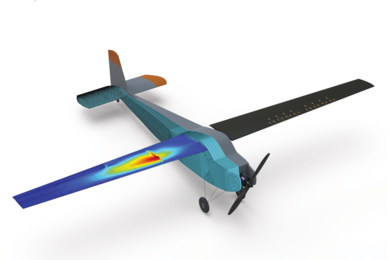
Model could help predictive virtual models become standard practice in engineering.

SMART study determines benefits of competition and potential impact for future urban cities and transport systems.
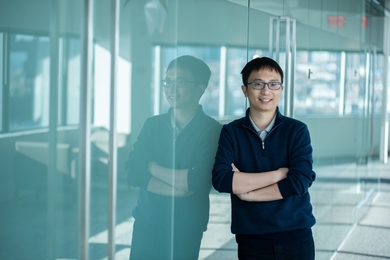
Yichen Shen PhD '16 is CEO of Lightelligence, an MIT spinout using photonics to reinvent computing for artificial intelligence.
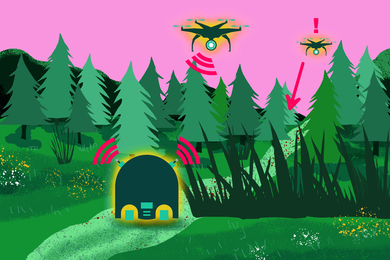
Algorithm enables robot teams to complete missions, such as mapping or search-and-rescue, with minimal wasted effort.

On May 6 and 7, researchers from the AI Policy Forum will present their preliminary AI public policy proposals aimed at shaping specific and significant uses of AI in our lives.

Method builds on gaming techniques to help autonomous vehicles navigate in the real world, where signals may be imperfect.
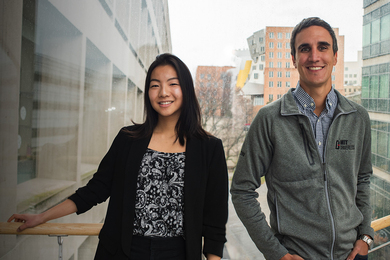
Leveraging research done on campus, student-run MIT Driverless partners with industry collaborators to develop and test autonomous technologies in real-world racing scenarios.

Assistant Professor Cathy Wu aims to help autonomous vehicles fulfill their promise by better understanding how to integrate them into the transportation system.
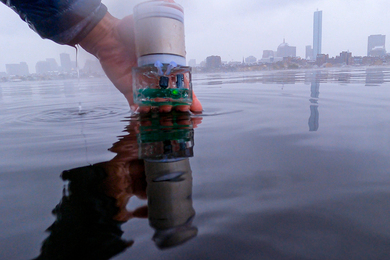
New approach could spark an era of battery-free ocean exploration, with applications ranging from marine conservation to aquaculture.