3 Questions: Putting nuclear waste into perspective
Professor Haruko Wainwright believes the risks posed by radioactive wastes cannot be properly assessed without also considering the hazards of chemical wastes.
Professor Haruko Wainwright believes the risks posed by radioactive wastes cannot be properly assessed without also considering the hazards of chemical wastes.
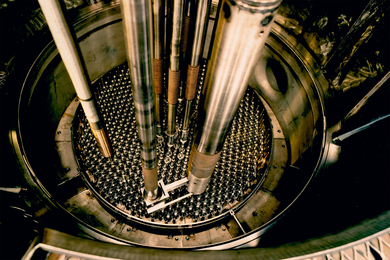
New understanding of how nuclear fuel breaks down and changes in an operating nuclear reactor could help keep some reactors running longer, will inform the next generation of nuclear reactor fuel systems.

Their new study aims to give budding industry a framework for understanding how fusion can be profitable.
PhD student Lauren Fortier is building on the experience she gained operating a nuclear plant for the Navy to solve a critical hurdle in the wider adoption of the energy source.
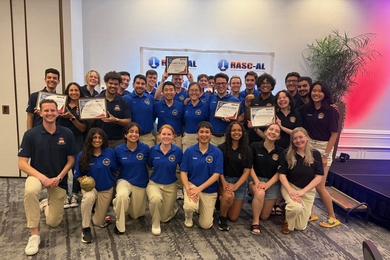
Three MIT teams took five top awards in the 2026 NASA RASC-AL Competition for designing critical elements for the moon base and future missions to Mars.
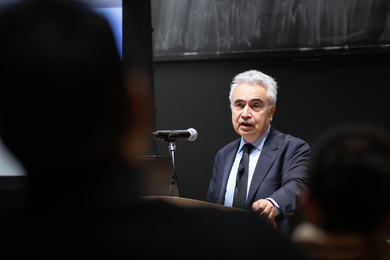
Expect energy disruptions and economic damage, especially in developing countries, and prepare to build a more resilient, sustainable energy system, says International Energy Agency executive director.
Pablo Duenas-Martinez, a MITEI research scientist, describes the “death spiral” of events that caused the 12-hour Iberian peninsula power outage in 2025, and five lessons learned.
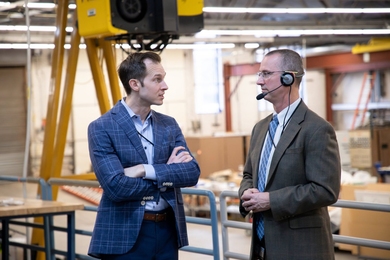
Rep. Jake Auchincloss visits the MIT Plasma Science and Fusion Center to learn about scaling geothermal energy.
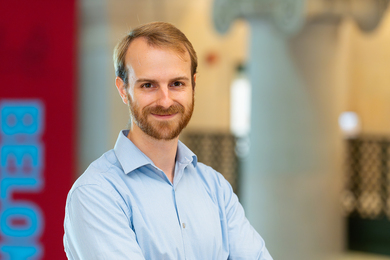
Dean Price, assistant professor in the Department of Nuclear Science and Engineering, sees a bright future for nuclear power, and believes AI can help us realize that vision.
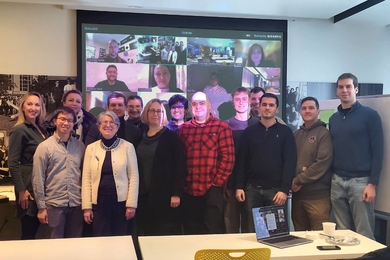
Build for Ukraine 2.0 united students, researchers, and Ukrainian collaborators to prototype solutions shaped by wartime conditions.
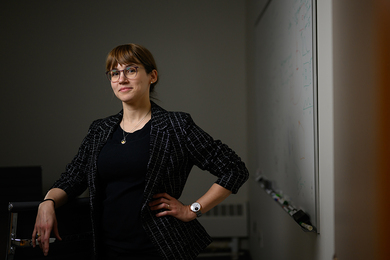
Sophia Henneberg, assistant professor in the Department of Nuclear Science and Engineering, is developing stellarators to harness fusion energy.

Master's student Taylor Hampson is modeling the behavior of an unconventional rocket engine that will heat propellant using nuclear energy.

In his 10 years at MIT, Loureiro helped illuminate the physics occurring at the center of fusion vacuum chambers and at the edges of the universe.
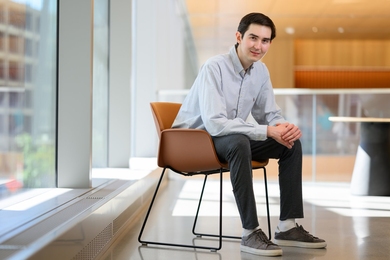
Nuclear waste continues to be a bottleneck in the widespread use of nuclear energy, so doctoral student Dauren Sarsenbayev is developing models to address the problem.
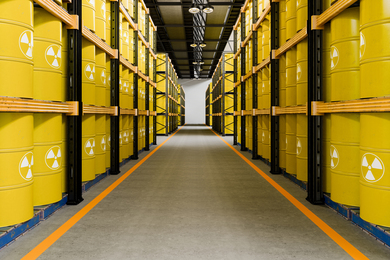
A new study by MIT researchers analyzes different nuclear waste management strategies, with a focus on the radionuclide iodine-129.