
New AI system could accelerate clinical research
By enabling rapid annotation of areas of interest in medical images, the tool can help scientists study new treatments or map disease progression.
By enabling rapid annotation of areas of interest in medical images, the tool can help scientists study new treatments or map disease progression.

MIT researchers have dramatically lowered the error rate of prime editing, a technique that holds potential for treating many genetic disorders.

MIT CSAIL researchers developed a tool that can model the shape and movements of fetuses in 3D, potentially assisting doctors in finding abnormalities and making diagnoses.
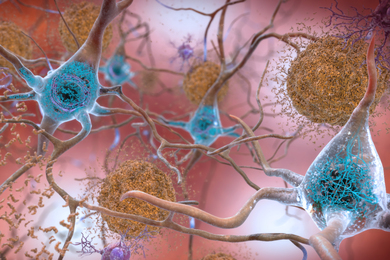
Lipid metabolism and cell membrane function can be disrupted in the neurons of people who carry rare variants of ABCA7.
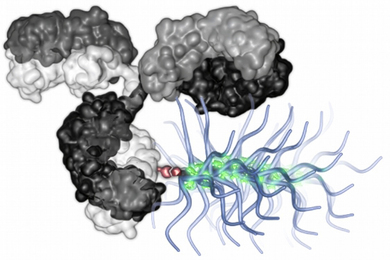
Outfitted with antibodies that guide them to the tumor site, the new nanoparticles could reduce the side effects of treatment.

Study of 3.5 million cells from more than 100 human brains finds Alzheimer’s progression — and resilience to disease — depends on preserving epigenomic stability.
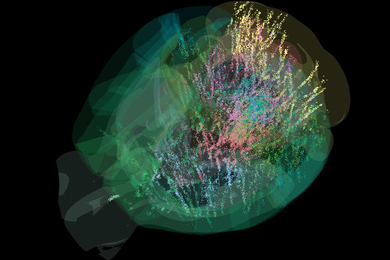
An international collaboration of neuroscientists, including MIT Professor Ila Fiete, developed a brain-wide map of decision-making at cellular resolution in mice.
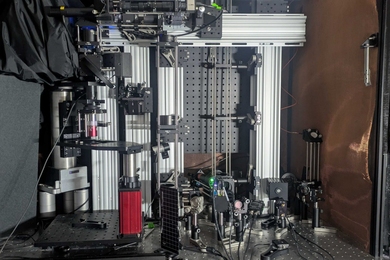
By combining several cutting-edge imaging technologies, a new microscope system could enable unprecedentedly deep and precise visualization of metabolic and neuronal activity, potentially even in humans.
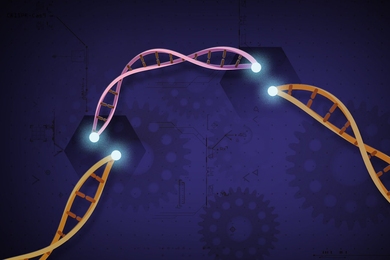
Researchers develop a fast-acting, cell-permeable protein system to control CRISPR-Cas9, reducing off-target effects and advancing gene therapy.
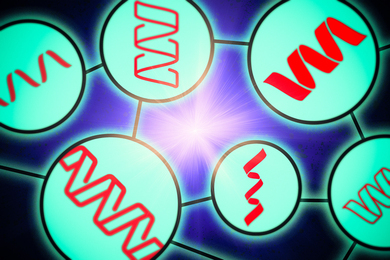
A new approach can reveal the features AI models use to predict proteins that might make good drug or vaccine targets.

The team used two different AI approaches to design novel antibiotics, including one that showed promise against MRSA.

A new study finds parts of the brain’s visual cortex are specialized to analyze either solid objects or flowing materials like water or sand.
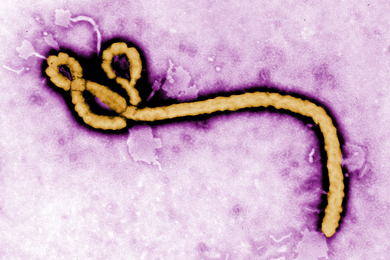
Combining powerful imaging, perturbational screening, and machine learning, researchers uncover new human host factors that alter Ebola’s ability to infect.

A new approach for testing multiple treatment combinations at once could help scientists develop drugs for cancer or genetic disorders.

The new implant carries a reservoir of glucagon that can be stored under the skin and deployed during an emergency — with no injections needed.