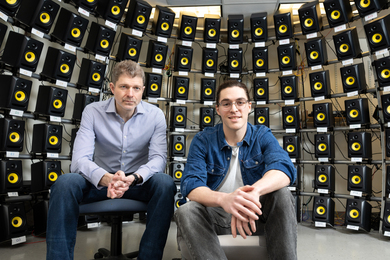
How the brain handles the “cocktail party problem”
Using a computational model, neuroscientists showed how the brain can selectively focus attention on one voice among others in a noisy environment.
Using a computational model, neuroscientists showed how the brain can selectively focus attention on one voice among others in a noisy environment.
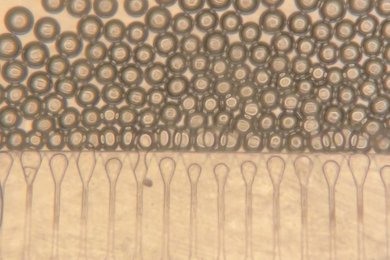
The engineered tissue grafts could take on the liver’s function and help thousands of people with liver failure.

By providing holistic information on a cell, an AI-driven method could help scientists better understand disease mechanisms and plan experiments.
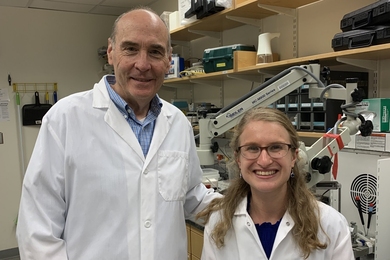
Researchers find mice modeling the autism spectrum disorder fragile X syndrome exhibit the same pattern of differences in low-frequency waves as humans — a new marker for treatment studies.
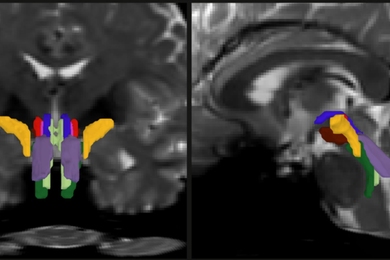
Opening a new window on the brainstem, a new tool reliably and finely resolves distinct nerve bundles in live diffusion MRI scans, revealing signs of injury or disease.
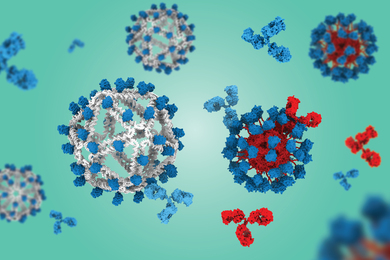
Based on a virus-like particle built with a DNA scaffold, the approach could generate broadly neutralizing antibody responses against HIV or influenza.
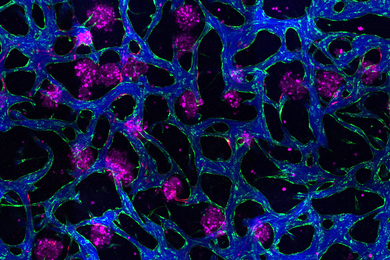
Two models more accurately replicate the physiology of the liver, offering a new way to test treatments for fat buildup.
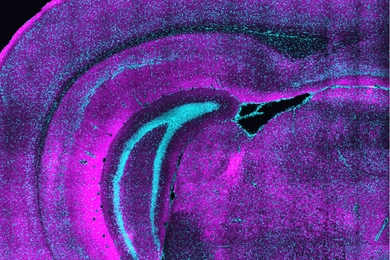
Somatostatin-expressing neurons follow a unique trajectory when forming connections in the visual cortex that may help establish the conditions needed for sensory experience to refine circuits.
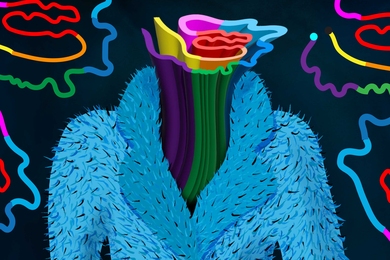
Learning more about this structure could help scientists find ways to block Tau from forming tangles in the brain of Alzheimer’s patients.
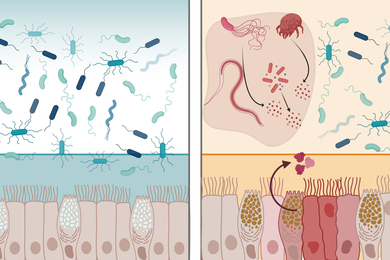
The protein, known as intelectin-2, also helps to strengthen the mucus barrier lining the digestive tract.
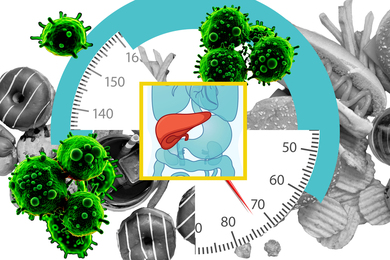
New research suggests liver cells exposed to too much fat revert to an immature state that is more susceptible to cancer-causing mutations.
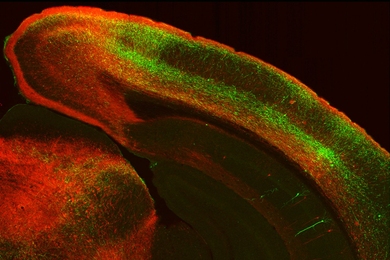
Research illustrates how areas within the brain’s executive control center tailor messages in specific circuits with other brain regions to influence them with information about behavior and feelings.
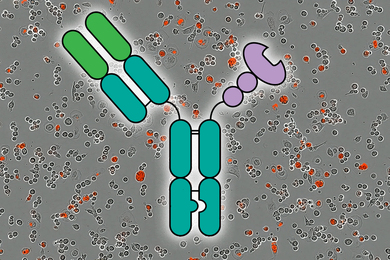
Using new molecules that block an immune checkpoint, researchers showed they could stimulate a strong anti-tumor immune response.
Tracking how fruit fly motor neurons edit their RNA, neurobiologists cataloged hundreds of target sites and varying editing rates, finding many edits altered communication- and function-related proteins.
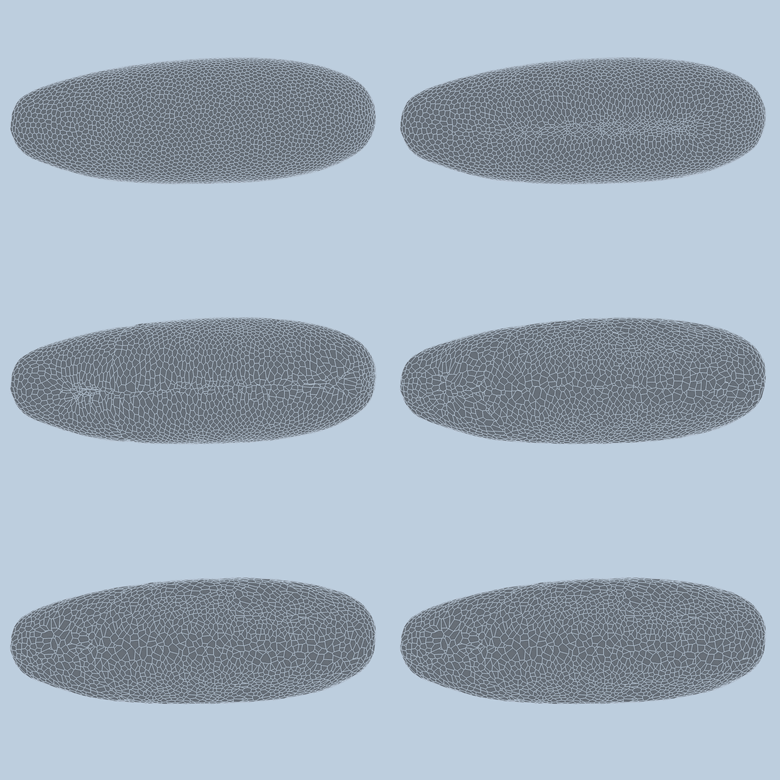
The approach could apply to more complex tissues and organs, helping researchers to identify early signs of disease.