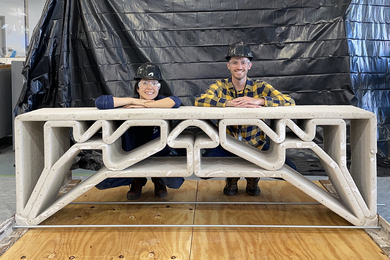
3D-printed bridge points the way to greener construction
MIT researchers developed a framework that folds a printer’s real-world limits into the optimization, while revealing that better hardware could sharply reduce material use.
MIT researchers developed a framework that folds a printer’s real-world limits into the optimization, while revealing that better hardware could sharply reduce material use.
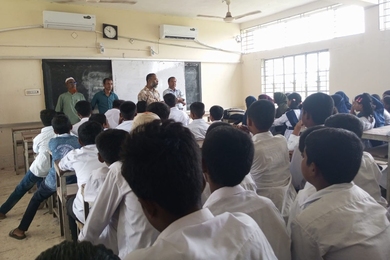
The Jameel Observatory-CREWSnet project opens a solar-powered “adaptation fortress” in Satkhira, a region facing severe and growing climate threats.
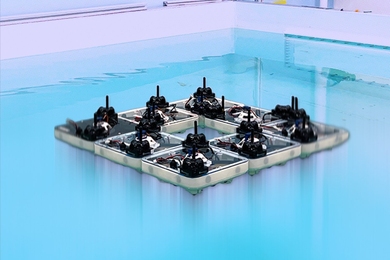
MIT researchers developed FloatForm, a swarm of small aquatic robots that snap together like ants forming a raft, assembling into reconfigurable structures on the water.
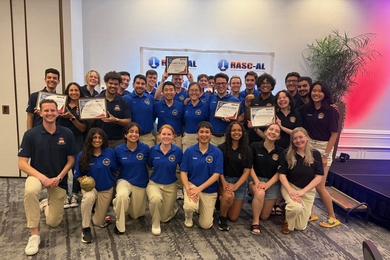
Three MIT teams took five top awards in the 2026 NASA RASC-AL Competition for designing critical elements for the moon base and future missions to Mars.
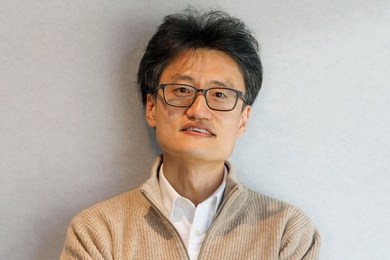
An expert in behavioral science and transportation, Zhao combines these studies with AI and public policy to address some of the most urgent challenges facing cities.
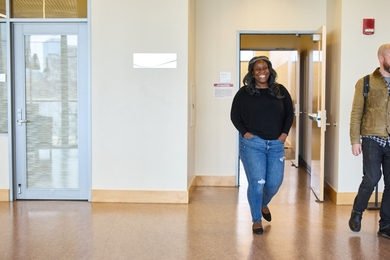
The MBA student and entrepreneur is learning to lead a more resilient future with her renewable energy company.

The initiative plans to engage industry leaders and MIT alumni with hubs in Tokyo, Dubai, and Hong Kong.
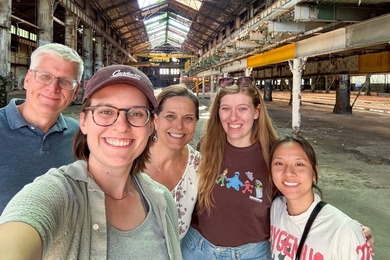
“You can’t teach planning today without grappling with how policy actually unfolds within communities,” says Professor Phillip Thompson.

Massachusetts Clean Energy Center CEO MBA ’12 Emily Reichert highlights the state government’s unique approach to fostering and keeping clean energy innovation.

MIT researchers analyzed a recently discovered ancient construction site to shed new light on a material that has endured for thousands of years.
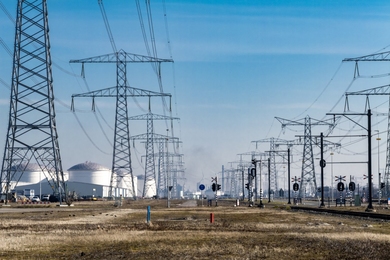
Macro, a modeling tool developed by the MIT Energy Initiative, enables energy-system planners to explore options for developing infrastructure to support decarbonized, reliable, and low-cost power grids.

High schooler Hinata Yamahara’s interest in urban planning was nurtured by free MIT resources, including OpenCourseWare.

AI supports the clean energy transition as it manages power grid operations, helps plan infrastructure investments, guides development of novel materials, and more.

Industry leaders agree collaboration is key to advancing critical technologies.

The approach could enable autonomous vehicles, commercial aircraft, or transportation networks that are more reliable in the face of real-world unpredictability.