
Researchers “reprogram” materials by quickly rearranging their atoms
A new method for precisely moving columns of individual atoms within a material could give rise to exotic quantum properties.
A new method for precisely moving columns of individual atoms within a material could give rise to exotic quantum properties.
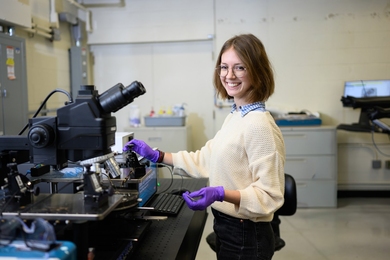
Camille Cunin PhD ’26 is transforming rigid circuitry into stretchable, signal-amplifying devices built for real-world biomedical use.
Faculty members and researchers were honored in recognition of their scholarship, service, and overall excellence.
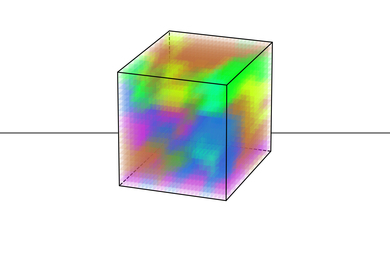
Relaxor ferroelectrics have been used in electronics and sensors for decades, but the source of their unique properties was a mystery until now.

In her new book, “Birds Up Close,” MIT materials engineer Lorna Gibson explores feathers, bones, bills, eggs, and flight, and the mechanics behind birds’ extraordinary abilities.
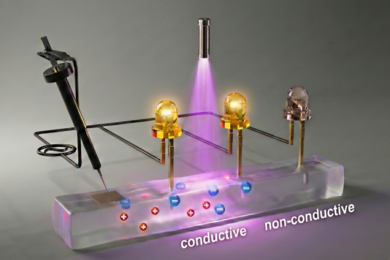
New MIT work advances the growing field of ionotronics, in which data are transferred through ions, potentially providing a bridge between electronics and biological tissue.

MIT Energy Initiative symposium maps a path to tap the planet’s heat-rich rocks for clean power at scale.
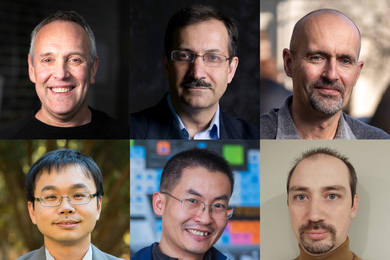
Two faculty and six additional alumni win top APS awards and prizes; four faculty and 12 additional alumni named APS Fellows.
Graduate engineering program is No. 1 in the nation; MIT Sloan is No. 6.
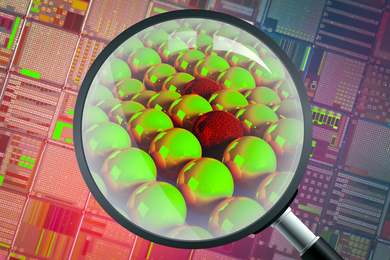
A new model measures defects that can be leveraged to improve materials’ mechanical strength, heat transfer, and energy-conversion efficiency.
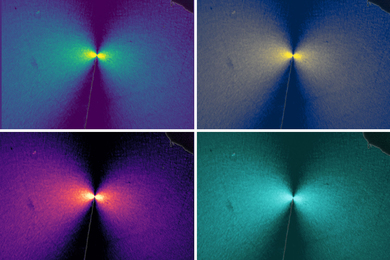
New insights into metallic cracks that harm battery performance could advance the longstanding quest to develop energy-dense solid-state batteries.
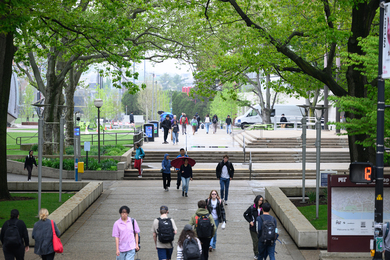
The Institute also ranks second in seven subject areas.
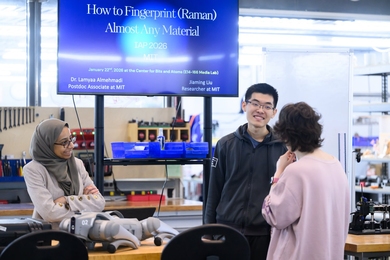
Participants learn how laser “fingerprinting” can help identify materials in fields ranging from law enforcement to art restoration.
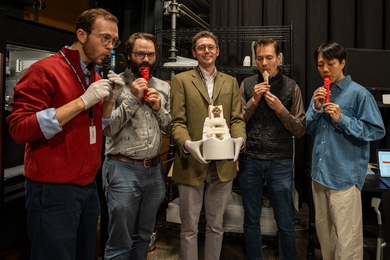
Through an interdisciplinary collaboration between MIT and the Museum of Fine Arts, Boston, researchers are creating playable physical and synthesized replicas.
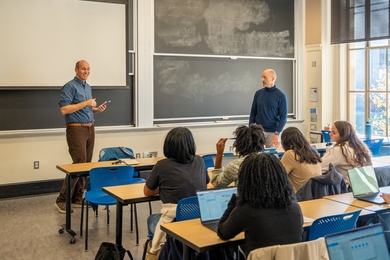
In STS.059 (The Bioeconomy and Society), students explore the social and political factors at work in the biology, biotech, and biological engineering sectors.