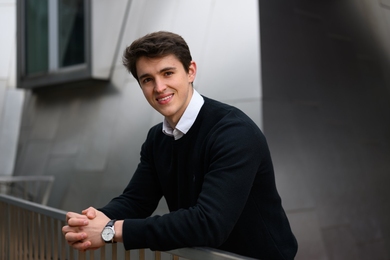
Enhancing maritime cybersecurity with technology and policy
Strahinja Janjusevic brings an international perspective and US Naval Academy education to his graduate research in the MIT Technology and Policy Program.
Strahinja Janjusevic brings an international perspective and US Naval Academy education to his graduate research in the MIT Technology and Policy Program.
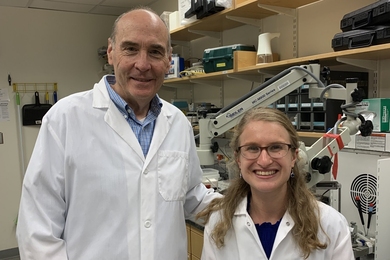
Researchers find mice modeling the autism spectrum disorder fragile X syndrome exhibit the same pattern of differences in low-frequency waves as humans — a new marker for treatment studies.
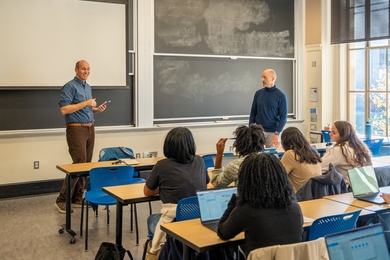
In STS.059 (The Bioeconomy and Society), students explore the social and political factors at work in the biology, biotech, and biological engineering sectors.
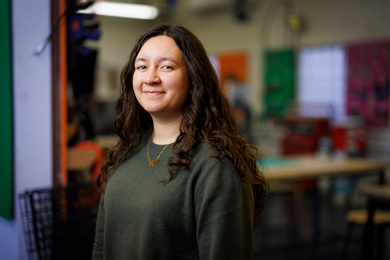
Through research with MIT D-Lab, MIT engineering student Kiyoko “Kik” Hayano worked with Keo Fish Farms to build a model for regenerative water systems.
Driven by overuse and misuse of antibiotics, drug-resistant infections are on the rise, while development of new antibacterial tools has slowed.
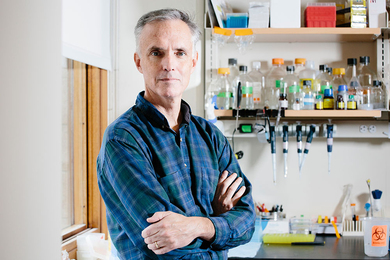
Professor James Collins discusses how collaboration has been central to his research into combining computational predictions with new experimental platforms.
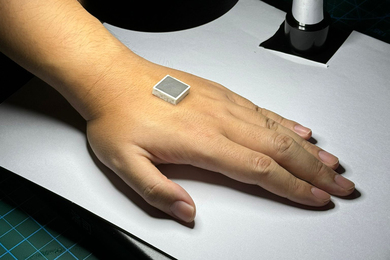
WITEC is working to develop the first wearable ultrasound imaging system to monitor chronic conditions in real-time, with the goal of enabling earlier detection and timely intervention.

As AI technology advances, a new interdisciplinary course seeks to equip students with foundational critical thinking skills in computing.
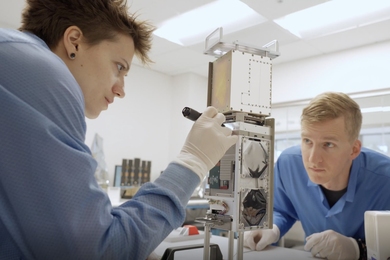
Mini microwave sounders developed at Lincoln Laboratory, demonstrated on a NASA mission, and now transferred to industry, are expanding storm-forecasting capabilities.
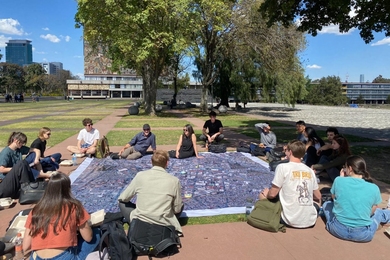
Cross-border collaborations are seen as a key to success for the MIT Leventhal Center’s Mexico City Initiative.
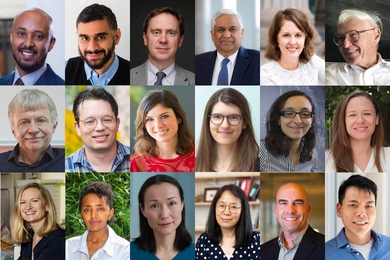
The program recognizes outstanding mentorship of graduate students.
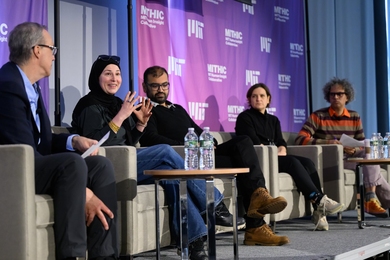
The inaugural MIT Human Insight Collaborative (MITHIC) Annual Event showcased the breadth of projects supported in the first year of the presidential initiative.
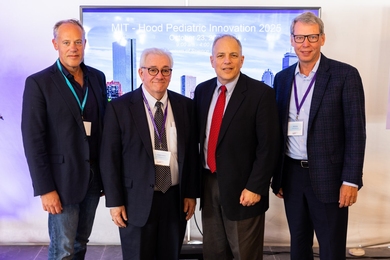
The Hood Pediatric Innovation Hub brings together clinicians, researchers, and industry to bridge the gap between discovery and care.
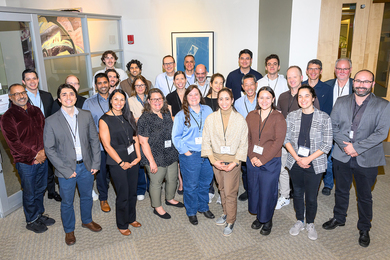
The consortium convenes industry, academia, and policy leaders to navigate competing demands and reimagine materials supply.

Angela Koehler, Iain Cheeseman, and Katharina Ribbeck are shaping the collaborative as a platform for transformative research, translation, and talent development across MIT.