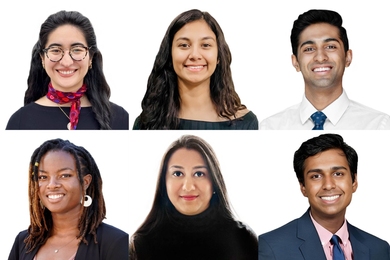
Six from MIT awarded 2026 Paul and Daisy Soros Fellowships for New Americans
Fellowship honors contributions of immigrants to American society by awarding $90,000 in funding for graduate studies.
Fellowship honors contributions of immigrants to American society by awarding $90,000 in funding for graduate studies.
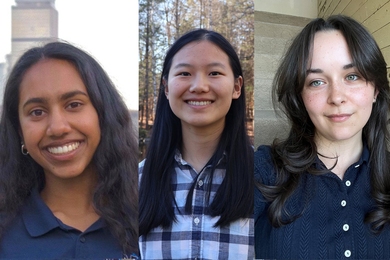
Rising seniors Deeksha Kumaresh, Anna Liu, and Charlotte Myers are honored for their academic achievements.
The prestigious honor society honors four MIT faculty and 13 additional MIT alumni among more than 250 new members.
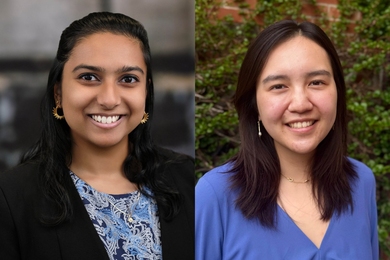
Mitali Chowdhury ’24 and Christina Kim ’24 will pursue graduate studies at Cambridge University in the UK.
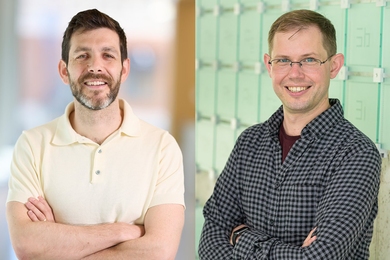
The associate professors of EECS and chemistry, respectively, are honored for exceptional contributions to teaching, research, and service at MIT.

Scientists say an exception in the Montreal Protocol for the use of ozone-depleting feedstocks could set the ozone recovery back seven years.

Long thought to be mainly a structural support, the cell membrane also influences how cells respond to signals and may contribute to the growth of cancer cells.
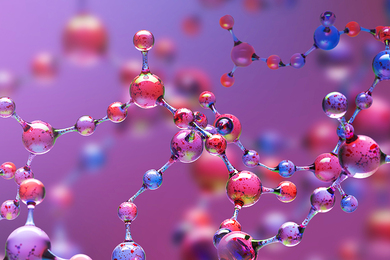
This new technique will allow chemists to efficiently fine-tune the chemical structure of an organic molecule.
The Institute also ranks second in seven subject areas.
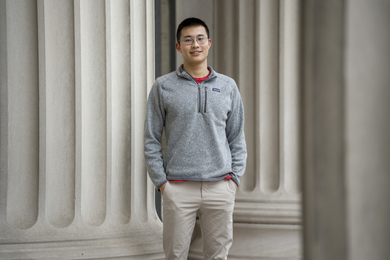
As an aspiring physician-scientist and editor-in-chief of The Tech, MIT senior Alex Tang has found inspiration in the lives of patients and others in his community.
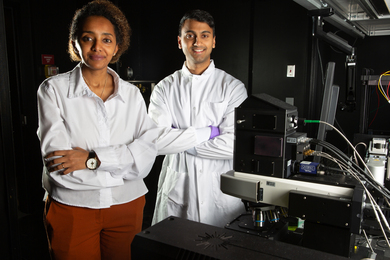
The technology could enable fast, point-of-care diagnoses for pneumonia and other lung conditions.

Professor Jesse Thaler describes a vision for a two-way bridge between artificial intelligence and the mathematical and physical sciences — one that promises to advance both.
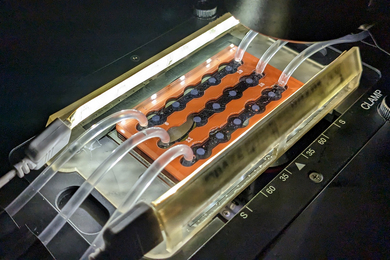
A new study finds hitchhiking bacteria dissolve essential ballast in ubiquitous “snow” particles, which could counteract the ocean’s ability to sequester carbon.

In research that could help elucidate humans’ role in global warming, scientists showed how three major natural events impacted global atmospheric temperatures.
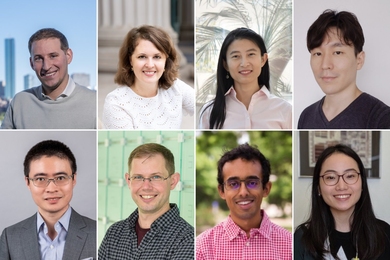
Annual award honors early-career researchers for creativity, innovation, and research accomplishments.