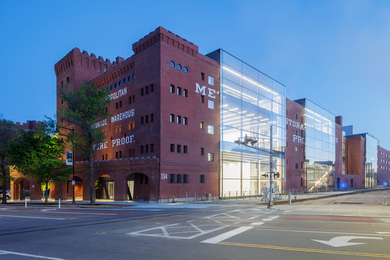
Met Warehouse opens as the new home of MIT’s School of Architecture and Planning
In a feat of adaptive reuse, a massive, century-old brick storage facility has been turned into a contemporary hub for collaboration and creative work.
In a feat of adaptive reuse, a massive, century-old brick storage facility has been turned into a contemporary hub for collaboration and creative work.

A new online platform helps engineers look beyond survival mode when designing habitats for extreme living conditions.

Nicholas de Monchaux reflects on guiding the MIT Department of Architecture through a period of dramatic change for the profession.
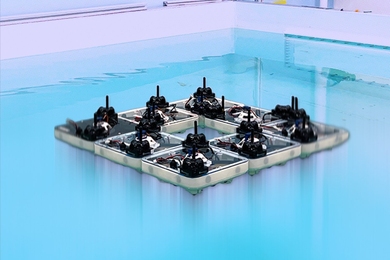
MIT researchers developed FloatForm, a swarm of small aquatic robots that snap together like ants forming a raft, assembling into reconfigurable structures on the water.
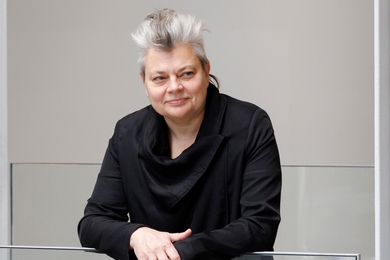
In this leadership role, Miljački seeks to shepherd a collective commitment to transform the present into a better future.
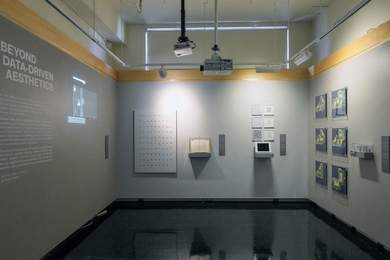
In a new Keller Gallery exhibition, Alexandros Haridis SM ’17, PhD ’22 traces centuries of ideas about aesthetic judgment and explores how design can make complex computational systems visible.

In Ghana, semi-communal “compound houses” affect how much people vote and participate in political activity, new research shows.
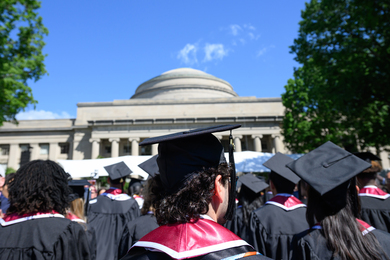
Ranking at the top for the 15th year in a row, the Institute also places first in 12 subject areas.

Low-cost personal cooling and emissions-free air conditioning among ideas studied with MIT’s Climate Project seed funding.
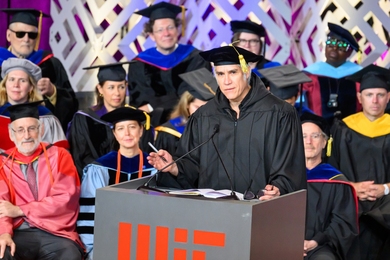
“All of us need to feel we are valuable,” says the SA+P Commencement speaker, a Chilean architect and Pritzker Prize winner.

Senior Krystal Montgomery explored design courses to shape a career in web development. As a national champion in track, learning to balance athletics and academics was key to her success.
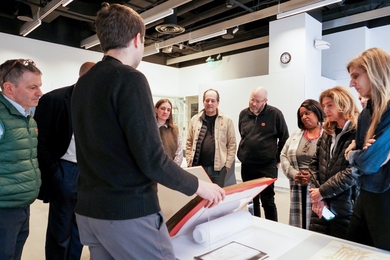
A day of conversations and archival access at the MIT Museum reflects an ongoing exchange rooted in the work and ideas of the Institute’s first Black graduate.

Associate Professor Skylar Tibbits discusses a new technology that uses granular convection to deliver individualized performance.
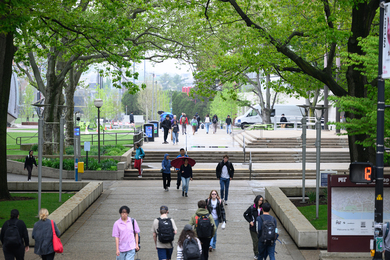
The Institute also ranks second in seven subject areas.
The newly created role will shape the infrastructure needed to nurture the school’s growing research goals.