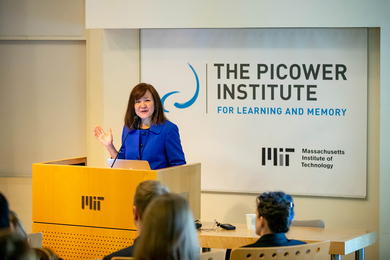
After 16 years leading Picower Institute, Li-Huei Tsai will sharpen focus on research, teaching
Tsai, who has grown the MIT neuroscience institute, will increase focus on research including Alzheimer’s disease and Down syndrome.
Tsai, who has grown the MIT neuroscience institute, will increase focus on research including Alzheimer’s disease and Down syndrome.
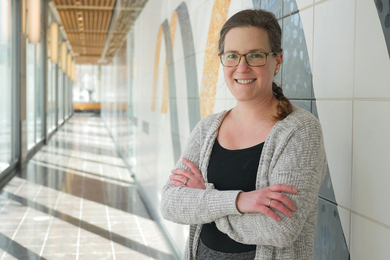
Assistant Professor Alison Ringel will investigate the intersection of immunology and aging biology, aiming to define mechanisms that underlie aging-related decline, thanks to a grant from the foundation.
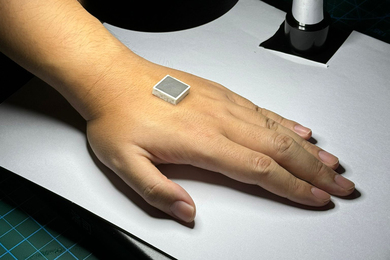
WITEC is working to develop the first wearable ultrasound imaging system to monitor chronic conditions in real-time, with the goal of enabling earlier detection and timely intervention.
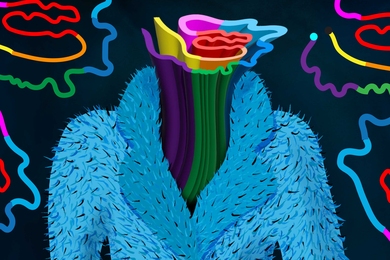
Learning more about this structure could help scientists find ways to block Tau from forming tangles in the brain of Alzheimer’s patients.
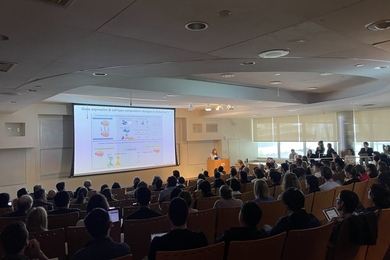
Speakers at MIT’s Aging Brain Initiative symposium described how immune system factors during aging contribute to Alzheimer’s, Parkinson’s and other conditions. The field is leveraging that knowledge to develop new therapies.

Ianacare, co-founded by Steven Lee ’97, MEng ’98, equips caregivers with the resources, networks, and tools they need to support loved ones.
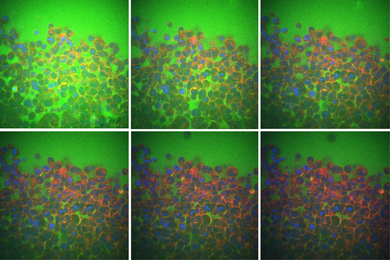
Watery fluid between cells plays a major role, offering new insights into how organs and tissues adapt to aging, diabetes, cancer, and more.

The new design could assist the elderly as they age in place at home.

Informal help is a huge share of elder care in the U.S., a burden that is only set to expand. A new book explores different countries’ solutions.
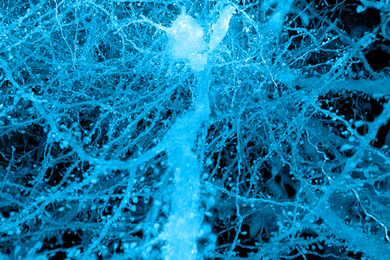
Since an MIT team introduced expansion microscopy in 2015, the technique has powered the science behind kidney disease, plant seeds, the microbiome, Alzheimer’s, viruses, and more.
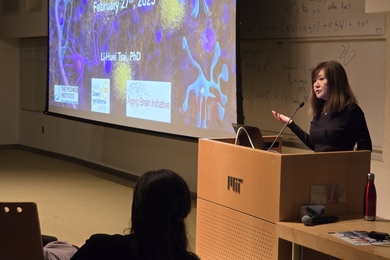
A decade of studies provide a growing evidence base that increasing the power of the brain’s gamma rhythms could help fight Alzheimer’s, and perhaps other neurological diseases.

New book from MIT AgeLab researchers applies the concept of innovation clusters to global population aging.
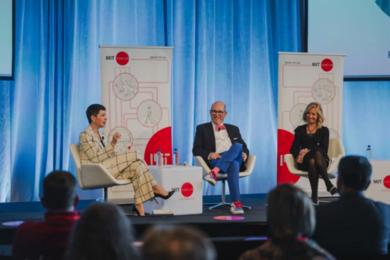
A symposium for financial professionals imagines a new industry around longevity planning.
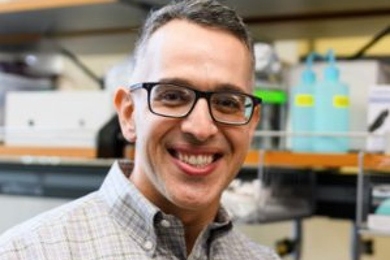
Albert Almada PhD ’13 studies the mechanics of how stem cells rebuild tissues. “Digging deep into the science is what MIT taught me,” he says.

Jonathan Weissman and collaborators developed a tool to reconstruct human cell family trees, revealing how blood cell production changes in old age.