
How to design a space habitat that supports its residents’ mental health
A new online platform helps engineers look beyond survival mode when designing habitats for extreme living conditions.
Download RSS feed: News Articles / In the Media / Audio
A new online platform helps engineers look beyond survival mode when designing habitats for extreme living conditions.

Longtime professors and experts in the fields of anesthesiology, aerospace engineering, and biological engineering, respectively, receive MIT’s highest faculty honor.
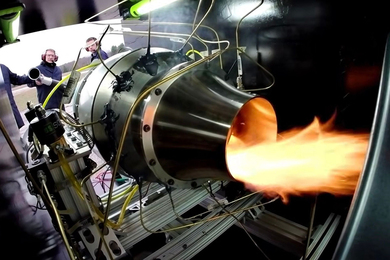
MIT students designed, built, and tested a jet engine with AI copilots, assessing AI’s usefulness in developing high-performance aerospace systems.
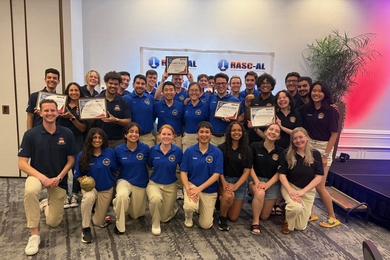
Three MIT teams took five top awards in the 2026 NASA RASC-AL Competition for designing critical elements for the moon base and future missions to Mars.

To help robots do chores in places like homes and factories, a new approach from MIT uses one language model to clarify users’ instructions, then another to ignore irrelevant info.
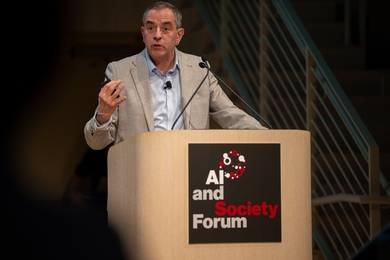
During the AI and Society Forum, leading MIT researchers examined critical questions about AI’s influence on employment and democracy.

Researchers combined an efficient algorithm with dedicated hardware to rapidly generate 3D maps for navigation using minimal memory and power.

Ranking at the top for the 15th year in a row, the Institute also places first in 12 subject areas.
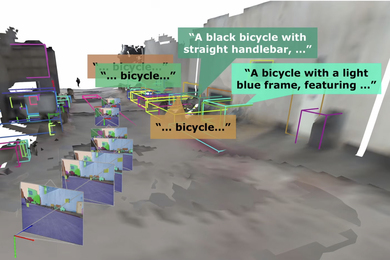
A new spatial memory system for robots efficiently captures details about the objects they see while exploring their environment.

Ten faculty members have been granted tenure in five units across MIT’s School of Engineering.

Researchers establish key insights for reading and writing information for quantum sensing, communication, computing, and control.

The “Sonar-MASt3R” combines sonar and visual data to create real-time 3D maps, even in cloudy water.
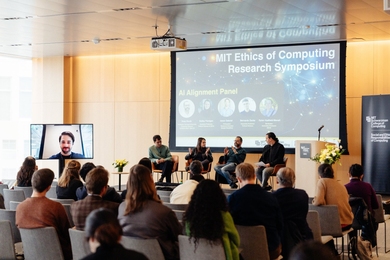
The MIT Ethics of Computing Research Symposium brought together experts and researchers working at the heart of ethical and social impact in technology.
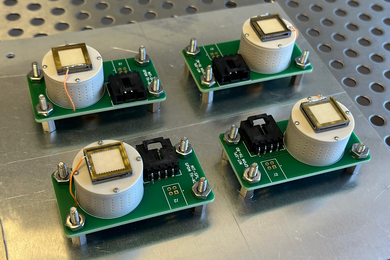
For satellites as small as a briefcase, getting around in space just got a whole lot easier.
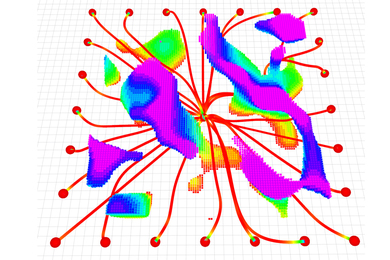
By rapidly generating a smooth path plan that cuts travel time and avoids obstacles, the open-source “MIGHTY” system could streamline disaster recovery and parcel delivery.