MIT engineers have found a way to stabilize the lipid nanoparticles used to deliver RNA vaccines, which could allow the vaccines to be more widely distributed.
MIT researchers’ approach, which uses naturally occurring sugars as antifreeze, could make it easier for hospitals to deploy this type of cancer treatment.
“Scientific American” showcases the history and future of America’s scientific engine, highlighting promising young scientists and icons at MIT and beyond.
The adjuvant can help the injectable polio vaccine induce a strong immune response in the GI tract, which is considered critical to eradicating the virus.
The MIT Marble Center for Cancer Nanomedicine looks back at 10 years of turning big ideas about nanotechnology into transformative advances for cancer patients.
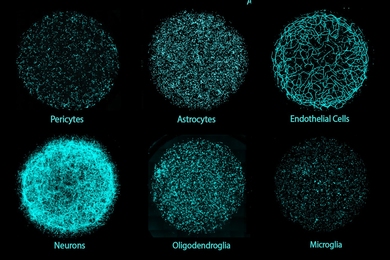
Cultured from induced pluripotent stem cells, “miBrains” integrate all major brain cell types and model brain structures, cellular interactions, activity, and pathological features.