Skip to content ↓

📬 Want a dose of MIT in your inbox? Subscribe to the MIT Daily and/or MIT Weekly newsletters.

Top News

Looking for audio? Listen to the MIT News podcast

Recent Highlights

More MIT News articles

In the Media

Bloomberg

MIT is exploring new pathways to build upon its entrepreneurial ecosystem, including creating additional support for startups and identifying new opportunities for successful translation and entrepreneurship, reports Greg Ryan for Bloomberg. “MIT has long had a reputation for fostering entrepreneurship: A 2015 report found that a quarter of alumni had founded their own companies, which together would have formed the world’s 10th-largest economy at the time,” explains Ryan. “Since then, MIT faculty and graduates have continued to develop new companies in technology, pharmaceuticals and other industries.” 

Fortune

A new working paper by researchers from MIT FutureTech finds that “AI’s march through the labor market looks far less like a sudden catastrophe and far more like a slow, rising flood — serious and accelerating, but not the overnight apocalypse that has dominated headlines and executive anxiety for the past two years,” writes Nick Lichtenberg for Fortune. “Rather than arriving in crashing waves that transform a certain set of tasks at a time,” the researchers write, “progress typically resembles a rising tide, with widespread gains across many tasks simultaneously.”

Nature

Two new studies from researchers at MIT and elsewhere have described “the machine-learning algorithms they developed to screen bacterial genomes and identify proteins that are involved in protecting the microorganisms against viral invaders,” reports Miryam Naddaf for Nature. “There’s a hope that maybe there’s a next generation of molecular tools that would come from some of these new systems,” says Prof. Michael Laub. 

WBZ Radio

Prof. Julien de Wit speaks with Dan Rea from WBZ’s Nightside News about his team’s work developing new ways to address threats posted by small asteroids to our critical space infrastructure. “We are developing the technology here at MIT to find [asteroids] and then track them and understand if we should be caring about them,” de Wit explains. 

The Boston Globe

A new laser communication system developed by a team from MIT’s Lincoln Laboratory is aboard NASA’s Artemis II mission to the moon, reports Nick Stoico and Hannah Goeke for The Boston Globe. “It’s a culmination of a huge effort by a lot of people,” says Lincoln Lab Group Leader Bryan Robinson. “We’ve been waiting until now to get it off the ground.”

The Guardian

Prof. David Autor speaks with The Guardian reporter Julia Scott about the growing appeal of hands-on jobs for young workers. These jobs “are an area where there’s tremendous specialized knowledge,” says Autor.  “It’s often acquired in the field. And it’s not easily automatable because it requires lots and lots of judgment, combined with a level of dexterity and adaptability in an ever-changing environment. That’s very, very challenging for robotics.” 

Forbes

According to the 2026 QS World University Rankings, MIT has been earned a No. 1 global ranking in 12 subject areas, including chemical engineering; chemistry; civil and structural engineering; computer science and information systems; data science and artificial intelligence; electrical and electronic engineering; engineering and technology; linguistics; materials science; mechanical, aeronautical, and manufacturing engineering; mathematics; and physics and astronomy, reports Michael T. Nietzel for Forbes.

Popular Science

MIT researchers have developed an ultrasound wristband that can transmit a user’s motions to a robotic hand or a virtual environment, reports Mack Degeurin for Popular Science. “Volunteers wearing the device could direct the robotic hand to grab tennis balls, make hand signs, and even play notes on a piano,” Degeurin explains. “That same technique can also be applied to digital environments, which means future wearers could control a phone screen without ever touching it, or interact with virtual reality in ways that feel more immersive.” 

GBH

Prof. Julien de Wit, Research Scientist Artem Burdanov and Research Scientist Saverio Cambioni join Edgar Herwick III of GBH’s Curiosity Desk to discuss their work with planetary defense and their method for detecting and tracking smaller asteroids that could impact Earth’s critical space infrastructure. “We are swimming in an era that is data rich, and so what we do in our group and at MIT is mine that data to reveal the universe like never before,” says de Wit. “Revealing new populations of asteroids, new populations of planets, and making sense of our universe like we have never done.”

The Washington Post

Prof. Adam Berinsky speaks with Washington Post reporter Shira Ovide about American’s relationship with AI and social media. “Berinsky said the unfavorable opinions about AI aren’t that bad compared with Americans’ low confidence in many institutions, including big business, Congress and newspapers,” writes Ovide. 

Associated Press

Prof. Christopher Knittel speaks with Associated Press reporter Paul Wiseman about the economic impact of the U.S. conflict with Iran. “A week ago or certainly two weeks ago, I would have said: If the war stopped that day, the long-term implications would be pretty small,’’ says Knittel. “But what we’re seeing is infrastructure actually being destroyed, which means the ramifications of this war are going to be long-lived.’’

Community Updates

Featured Multimedia

Video thumbnail

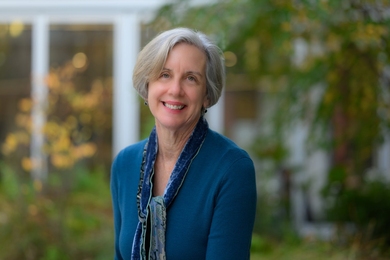
Dean at the MIT Sloan School of Management, Rick Locke is a scholar of international labor standards and comparative political economy. Here, he speaks about the MIT Sloan community and the future of management education.

Video thumbnail

MIT engineers have designed an ultrasound wristband that precisely tracks a wearer’s hand movements in real- time. By moving their hands and fingers, users can direct a robot to perform specific hand gestures and tasks, or they can manipulate objects in a virtual environment with high dexterity control.

Video thumbnail

Song Han is an associate professor in Electrical Engineering and Computer Science whose research focuses on efficient AI computing. In this episode, President Sally Kornbluth speaks with Song about efficient AI, why it’s so energy-hungry in the first place, and the benefits of lighter models.

Video thumbnail

Rosalind Picard reflects on the origins of her work in wearable sensing and affective computing — technology designed to measure and respond to human emotions. Her team created a glove-based electrodermal sensor that glowed in response to users' emotional response. This opened up new possibilities for emotion-sensing wearables, ultimately shaping the direction of her future research and the field as a whole.

More News