Skip to content ↓

📬 Want a dose of MIT in your inbox? Subscribe to the MIT Daily and/or MIT Weekly newsletters.

Top News

Looking for audio? Listen to the MIT News podcast

Recent Highlights

More MIT News articles

In the Media

Business Insider

Christina Cassotis MBA '14 speaks with Business Insider reporter Kelsey Vlamis about her experience and goals for the airline industry as CEO of Pittsburgh’s airport. “I love my job, and I like thinking about my job,” says Cassotis. “Of course, it's stressful, but it's the kind of stress I'm built for. I am very good at managing lots of complexity. I really love understanding stakeholders and what they need and how to communicate with them. We're constantly looking for better ways to do things. I care a lot about making sure our staff feels engaged. Airports are fun places to work.” 

The Economist

The Economist chronicles the life and work of Prof. Nuno Loureiro, from his childhood in Portugal where he dreamed of becoming a scientist to his work at MIT as a “fusion pioneer” leading the Plasma Science and Fusion Center. “He walked into his classes beaming, ready to cover the blackboard with figures. He joked like a friend, but he worked his students vigorously, advising them that if they were not yet the best, they should strive to be. Failure was not to be feared, because it showed they were trying to tackle the really hard problems.”

Sports Business Journal

Writing for Sports Business Journal, Sloan Senior Lecturer Shira Springer highlights ways to increase attention and investment in women’s sports. “Reflecting on the year that was in women’s sports, professional ice hockey and track and field offered two case studies on raising awareness and building momentum by eventizing,” writes Springer. “Both events aimed to take women’s sports to new places – one literally focused on new cities for women’s ice hockey, while the other set its sight on historic territory for women’s track. In the process, and in different ways, both presented a vision for the future, a desire to go bigger, take calculated risks and see what happens.” 

New York Times

New York Times reporter Rebecca Elliott spotlights Phoenix Tailings, a startup co-founded by MIT alumni that is developing a sustainable process for refining rare-earth refining in the United States. Elliott notes that Phoenix Tailings created a closed-loop design for their manufacturing method that “distinguishes this process from the more energy-intensive techniques used in China, where workers scoop up molten metal with ladles.”

Forbes

In a roundup of the biggest tech breakthroughs of 2025, Forbes reporter Alex Knapp spotlights how MIT engineers developed magnetic transistors, a “discovery [that] could enable faster and more energy-efficient semiconductors.”

Gizmodo

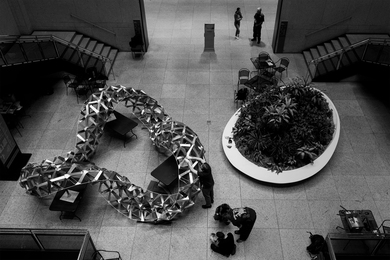
Researchers at MIT have developed a new type of material that can transform into a 3D structure with the simple pull of a string, reports Gayoung Lee for Gizmodo. The new material could “have an impressive range of applications, from transportable medical devices and foldable robots to modular space habitats on Mars,” Lee explains. 

WBUR

The MIT Museum is hosting its latest After Dark event on January 8 with a new program called “Making Time,” reports Shira Laucharoen for WBUR. The evening’s activities “will explore what it means to slow down,” writes Laucharoen. “Activities include collaborating with others on a rag rug-making project and practicing yoga and meditation with MIT’s Yes Plus Club.” 

The Boston Globe

Prof. Nuno F.G. Loureiro is remembered as a “brilliant ‘physicist’s physicist,’” who “pushed for revolutionary breakthroughs in the complex, arcane field of plasma science,” in a tribute by Boston Globe reporter Brian MacQuarrie. “Inside and outside the lab, Mr. Loureiro also was known for a charismatic leadership style that combined warmth, humor, and personal engagement in the relentless pursuit of excellence,” MacQuarrie writes. “Nuno represents what MIT treasures in its people,” notes Prof. Joseph Paradiso, “at the top of his game in research, but with a wide-ranging curious mind ready to grapple with new ideas.”

New York Times

New York Times reporter Rebecca Elliott spotlights Phoenix Tailings, a startup co-founded by MIT alumni that is developing a sustainable process for refining rare-earth refining in the United States. Elliott notes that Phoenix Tailings created a closed-loop design for their manufacturing method that “distinguishes this process from the more energy-intensive techniques used in China, where workers scoop up molten metal with ladles.”

Associated Press

MIT Center for Transportation and Logistics Research Scientist Sreedevi Rajagopalan speaks with Associated Press reporter Aya Diab about the impact of “fast shipping” options on emissions. “For the same demand, fast shipping definitely increases emissions 10 to 12%,” explains Rajagopalan. “Given that companies want to be competitive in terms of speed, it comes at the cost of your efficiency. Vans are half full, and you make multiple rounds, multiple trips to the same location … your fuel consumption goes up, and you’re not able to consolidate.”

The Boston Globe

Prof. Albert Saiz speaks with Boston Globe reporter Andrew Brinker about the barriers to homeownership in the United States, specifically in the Greater Boston area. “Unless we do something about housing stock — building, building, building — this is a dangerous situation for working class folks who used to depend on housing as their main way to accumulate wealth,” says Saiz.

Forbes

Prof. Deblina Sarkar speaks with Forbes reporter William A. Haseltine about her work developing “circulatronics,” microscopic electronics devices that could one day be used to help treat brain diseases. “What we have developed are tiny electronic devices that can travel through body fluids and autonomously find their target regions, with no external guidance or imaging,” explains Sarkar. “They provide very precise electrical stimulation of neurons without the need for surgery.” 

The Boston Globe

Prof. Yossi Sheffi speaks with Boston Globe reporter Claire Thornton about fraud and crime in the digital age, and its impact on supply chain management. According to Sheffi, “instead of crimes that rely on physical covertness, breaking and entering, violence, or the threat of it, digital-age criminals are finding more success posing as legitimate members of the supply chain in order to trick businesses,” writes Thronton. 

The Wall Street Journal

The Wall Street Journal features reporter Amy Dockser Marcus’ visit to the MIT AgeLab and her time using the AGNES age-simulation suit on the The Future of Everything’s Best of 2025 list, reports Conor Grant for The Wall Street Journal. Grant highlights Marcus’ newfound awareness “of challenges faced by the elderly – and a new motivation to prepare for old age.”

Fortune

Fortune contributor Andrew Winston highlights an analysis from the MIT Sustainable Supply Chain Lab, part of MIT’s Center for Transportation and Logistics, examining the role of sustainability in supply chains. The researchers found that “85% of companies were maintaining or accelerating sustainable supply chain practices.”

Washington Post

Washington Post columnist George F. Will reflects on MIT and his view of “the damage that can be done to America’s meritocracy by policies motivated by hostility toward institutions vital to it.” Will notes that MIT has an "astonishing economic multiplier effect: MIT graduates have founded companies that have generated almost $1.9 trillion in annual revenue (a sum almost equal to Russia’s GDP) and 4.6 million jobs."

Community Updates

Featured Multimedia

Video thumbnail

Professor Jonathan Gruber speaks to classical economics being built on one powerful explanatory insight: that free markets — networks of buyers and sellers, producers and consumers, weighing the trade-offs of different options and making self-interested choices based on supply and demand — do a better job of deciding how to allocate resources than can be achieved by a top-down, command-economy approach.

Video thumbnail

The Edward and Joyce Linde Music Building is the new home for MIT Music. Fully opened in February 2025, the building provides a centralized facility for music instruction and performance, with top-quality rehearsal spaces, recording studios, and new labs for music technology.

Video thumbnail

The MIT Human Insight Collaborative (MITHIC) is a presidential initiative with a mission of elevating human-centered research and teaching and connecting scholars in the humanities, arts, and social sciences with colleagues across the Institute.

Video thumbnail

Associate professor of mechanical engineering, Sili Deng, is driving research in sustainable and efficient combustion technologies. Her research group targets three areas: building up fundamental knowledge on combustion processes and emissions; developing alternative fuels and metal combustion to replace fossil fuels; and flame-based synthesis of cathode materials for lithium-ion batteries.

Video thumbnail

At MIT, our mission is to advance knowledge; to educate students in science, engineering, technology, humanities and social sciences; and to tackle the most pressing problems facing the world today. We are a community of hands-on problem-solvers in love with fundamental science and eager to make the world a better place.

More News