Skip to content ↓

📬 Want a dose of MIT in your inbox? Subscribe to the MIT Daily and/or MIT Weekly newsletters.

Top News

Looking for audio? Listen to the MIT News podcast

Recent Highlights

More MIT News articles

In the Media

The Daily Caller

Writing for The Daily Caller, Jesse Hamel Executive MBA ’25 - a retired Air Force lieutenant colonel, an AC-130 gunship combat aviator, a former Air Force Special Operations Command drone squadron commander and founder of VICTUS Technologies - makes the case for the Department of War sponsoring graduate-level education and fellowships at MIT. “The talent base and the operational seriousness of MIT made VICTUS possible,” Hamel writes. “My time on [the MIT] campus from 2023 through 2025 reinforced that view. As a veteran, I encountered respect for my service alongside some of the most demanding technical and academic standards I have ever faced.” 

GBH

Using an ordinary fridge magnet to control a microrobot might sound like fiction, but a team of MIT researchers engineered a technique to 3D-print magnetically activated robots and other materials that could be used in medicine and varying fields. MIT graduate students Andrew Chen and Rachel Sun joined Edgar B. Herwick III of GBH’s Curiosity Desk to discuss their work and inspiration. Sun explains that ultimately, they’re “trying to develop these materials for everyday uses that push the frontiers of what’s possible and how we can help people in society.” 

Manufacturing Dive

Manufacturing Dive reporter Cole Rosengren notes that a year after its launch, the MIT Initiative for New Manufacturing (INM) is “gaining traction toward its goal of helping modernize U.S. industrial systems.” Speaking at a Boston Tech Week event, Prof. John Hart, co-director of the INM, shared that at MIT, “we believe that there are important things we can do to help grow domestic manufacturing productivity, impart more sustainability in supply chains and industries, and also contribute to the creation of high-quality manufacturing jobs.”

The Economist

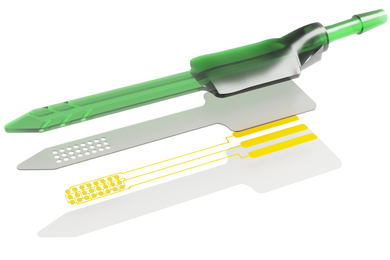
The Economist reports on the growing popularity of ingestible sensors, including work at MIT where researchers are using the devices to “sense internal conditions and act on what they find.”  The MIT team “received $66m from ARPA-H, a federal grant system that pushes high-risk, transformative health-care technology, to develop ingestible devices for the oral delivery of mRNA treatments.” 

Reuters

In a series of papers published in the Journal of Plasma Physics, researchers from MIT, Commonwealth Fusion Systems (CFS) and other universities were able to validate the science and feasibility behind CFS’ plans to build a 400-megawatt fusion power plant, reports Timothy Gardner for Reuters. 

NewsNation

A study co-authored by Prof. Michiel Bakker finds that use of AI tools can impact cognitive function and problem-solving abilities in a relatively short period of time, reports Rob Taub for NewsNation. “We show that just 10–15 minutes of AI interaction can result in significant impairments in independent performance and persistence — capacities that are foundational to lifelong learning,” the researchers explain. “If brief exposure produces measurable erosion, the cumulative effects of daily AI use over months or years may be profound and difficult to reverse.”

National Public Radio (NPR)

NPR reporter Jeff Brady spotlights a study by Prof. Jessika Trancik and Marco Miotti PhD ’20  that found “across most of the U.S., electric vehicles are cost-competitive with their gas counterparts. And it found that in most locations, EVs also reduce emissions between 40% and 60%.” 

Fortune

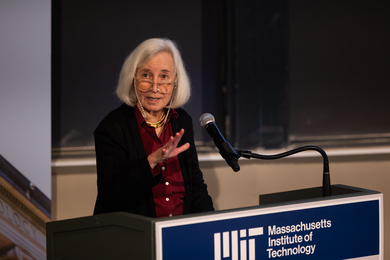
In her address to the Class of 2026 during the OneMIT Commencement Ceremony, Lisa Su ’90, SM ’91, PhD ’94, Advanced Micro Devices CEO, emphasized that “the world does not just need people who know how to use powerful tools, it needs people who know what to use them for, people with a sense of purpose, judgment, courage.” She added: “For everything that AI can do, AI can’t decide which problems are worth solving. It can’t make the hard judgments when the data is not there. It can’t take responsibility for the outcomes. These are actually our responsibilities, and they matter now more than ever.”

Gizmodo

MIT engineers have developed a new low-temperature process for extracting battery-grade lithium from hard rock, while also reducing waste, reports Gayoung Lee for Gizmodo. “Mining is essential to technology and therefore to society, yet it is perceived negatively by much of the public as a destructive, polluting industry, in some cases with good reason,” explains Prof. Yet-Ming Chiang. “We hope to help change that perception by showing that there are cleaner, more sustainable ways to do it.”

Axios

To help establish Massachusetts and the nation as a quantum leader, President Sally Kornbluth and Governor Maura Healey announced plans for a new share-used quantum research facility at MIT, writes Axios reporter Steph Solis. The Quantum Systems Laboratory would “host teams focused on using quantum mechanics for life sciences and defense research, but what would set the MIT project apart from existing labs is its ability to power direct communication among multiple quantum computers,” Solis explains. 

Community Updates

Featured Multimedia

Video thumbnail

Researchers at MIT are developing a new kind of sensor that detects cancer-related signals inside the bladder and emits a fluorescent light to reveal their presence. By using these nanosensors to map bladder cancer biomarkers in real time, this approach could transform how we monitor and diagnose the disease.

Video thumbnail

A new storytelling project titled Curiosity on a Mission champions the long-horizon science that powers American innovation. The MIT effort highlights how basic research sparks enormous advances in medicine, technology, national security, and economic growth.

Video thumbnail

Explore the origin and global impact of MIT OpenCourseWare, a pioneering initiative that challenged traditional educational models. Discover how the commitment to making knowledge accessible to everyone has shaped online learning and inspired a worldwide movement toward open education for learners everywhere.

Video thumbnail

In MIT's Elements of Mechanical Design course, students apply theoretical concepts from core engineering classes to build high-precision machines. Through lab work and shop time, they bridge the gap between academics and practical application, developing the hands-on expertise and confidence necessary to excel as professional engineers.

Video thumbnail

What if time could be measured with near-perfect precision? Atomic clocks do exactly that, using atoms as nature’s most reliable timekeepers. Here’s how they work and why modern life depends on them.

More News