Skip to content ↓

📬 Want a dose of MIT in your inbox? Subscribe to the MIT Daily and/or MIT Weekly newsletters.

Top News

Looking for audio? Listen to the MIT News podcast

Recent Highlights

More MIT News articles

In the Media

Medscape

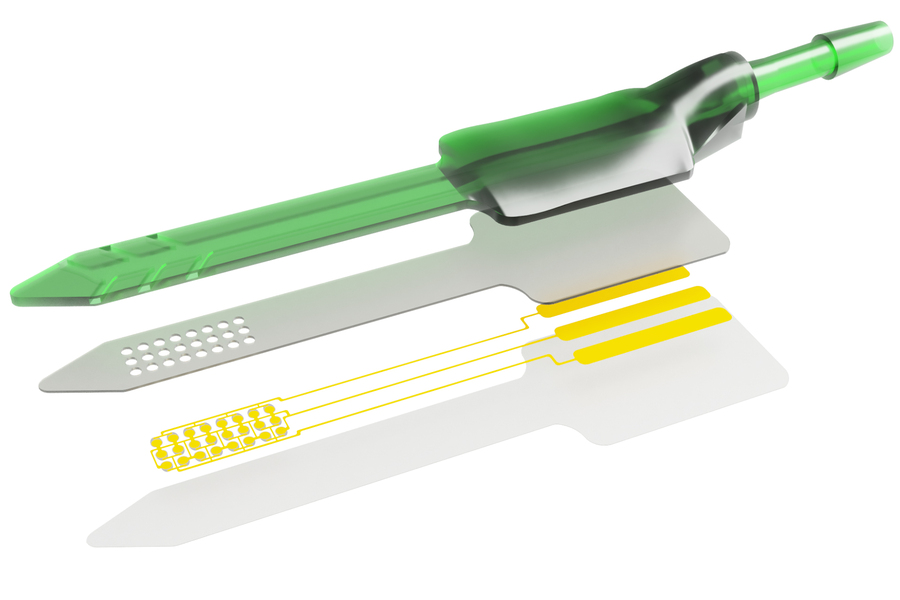
Prof. Daniel Anderson speaks with Mandy Letterii at Medscape about his development of an implantable device for people with diabetes that can dispense islet cells directly into the body to manage blood sugar, which would eliminate the need for insulin injections. “We want to allow people to forget that they have diabetes,” says Anderson. “We’re not there yet, but that’s certainly what we hope to achieve.”

CBS News

CBS News reporter Aimee Picchi spotlights Prof. Andrew Lo’s recent comments on using AI for retirement planning. “Lo stressed that it's important to ask critical questions when using AI for retirement advice, such as prompting an AI to say where it might be wrong and to list its assumptions and uncertainties,” writes Picchi. 

Fast Company

Prof. Sinan Aral speaks with Fast Company reporter Natalie Nixon about the risks of offloading creative work to AI systems. In one study, Aral and his colleagues found that with more creative work outsourced to AI, there was a resulting “slow homogenization of output that occurs when AI, trained on the same publicly available internet, starts flattening the edges that make creative work distinctive.” In another study, Aral’s team found, “cognitive offloading to AI (the act of outsourcing tasks you could do yourself) erodes the very skills you’re handing off.” 

Scientific American

In an article republished by Scientific American, Manon Bischoff delves into the history of Margaret Hamilton’s work at the MIT Instrumentation Lab, where she “was one of the people responsible for the features that ultimately made the moon landing possible.” Hamilton helped “program ‘emergency fixes,’ contingency procedures that were implemented when something unexpected happened during a mission.”

The Weekly Show with Jon Stewart

Profs. Daron Acemoglu and David Autor join Jon Stewart on his podcast, “The Weekly Show” to discuss what the future might look like for American workers and the importance of creating guardrails and policies that help ensure AI can be integrated in way that is positive for workers. “There’s constructive ways to steer.  We don't need to shut it down. We don't need to regulate it to death so it can't move. The U.S. is innovative, and that's great. We have a lot to be proud of, in that we have led this technology. We're building it out quickly. It's valuable,” says Autor. “We need to steer it. Just left to its own…it’s not going to be pro-worker.” 

Marketplace

Prof. Asu Ozdaglar, head of EECS and deputy dean of academics for the MIT Schwarzman College of Computing, speaks with Kai Ryssdal of Marketplace about how MIT is preparing its students for the era of AI by teaching foundational skills that will enable them to find jobs in a variety of different sectors. The new Artificial Intelligence + Decision Making major (AI+D) teaches students about the “foundations of how to use this intelligence for enhancing human experience, human work, human education, all of those domains, so that no matter how the technology changes, these students can adapt their skills to the new set of tools and developments.”

Bloomberg Radio

Profs. Elisabeth Reynolds and Simon Johnson joined Tom Keene and Paul Sweeney on Bloomberg Surveillance to discuss their new book, "Priority Technologies: Ensuring U.S. Security and Shared Prosperity," which highlights six key areas where advances in technology can drive the U.S. economy and support national security. “Quantum is the next frontier and opens up billions of dollars of opportunity,” says Reynolds. “Not just for defense and encryption issues, but also across all sorts of applications in financial services and biopharma.” 

CNN

In an interview with CNN reporter Madeline Holcombe, Prof. Sherry Turkle shares her views on AI tools and companionship, and how AI chatbots can impact social connection and isolation. “Intimacy requires vulnerability — there is no intimacy without vulnerability,” says Turkle. “What AI offers is connection without vulnerability. You are not getting a sustaining form of intimacy and connection. You are getting a non-nourishing combination that may give the sense of a quick fix, but is not sustaining.” 

Forbes

In an article for Forbes, Senior Lecturer Guadalupe Hayes-Mota '08 MS '16, MBA '16 explores how “AI is now embedded in the critical path of drug discovery, and it is making consequential decisions at a speed and scale that existing governance structures were simply not designed to handle.” Hayes-Mota emphasizes: “The goal is to ensure that as AI accelerates the machine of drug development, we have deliberate mechanisms for human accountability threaded through every critical junction.” 

Fast Company

A new study co-authored by Sloan graduate student Anand Shah explores the growing use of AI across the legal system, reports Chris Stokel-Walker for Fast Company. “The pro se share of all civil cases has been 11% for quite some time,” says Shah. “And then in the post-AI world, we see it jumping all the way up to something like 18%.”

WBUR

Prof. Regina Barzilay speaks with WBUR’s Priyanka Dayal McCluskey about her work developing an AI risk detection tool that can analyze mammogram images and help predict risk of breast cancer before it happens or spreads. Barzilay, who describes the tool as a hi-tech weather forecast for breast health, notes that: “We really need to have tools that can help, rather than just staring at an image and trying to guess.” 

Community Updates

Featured Multimedia

Video thumbnail

A new storytelling project titled Curiosity on a Mission champions the long-horizon science that powers American innovation. The MIT effort highlights how basic research sparks enormous advances in medicine, technology, national security, and economic growth.

Video thumbnail

In MIT's Elements of Mechanical Design course, students apply theoretical concepts from core engineering classes to build high-precision machines. Through lab work and shop time, they bridge the gap between academics and practical application, developing the hands-on expertise and confidence necessary to excel as professional engineers.

Video thumbnail

What if time could be measured with near-perfect precision? Atomic clocks do exactly that, using atoms as nature’s most reliable timekeepers. Here’s how they work and why modern life depends on them.

Video thumbnail

MIT researcher Ryan Williams has uncovered a surprising connection between how long a computation takes and how much memory it needs. His new result shows that even very time-consuming problems can sometimes be solved using far less memory than expected, by cleverly reusing space.

Video thumbnail

Engineers have long struggled to replicate the strength, speed, and control of natural muscles. Now, new artificial fibers developed at the MIT Media Lab move closer to matching those qualities.

More News