Skip to content ↓

📬 Want a dose of MIT in your inbox? Subscribe to the MIT Daily and/or MIT Weekly newsletters.

Top News

Looking for audio? Listen to the MIT News podcast

Recent Highlights

More MIT News articles

In the Media

Newsweek

MIT researchers have found that colon cancer cells can “change their identity, allowing them to travel through the body and form new tumors,” reports Daniella Gray for Newsweek. The findings could point to future treatments that can prevent metastasis—the leading cause of death for colorectal cancer patients, Gray explains. 

Jewish Herald-Voice

The Jewish Herald-Voice takes an interstellar journey to the past, spotlighting how thirty years ago Prof. Jeffrey Hoffman set off on an expedition into space on the Space Shuttle Columbia, bringing with him the “first kosher Torah scroll in history to be taken into space.” Hoffman was the “first Jewish-American male astronaut to fly into space and saw the act of bringing religious objects into space as part of bringing his practice of Conservative Judaism with him.” He noted that: “It wasn’t that space made this Torah special; it was more that the Torah made space special.” 

The Boston Globe

For the Boston Globe, reporter Aaron Pressman features MIT startup VulcanForms, a 3D printing manufacturer expected to create over 1,000 jobs with a new 1-million-square-foot-plant in Devens, MA. The facility will bring capacity for more customers in medical devices, aerospace and defense, and consumer goods industries. “MIT professor John Hart started the company with grad student Martin Feldmann [‘14] as a way to bring 3D printing techniques using lasers and powdered metals to larger-scale manufacturing jobs,” writes Pressman.

US News & World Report

In an interview with U.S News & World Report, Prof. Bradford Skow and Prof. Alex Byrne, two of the co-directors of the MIT Civil Discourse project, explain how the effort is aimed at helping students productively debate challenging issues using the Braver Angels format. “Lectures on how to ride a bike are useless; you learn by hopping on and pedaling,” they explain. “Lectures on civil discourse are marginally more effective, but learning how to discuss hard topics with people you disagree with ultimately requires seeing it done and doing it yourself.”

Forbes

Writing for Forbes about efforts to improve air travel safety, Tanya Eves highlights the Air-Guardian system, an eye-tracking monitor for pilots developed by CSAIL researchers that assists when attention wavers. “In tests, it reduced flight risk and improved navigation success rates,” writes Eves. “It's a model for how the virtual co-pilot relationship should work: not replacement, but a seamless, intelligent partnership that understands when to act and when to stay silent.”

The Wall Street Journal

Prof. David Autor discusses the potential future economic impact of AI in a panel discussion moderated by Wall Street Journal reporter George Anders. “Technology automates, it complements and it creates new expertise and new work,” says Autor. “I don’t think we’re headed into a new world where human judgment, moral reasoning, empathy and know-how have no economic value.” 

Scientific American

Prof. Alan Guth chats with Scientific American reporter Joseph Howlett about the future of the field of cosmology and his advice for early-career physicists for “The Young American Scientists” special section. Guth shares that thanks to advances in technology, “we’re able to unravel, to make sense out of, what we’re observing. A lot of progress has been made on those lines.” 

Boston Globe

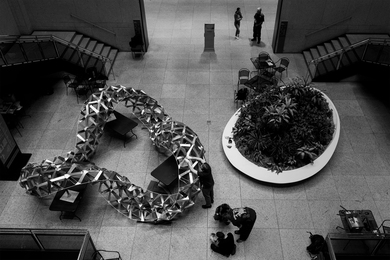
The archive of the renowned architect and alumnus I.M. Pei ’40 - including 1,500 rolls of architectural drawings, 50 models, and 1,000 linear feet of manuscripts – will be coming to the MIT Museum, reports Mark Feeney for The Boston Globe. “This landmark donation marks the homecoming of I.M. Pei to MIT,” says MIT Museum Director Michael John Gorman. “The MIT Museum is thrilled to steward his legacy and, together with MIT’s School of Architecture and Planning, establish a global hub for the study of I.M. Pei.”

Scientific American

Visiting Scientist Alice Stanton speaks with Scientific American reporter Tanya Lewis about her work developing miBrain, a 3D model of the human aimed at helping scientists “better understand neurological diseases such as Alzheimer’s and Parkinson’s so researchers can develop personalized treatments for them.” Says Stanton of the need for stable support for scientific research: “When we have a loved one who gets sick, we want a treatment—we want something to cure them. It doesn’t come out of thin air.”

New York Times

In a New York Times opinion piece, Prof. Carlo Ratti examines the debate around Ferrari’s first electric vehicle (EV) and the future of EV self-driving technology. “The self-driving technology available in most EVs turns the car into something summoned on demand,” writes Ratti. “Our work at the Massachusetts Institute of Technology suggests that autonomous driving could allow cities to operate with a small fraction of today’s vehicles while reducing parking demand by as much as 85 percent.”

Fortune

Fortune reporter Emma Burleigh spotlights MIT’s financial aid programs that provides free tuition to students whose parents earn less than $200,000 a year. Additionally, tuition, housing, dining, fees, books, and personal expenses for students with parental incomes of less than $100,000 are covered by MIT. “Famed research university MIT is not only footing the tuition bill of its lower-income students—it’s making ‘free college’ a reality,” writes Burleigh. 

Scientific American

Prof. Emery Brown speaks with Scientific American reporter Tara Haelle for Scientific American’s special “Young American Scientists” section, discussing the evolution of the field of neuroscience and why he is optimistic about the future of scientific research in the U.S. “I am optimistic because I see new and exciting findings being discovered every day,” says Brown. “With [MIT] President [Sally] Kornbluth’s support, [the university] has developed its Health and Life Sciences (HEALS) program to encourage MIT faculty to look more deeply into solving health care problems. The enthusiasm for HEALS has been contagious across the campus.” 

The Hill

For The Hill, Senior Lecturer Robert Pozen and contributor Mark Iwry argue that the U.S. should implement federal legislation for automatic retirement savings plans. “Without burdening small employers, bipartisan auto-IRA legislation would make retirement saving easy for employees without an IRA or retirement plan at work,” write Pozen and Iwry. “Such legislation would extend tax-favored retirement savings to the tens of millions of workers now left behind, fulfilling the stated intent of the recent executive order ‘to ensure that every American worker has access to a simple, portable, low-cost retirement-savings option.’”

Scientific American

For the Scientific American special section “The Young American Scientists,” Institute Prof. Robert Langer speaks with Megha Satyanarayana about the “spectacular” history of American innovation and education, and why he feels it’s important to celebrate scientific achievements in the same way we honor celebrities and sports stars. “I’m just a big believer in the resilience of people,” says Langer. “I look at the history of American innovation and education over the past 250 years, and it’s been spectacular. We’ve had world wars, you know, we’ve had depressions, and people keep persisting and keep learning. They keep discovering and they keep inventing.”

CBS News

Prof. Eric So joins CBS News Tech Watch to discuss a new Pew Research Center study that reveals 40% of U.S. adults perceive AI’s future impact to be negative, as well as his upcoming book, The Collision: What AI Does to Us. “The growth of AI is simply overwhelming for so many people in terms of the pace of progress. But also, a reflection of the fact that for so much of human history, human level intelligence was our most scarce resource, our most defensible advantage,” says So. “It was why we were paid the salaries that we are. And now AI is increasingly commoditizing that. It’s being mass produced in a way that really causes us to question what’s going on to make us valuable in the future.”

Scientific American

For Scientific American’s special section “The Young American Scientists,” Prof. Feng Zhang speaks with Tara Haelle about the importance of investing in science and education, noting that “American science has long been the strongest engine of discovery and innovation in the world.” Zhang shares: “I’m fortunate to work with extraordinary students and postdocs, but the infrastructure that lets them do their best work is under real stress: funding instability..., immigration uncertainty for international scientists and an erosion of public trust in expertise. We can lose the lead rapidly if we do not protect our innovation ecosystem.” 

Community Updates

Featured Multimedia

Video thumbnail

Some of the most important things in life feel ordinary, until you stop and think about what makes them possible. A cure. A car. A comet. Someone right now is chasing answers to questions we haven't even asked yet. From medicine to infrastructure to breakthroughs we can't yet imagine, science touches every part of daily life because someone followed their curiosity.

Video thumbnail

As we celebrate 250 years of American independence, we are reminded that MIT was founded in the same spirit: to advance knowledge, foster innovation, and serve the country through education, research, and discovery.

Video thumbnail

Researchers at MIT are developing a new kind of sensor that detects cancer-related signals inside the bladder and emits a fluorescent light to reveal their presence. By using these nanosensors to map bladder cancer biomarkers in real time, this approach could transform how we monitor and diagnose the disease.

Video thumbnail

A new storytelling project titled Curiosity on a Mission champions the long-horizon science that powers American innovation. The MIT effort highlights how basic research sparks enormous advances in medicine, technology, national security, and economic growth.

Video thumbnail

Explore the origin and global impact of MIT OpenCourseWare, a pioneering initiative that challenged traditional educational models. Discover how the commitment to making knowledge accessible to everyone has shaped online learning and inspired a worldwide movement toward open education for learners everywhere.

More News