Skip to content ↓

📬 Want a dose of MIT in your inbox? Subscribe to the MIT Daily and/or MIT Weekly newsletters.

Top News

Looking for audio? Listen to the MIT News podcast

Recent Highlights

More MIT News articles

In the Media

Scientific American

Prof. Alan Guth chats with Scientific American reporter Joseph Howlett about the future of the field of cosmology and his advice for early-career physicists for “The Young American Scientists” special section. Guth shares that thanks to advances in technology, “we’re able to unravel, to make sense out of, what we’re observing. A lot of progress has been made on those lines.” 

Forbes

Writing for Forbes about efforts to improve air travel safety, Tanya Eves highlights the Air-Guardian system, an eye-tracking monitor for pilots developed by CSAIL researchers that assists when attention wavers. “In tests, it reduced flight risk and improved navigation success rates,” writes Eves. “It's a model for how the virtual co-pilot relationship should work: not replacement, but a seamless, intelligent partnership that understands when to act and when to stay silent.”

Boston Globe

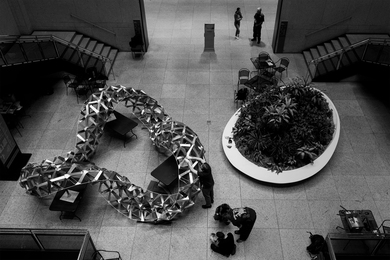
The archive of the renowned architect and alumnus I.M. Pei ’40 - including 1,500 rolls of architectural drawings, 50 models, and 1,000 linear feet of manuscripts – will be coming to the MIT Museum, reports Mark Feeney for The Boston Globe. “This landmark donation marks the homecoming of I.M. Pei to MIT,” says MIT Museum Director Michael John Gorman. “The MIT Museum is thrilled to steward his legacy and, together with MIT’s School of Architecture and Planning, establish a global hub for the study of I.M. Pei.”

Forbes

Writing for Forbes, contributor Ron Schmelzer highlights Describe Anything, Anywhere, at Any Moment (DAAAM), a new system developed by MIT researchers that could enable robots to capture details of objects they see while exploring an environment. In the future, the system could allow factory workers to send robotic assistants to find items. DAAAM “lets a robot build a detailed map of a space, attach descriptions to objects in that map, and answer plain English questions later,” Schmelzer explains. 

US News & World Report

In an interview with U.S News & World Report, Prof. Bradford Skow and Prof. Alex Byrne, co-directors of the MIT Civil Discourse Project, explain how the effort helps students productively debate hot-button issues using the Braver Angels format. “Lectures on how to ride a bike are useless; you learn by hopping on and pedaling,” they explain. “Lectures on civil discourse are marginally more effective, but learning how to discuss hard topics with people you disagree with ultimately requires seeing it done and doing it yourself.”

Scientific American

For Scientific American’s “The Young American Scientists” special section, reporter Tara Haelle interviews Prof. John Urschel, a former NFL player, exploring his views on the benefits for aspiring young scientists of having a broad background to draw upon. “A lot of good research happens when people can draw on tools, techniques and insights from different areas, disciplines and even fields,” says Urschel. “I hope we can encourage promising young scientists to establish strong, broad backgrounds and to communicate frequently with those outside their particular areas.” 

Scientific American

Scientific American reporter Deni Ellis Béchard spotlights graduate student Alex Zhang for the publication’s special section featuring 28 rising young scientists. “The types of research that I want to work on are things that I think should be shared for the benefit of people in general,” Zhang says of his work aimed at improving AI user experience with recursive language models. 

Fast Company

Fast Company reporter Jude Cramer spotlights a new study by MIT researchers that finds individuals who rely on AI to verify facts saw a 15% decline in their ability to detect fake news when unassisted by AI. “AIs that ‘tell’ by providing direct answers are more likely to foster reliance, while those that ‘ask’ via Socratic questioning are better at engaging someone to actually learn how to discern the truth on their own,” says graduate student Valdemar Danry. “But it’s very much a trade-off between speed and effort.”

New York Times

Prof. Christopher Knittel speaks with New York Times reporter Emmett Lindner about the likelihood that gas prices remain high after the U.S.-Iran framework deal is signed. “When prices are going up, consumers are very adamant about checking the prices of multiple gas stations,” says Knittel. “But when prices start to fall, they do that less, so gas stations can kind of get away with not lowering prices one for one with oil.”

GBH

Prof. David Kaiser joins GBH “Particles of Thought” podcast host Dr. Hakeem Oluseyi to discuss his hunt for primordial black holes. “It’s a lot easier to find stuff coming off of a very bright, hot source, than a cold, dim one. So, the Hawking temperature of a black hole that has the same mass as our sun, or a little bigger would be so cold we would literally never be able to measure [its] radiation,” says Kaiser. “You’ll never see it [Hawking Radiation] from stellar collapse black holes, you’ll never see it from supermassive black holes, or even colder. The only hope to ever see it would be a smaller mass black hole.”

Community Updates

Featured Multimedia

Video thumbnail

As we celebrate 250 years of American independence, we are reminded that MIT was founded in the same spirit: to advance knowledge, foster innovation, and serve the country through education, research, and discovery.

Video thumbnail

Researchers at MIT are developing a new kind of sensor that detects cancer-related signals inside the bladder and emits a fluorescent light to reveal their presence. By using these nanosensors to map bladder cancer biomarkers in real time, this approach could transform how we monitor and diagnose the disease.

Video thumbnail

A new storytelling project titled Curiosity on a Mission champions the long-horizon science that powers American innovation. The MIT effort highlights how basic research sparks enormous advances in medicine, technology, national security, and economic growth.

Video thumbnail

Explore the origin and global impact of MIT OpenCourseWare, a pioneering initiative that challenged traditional educational models. Discover how the commitment to making knowledge accessible to everyone has shaped online learning and inspired a worldwide movement toward open education for learners everywhere.

Video thumbnail

In MIT's Elements of Mechanical Design course, students apply theoretical concepts from core engineering classes to build high-precision machines. Through lab work and shop time, they bridge the gap between academics and practical application, developing the hands-on expertise and confidence necessary to excel as professional engineers.

More News