Skip to content ↓

📬 Want a dose of MIT in your inbox? Subscribe to the MIT Daily and/or MIT Weekly newsletters.

Top News

Looking for audio? Listen to the MIT News podcast →

Recent Highlights

More MIT News articles

In the Media

Los Angeles Times

Los Angelos Times reporter Mark Swed spotlights Prof. Tod Machover’s “already and not yet,” a new symphony that “handles democracy not as a done deal, but a series of scary questions — and doesn’t trust the heartless machines for answers.”. “Already and not yet” challenges us to make the world more beautiful by looking deeply into ourselves,” writes Swed. The orchestral score treats “musicians as creative artists and the audience as capable of opening its collective mind.”  

Forbes

Forbes has named MIT Professional Education’s Applied AI for Digital Transformation as the best professional development course available, writes Doug Wintemute and Veronica Beagle. “Designed for senior executives and tech leaders, this course explores AI adoption frameworks and strategies. Upon completion, graduates receive 6.4 continuing education units (CEUs) and a certificate of completion from the renowned MIT Professional Education.”  

The New York Times

William D. Nordhaus PhD ’67, a “Yale economist and Nobel laureate who tabulated the economic wreckage of carbon emissions and influenced climate policy across several presidential administrations,” has died at 85, reports The New York Times’ Lydia DePillis. Nordhaus developed a model over decades, “to balance climate change’s long-term damage with the costs required to contain it,” that has “underpinned dozens of regulations around the world aimed at limiting fossil fuels and seeded the ground for a new field of research that bridges the gap between economics and earth science,” writes DePillis.  

Bloomberg

Northwood Space Corp., “a maker of critical ground infrastructure for satellites,” cofounded by CEO Bridgit Mendler MS ‘20, is highlighted by Bloomberg’s Edward Ludlow and Sana Pashankar. “Northwood builds phased-array antenna systems that use electronically steered beams to communicate with multiple satellites without the need for large, mechanically rotating dishes,” Ludlow and Pashankar note. “The company so far has deployed six ground sites on two continents and says it added new customers across U.S. government agencies and commercial space companies in addition to traditional satellite operators.”  

Forbes

Alumna Thapanee Techajareonvikul, CEO and president of Berli Jucker, is honored as one of Forbes Asia’s Power Businesswomen 2026, writes reporter Rana Wehbe Watson. Techajareonvikul is “keen to promote gender equality at the company [Berli Jucker], where today more than half the 61,000 workforce is female,” notes Wehbe Watson. “In the top management positions women make up 53%,” says Techajareonvikul.  

Bloomberg

Prof. Daron Acemoglu joins Bloomberg’s “Mishal Husain Show” to discuss his latest book, “What Happened to Liberal Democracy: Remaking a Politics of Shared Prosperity,” as it relates to democracy in the age of AI and social media. “The thing that gives me hope is that humans are very adaptable,” says Acemoglu. “People, even in this polarized world, have a deep sense of fairness, around [which] we can come together. There are so many shared moral values between the different sides of the aisle in the U.K., [and] the U.S. Polarization, bad leadership [and] social media have obscured them.” 

Forbes

Writing for Forbes, alumnus Paul Hsieh discusses radiologists employing rapidly evolving AI tools to help deliver diagnoses. “Radiologists are willing to employ AI tools that have been statistically validated to provide reliable diagnoses, even if we don’t yet fully understand how those tools work,” writes Hsieh. “But radiologists are not content to stop there. We also continually seek to improve genuine human understanding of how AI works in our field as a matter of professional responsibility for ourselves and for our patients.”  

CNN

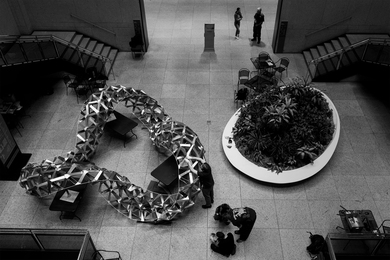
CNN’s Amy Gunia highlights TESSERAE, magnetic, self-assembling tiles that can be used to create structures in space for humans to live in, designed by Visiting Scholar Ariel Ekblaw SM ’17, PhD ’20. “The tiles can be stacked on top of each other inside a rocket and released in space, where they can autonomously attach to each other—employing electro-permanent magnets, cameras and AI—to create a predetermined shape,” writes Gunia. “They can self-assemble into something way bigger than the size of the rocket that they came up in,” Ekblaw explains. 

Slate

In a conversation with Slate’s Shirin Ali, Prof. Charles Stewart III, director of MIT’s Election Data and Science Lab, discusses a framework to help voters “see important red flags in the hours immediately following Election Day,” detailed in his new paper “The Day After: Threats and Guardrails in the 2026 Election.” “After Election Day, that’s where we’re thinking about getting the final count in,” says Stewart. “We shift into the formal process of canvassing the vote, certifying it, and making sure that we’ve named the winners.”  

GBH

Prof. Suraj Cheema joins Edgar B. Herwick, host of GBH’s “The Curiosity Desk,” to discuss the functionality and global development of computer chips. “The know-how of how to make these chips is very specialized,” says Cheema. “Imagine there’s 100 steps in the process, not just that printer that costs a few $100 million, just all these other kinds of steps that go along with it. We have 20 million transistors in this little chip. We want them all to work. They all have to work [for the chip to function].”  

USA Today

A team of astronomers, including scientists from MIT, have developed Lumina, a complex computer simulation that “shows how the first galaxies, stars and other astral phenomena developed and evolved over the ensuing millennia,” reports Eric Lagatta for USA Today. “Lumina's simulations begin around 45 million years after the ‘Big Bang,’ when the universe is still ensconced in a cosmic dark age, as neutral hydrogen shrouded the universe, preventing light and other forms of radiation from traveling,” writes Lagatta. “The simulation covers a massive patch of the early universe, spanning about 1.6 billion light-years, as phenomena like dark matter, gas and stars form and grow.” 

The New York Times

Mike Beigel ‘70, who invented Mu-Tron III, considered to be “the first commercial envelope filter pedal [that] allowed guitar players to achieve a synthesizer-like sound” used in popular 1970s music, has died at 79, reports Alex Williams for The New York Times. “The Mu-Tron III was the most renowned of several effects pedals that Mr. Beigel invented for Musitronics, a New Jersey-based company that he co-founded in 1972,” writes Williams. Musitronics, “produced a variety of sought-after pedals, including the Mu-Tron Octave Divider, Phasor, Flanger and Bi-Phase, which have been adopted by notables like Neil Young, Billy Corgan of the Smashing Pumpkins and John Frusciante, the Chili Peppers guitarist.” 

Bloomberg

Prof. Sanjay Sarma speaks to Bloomberg’s Saritha Rai about the difficulty of developing dexterous robots for use in the home versus developing factory machines for use in standardized plants. “Heavy work, hazardous tasks have long been the focus of automation,” says Sarma. “Robots seem to be following an evolutionary path–the finer the motor or cognitive skills required, the harder to automate.”  

Community Updates

Featured Multimedia

Video thumbnail

MIT quantum engineer Will Oliver joins President Sally Kornbluth to discuss the promise of quantum computing, the challenges of scaling the technology, and its potential to transform fields from drug discovery to materials science.

Video thumbnail

What if solar panels could be lighter, thinner, and easier to install? MIT PhD student Karen Yang explores how developing flexible, lightweight solar technology could make clean energy more accessible, from remote communities and disaster relief efforts to rooftops that can't support traditional solar panels.

Video thumbnail

MIT researchers developed SANDO, a new navigation system that helps robots safely navigate unfamiliar environments while avoiding moving obstacles. The system can rapidly plan and adjust a collision-free path using onboard sensors and computing, with safety backed by mathematical guarantees.

Video thumbnail

Quantum computers could revolutionize everything from drug discovery to cryptography, but building the hardware remains a challenge. MIT research scientist Patrick Strohbeen explores how studying materials at the nanoscale could help unlock the potential of quantum computing.

Video thumbnail

Alex Slocum, the Walter M. and A. Hazel May Professor of Mechanical Engineering at MIT, has a serious message for students in Fundamentals of Precision Product Design, but a famously fun way of delivering it. Students describe the course as “creative chaos,” an approach that drives home the importance of precision and repeatability in engineering design.

More News