Skip to content ↓

📬 Want a dose of MIT in your inbox? Subscribe to the MIT Daily and/or MIT Weekly newsletters.

Top News

Looking for audio? Listen to the MIT News podcast →

Recent Highlights

More MIT News articles

In the Media

TechCrunch

Flapping Airplanes, a startup co-founded by Benjamin Spector ’22, MEng ’22, has developed a framework for AI models to run efficiently while being trained on less data and in a single graphics processing unit (GPU), writes Julie Bort for TechCrunch. The framework “can run a task that spends most of its time waiting for data to be fetched alongside one that spends most of its time doing math, so the chip is rarely sitting idle,” notes Bort. “The premise is that AI has barely scratched the surface of what GPUs can do, and they believe it can create intelligent systems ‘without ingesting half the internet.’”  

Manufacturing Dive

For Manufacturing Dive, reporter Nathan Owens spotlights MIT’s Technologist Advanced Manufacturing Program (TechAMP), a 12-mong-long program that combines online instruction with hands-on lab work to bridge the gap between technical engineering and management skills, designed for working technicians or operators. “Students gain foundational leadership, process control and systems thinking skills,” notes Owens. TechAMP has “really shown me how to communicate more, communicate problems more, communicate solutions more,” says Brian Coppenrath, who completed the program.  

Metropolis

Metropolis reporter Anthony Paletta details how MIT’s inaugural Future Fest “brought together visionary leaders across design, technology, and art to address the world’s most pressing problems,” and also featured the public debut of the redesigned Metropolitan Warehouse. The festival featured discussions, exhibits and demonstrations on architecture, design and technology, including a new technique that utilizes knitted fibers as a flexible formwork for concrete, a discussion on how AI could be used to increase sustainability in construction and exploration of how “reef legos” can rebuild beaches and combat costal erosion. “There are no shortage of things going wrong in the world, and others likely to follow,” writes Paletta, “but MIT’s Future Fest offered reassuring proof that we’ve not run out of means to address these problems.” 

El Pais

Postdoctoral Associate Iman YeckehZaare speaks to El País reporter Jordi Pérez Colomé about his research on RentAHuman, a platform that allows AI agents to hire people to do physical labor. “RentAHuman has shown that many people are willing to sign up to be hired by AI agents. What it still hasn’t shown is that many AI agents are doing the hiring,” says YeckehZaare. “Listings posted by agents will increase as AI agents become capable of acting and paying on their own.”  

Poets&Quants

Poets & Quants reporter Jeff Schmitt writes that MIT Sloan School of Management’s Assistant Dean Dawna Levenson has been honored as the “MBA Admissions Director of the Year,” by Poets & Quants. “Dawna brings a very human-first approach to MIT Sloan Admissions, deeply learning about our applicants as people and professionals, getting to know them through interviews, and understanding how they hope to make a difference in the world through their education,” says Sloan Dean Richard Locke. “She supports students throughout the admissions journey, providing guidance, helping them navigate the process, and pivoting, as needed, to support their matriculation.”  

The Street

Testing 1,000 synthetically generated client profiles against AI chatbots for investment advice, Prof. Andrew Lo and Research Affiliate Jillian Ross identified “heuristic collapse,” where chatbots based their recommendations almost entirely on self-reported risk tolerance, while ignoring income and other variables, writes Damilola Esebame for The Street. “Lo has recommended that investors use chatbots for orientation, leveraging them to frame questions, map out available options, and prepare for conversations with a human advisor rather than treating the output as a finished plan,” notes Esebame. 

TechCrunch

Eka Robotics, a startup cofounded by Prof. Pulkit Agrawal, has developed a robot with  a force-sensitive gripper that can “pick up about 1,500 objects that weigh up to 1 kg in an hour, compared to about 600 for a human” with 95% accuracy, reports Tim Fernholz for TechCrunch.  “We are starting off being very pragmatic, and saying here are two verticals in pick, arrange, place, and wire handling, let’s make them be home runs,” says Agrawal. “Once we have made home runs on them, the sky is the limit in how much we can do with the approach we are developing.” 

WDIY

Prof. Justin Reich joins WDIY’s Aryash Shyam, host of “Teen Scientist,” to discuss the use of AI tools in K-12 education. “In my classroom, everything we do with AI has been negotiated with students. I think that every educator in their own classroom can have an ongoing engagement [with students about AI use],” says Reich. “Historically, student tech teams have been very successful in many schools doing a wide range of things, helping to set policy, helping to provide professional development [and] helping give a sense of youth perspective.” 

The New Yorker

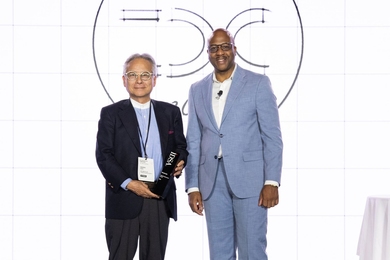
The New Yorker’s Gideon Lewis-Kraus details how Morris Chang ’52, SM ’53 founded the Taiwan Semiconductor Manufacturing Company (TSMC), “one of the most valuable tech companies globally” that “makes almost all of the world’s advanced [computer] chips.” “Chang proposed a semiconductor ‘foundry,’ which would do for pricey chips what its predecessors had done for cheap junk. At the time, however, the market didn’t exist,” writes Lewis-Kraus. “By the end of TSMC’s first decade, the company was bringing in a billion dollars in annual revenue.”  

MassLive

Principal Research Scientist Deepjyoti Deka speaks to MassLive’s Tréa Lavery about the possibility of large data centers being located in greater Boston. “Anything, mostly, that you are using the computer for, that you are getting some information from, is housed in a data center,” says Deka. “When you talk about data centers in greater Boston, I doubt if we have any hyperscale, because there would need to be a gigantic factory that you could observe from a distance. But there are small ones.” 

The Boston Globe

In The Boston Globe’s “Starting Point Newsletter,” reporter Anna Kusmer features Prof. Sherry Turkle’s insights from her latest book “Artificial Intimacy: Who We Become When We Talk to Machines,” including the risks that AI companionship poses to school-aged children. “Children are bringing the world inside; they’re bringing the people around them inside them to create an inner life,” says Turkle. “And when you talk to a chatbot, there is nothing to bring inside. There is no caring person.” 

Financial Times

Financial Times reporter Clive Cookson details how the late Margaret Hamilton engineered code that would play a crucial role in achieving the first moon landing, at MIT’s Instrumentation Lab. When Apollo 11’s onboard computer flashed alarms minutes from landing on the moon, “Hamilton and colleagues had engineered the software to dump non-essential background tasks under those circumstances and prioritize procedures needed for the landing,” writes Cookson. “NASA controllers in Houston trusted the software, so they decided not to abort the mission, allowing Neil Armstrong and Buzz Aldrin to touch down safely in their Eagle module.”  

Community Updates

Featured Multimedia

Video thumbnail

Alex Slocum, the Walter M. and A. Hazel May Professor of Mechanical Engineering at MIT, has a serious message for students in Fundamentals of Precision Product Design, but a famously fun way of delivering it. Students describe the course as “creative chaos,” an approach that drives home the importance of precision and repeatability in engineering design.

Video thumbnail

Founded in 1950, MIT’s School of Humanities, Arts, and Social Sciences encourages students to think broadly about the world and their place in it, while examining what it means to be human and the social, ethical, and economic dimensions of today’s greatest challenges.

Video thumbnail

Drawing on research he began at MIT, AJ Perez ’13, MEng ’14, PhD ’23, is finding new uses for the world’s growing plastic waste. His company, Atlas, 3D prints building materials from recycled plastic, giving discarded material a new purpose.

Video thumbnail

A fast-paced look at the people, ideas, research, and experiences that make MIT what it is. From groundbreaking discoveries and hands-on learning to a vibrant campus community, see the curiosity, creativity, and innovation that drive the Institute. This is MIT.

Video thumbnail

Meet Paula Hammond, MIT Institute Professor and Dean of the School of Engineering—the first woman and first Black scholar to lead MIT's Department of Chemical Engineering. Discover how her pioneering research in nanotechnology and ovarian cancer has shaped her career, the barriers she broke along the way, and what it means to change what leadership looks like in STEM.

More News