Skip to content ↓

📬 Want a dose of MIT in your inbox? Subscribe to the MIT Daily and/or MIT Weekly newsletters.

Top News

Looking for audio? Listen to the MIT News podcast

Recent Highlights

More MIT News articles

In the Media

Washington Post

Washington Post columnist George F. Will reflects on MIT and his view of “the damage that can be done to America’s meritocracy by policies motivated by hostility toward institutions vital to it.” Will notes that MIT has an "astonishing economic multiplier effect: MIT graduates have founded companies that have generated almost $1.9 trillion in annual revenue (a sum almost equal to Russia’s GDP) and 4.6 million jobs."

Scientific American

MIT researchers have developed “GelSight,” a system that provides robots with a sense of touch, reports Ben Guarino for Scientific American. “GelSight can identify by touch the tiny letters spelling out LEGO on the stud of a toy brick,” explains Guarino. 

The Boston Globe

Sherwin Greenblatt '62, SM '64 reflects on his two-decade tenure as director of MIT’s Venture Mentoring Service (VMS), a program that provides support for entrepreneurs in the MIT community, reports Jon Chesto for The Boston Globe.  “VMS differs from many mentoring programs in that entrepreneurs are connected to not just one mentor, but several subject matter experts, depending on their needs,” explains Chesto. “These are also considered long-term commitments, not just several months of counsel and brainstorming.” 

MIT Technology Review

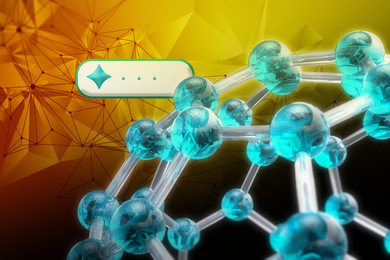
Lila Sciences, a startup co-founded by Prof. Rafael Gómez-Bombarelli, is developing new platforms aimed at enabling AI-driven laboratories to accelerate materials discovery for energy, sustainability, and computing, writes David Rotman for Technology Review. “If they succeed, these companies could shorten the discovery process from decades to a few years or less,” Rotman notes. 

The Boston Globe

Prof. Emeritus Paul Osterman speaks with The Boston Globe reporter Scotty Nickerson about increased employment opportunities in nursing homes and residential care facilities. “Baby boomers and retirements are going to increase demand, and a lot of folks are going to need longer-term health care,” says Osterman.

Forbes

Addis Energy, a startup co-founded by Prof. Yet-Ming Chiang is using the earth “as a chemical reactor to make ammonia in a cleaner way,” reports Alex Knapp for Forbes. The team identifies “rocky formations underground with large amounts of iron,” explains Knapp. “Then they inject those rocks with water, nitrogen and a chemical catalyst. That causes the oxygen in the water to bind with the iron in the rocks—making rust—freeing the hydrogen, which reacts with nitrogen to form ammonia.” 

New Scientist

Prof. Jesse Thaler shares the physics moonshot experiment he would like to undertake if imagination was the only constraint on scientific ambition. “I am an enthusiast for an audacious idea to explore the unknown: a muon collider,” Thaler shares. “The muon is a brilliant candidate for a discovery machine. Muons are 200 times heavier than electrons, which makes them more efficient to accelerate. And unlike the protons used at the LHC, muons are elementary particles, so colliding them together would probe sharper, higher energies, potentially allowing us to discover more massive particles beyond the Higgs boson or even the nature of dark matter.” 

New York Times

A study by MIT researchers examining the carbon emissions of self-driving cars found that “the power required to run one billion driverless vehicles driving for one hour per day could consume as much energy as all existing data centers in the world,” reports Claire Brown for The New York Times. Graduate student Soumya Sudhakar explains that another big unknown is how autonomous vehicles could change the way people travel, adding to the uncertainty over the overall long-term emissions outlook for self-driving cars. 

The Boston Globe

President Sally Kornbluth is honored by The Boston Globe as one of the Bostonians of the Year, a list that spotlights individuals across the region who, in choosing the difficult path, “showed us what strength looks like.” Kornbluth was recognized for her work being of the “most prominent voices rallying to protect academic freedom.”

State House News

MIT is “taking a quantum leap with the launch of the new MIT Quantum Initiative (QMIT), reports State House News reporter Katie Castellani. “There isn't a more important technological field right now than quantum with its enormous potential for impact on both fundamental research and practical problems,” said President Sally Kornbluth during the launch event. “QMIT will help us to ask the right questions, identify the most critical problems and create a roadmap for developing quantum solutions that are both transformative and accessible.” 

Ars Technica

A new report co-authored by Prof. Dava Newman and Lindy Elkins-Tanton '87, SM '87, PhD '02 explores the highest-priority science objectives for the first human missions to Mars, reports Eric Berger for Ars Technica. “We’re searching for life on Mars. The answer to the question ‘are we alone’ is always going to be ‘maybe,’ unless it becomes yes,” explains Newman. 

New Scientist

A 1927 argument between Albert Einstein and Niels Bohr regarding “one of the core mysteries of quantum physics,” has led multiple scientists, including Prof. Wolfgang Ketterle, to conduct the thought experiments the two scientists developed a century ago to determine if  “light [is] really a wave, a particle or a complex mixture of the two,” writes Karmela Padavic-Callaghan for New Scientist.

USA Today

Visiting Scientist Judah Cohen speaks with USA Today reporter Doyle Rice about how the polar vortex could send a blast over cold air to areas of the central and eastern United States. “I believe that the entire cycle of a weak or disrupted polar vortex that began at the end of November is coming to its conclusion by the end of next week,” explains Cohen. “Clearly, the polar vortex is strengthening and some period of milder weather in the central and eastern U.S. looks inevitable to me.”  

Wired

In an opinion piece appearing in Wired, Prof. Elfatih Eltahir and postdoctoral researcher Yeon-Woo Choi examine the “ongoing water scarcity crisis” in Tehran. “With dry soils and high evaporation, rivers and wetlands shrank. Falling reservoir levels led to disruptions in hydropower generation, and water shortages prompted strict saving measures across parts of the capital,” they write. “These cascading impacts exposed how vulnerable Tehran’s infrastructure, economy, and communities have become under compounding heat and drought stress.” 

San Francisco Chronicle

Prof. James Collins and his colleagues are using AI to develop new compounds to combat the growing problem of antibiotic resistant bacteria, reports Lisa M. Krieger for the San Francisco Chronicle. Thus far, “Collins and his colleagues have synthesized several compounds that combat hard-to-treat infections of gonorrhea and MRSA,” writes Krieger. “These techniques are also being harnessed to fight diseases, like cancer, lupus and arthritis.” 

Community Updates

Featured Multimedia

Video thumbnail

Professor Jonathan Gruber speaks to classical economics being built on one powerful explanatory insight: that free markets — networks of buyers and sellers, producers and consumers, weighing the trade-offs of different options and making self-interested choices based on supply and demand — do a better job of deciding how to allocate resources than can be achieved by a top-down, command-economy approach.

Video thumbnail

The Edward and Joyce Linde Music Building is the new home for MIT Music. Fully opened in February 2025, the building provides a centralized facility for music instruction and performance, with top-quality rehearsal spaces, recording studios, and new labs for music technology.

Video thumbnail

The MIT Human Insight Collaborative (MITHIC) is a presidential initiative with a mission of elevating human-centered research and teaching and connecting scholars in the humanities, arts, and social sciences with colleagues across the Institute.

Video thumbnail

Associate professor of mechanical engineering, Sili Deng, is driving research in sustainable and efficient combustion technologies. Her research group targets three areas: building up fundamental knowledge on combustion processes and emissions; developing alternative fuels and metal combustion to replace fossil fuels; and flame-based synthesis of cathode materials for lithium-ion batteries.

Video thumbnail

At MIT, our mission is to advance knowledge; to educate students in science, engineering, technology, humanities and social sciences; and to tackle the most pressing problems facing the world today. We are a community of hands-on problem-solvers in love with fundamental science and eager to make the world a better place.

More News